Two one-way trips, not one long day
This is the rare group booking where the bus does not stay with you.
Sunday it carries everyone out to camp and drives home empty. Friday it drives back out empty to collect them. Each leg is its own trip, so the distance from the church lot to camp shows up twice in the plan even though the group only rides one direction at a time.
Ask for both legs in a single request. Pickup day is where these come apart: the closing program overruns, a parent arrives to collect one child early, the bus is idling in the lot while thirty kids are still in the final chapel service. Get the camp's last-day schedule from the director, agree a departure time with them, and put that time in the booking rather than a hopeful estimate.
A week of luggage for thirty-plus kids
Luggage, not headcount, is what sinks most camp transfers.
Thirty campers each arrive with a duffel, a sleeping bag, a pillow, and very often a box fan for a cabin with no air conditioning. That pile is several times what fits behind the last row of a shuttle. Whatever does not fit ends up on seats, and a 36 seat bus carrying ten seats of luggage is a 26 seat bus with a seating crisis in the church parking lot.
- Put a limit in the packing list itself: one duffel, one sleeping bag, pillow stuffed inside the bag.
- Ask one parent to drive a pickup or SUV out with the overflow gear.
- Tag every bag with the camper's name and cabin, so unloading is not a scavenger hunt.
- Count bags leaving and count them again coming home. Kids leave things behind.
Nobody has ever regretted sending the fans in a parent's truck.
Campers, counselors, chaperones: getting the count right
Adults are where youth groups quietly outgrow the bus they were planning on.
Twenty-eight middle schoolers and six leaders is thirty-four people before a single bag goes aboard, and your church or the camp almost certainly sets a required adult-to-camper ratio that you do not get to round down. Count those leaders in the seat total. Do not plan on the youth pastor following in a car unless somebody else is genuinely responsible on the bus. For scale, about 5% of requests in our Houston inquiry records with a valid group size were for 31 to 40 passengers and about 13% for 21 to 30; across all markets, around 14% of inquiries mentioning a shuttle sat in that 31 to 40 range.
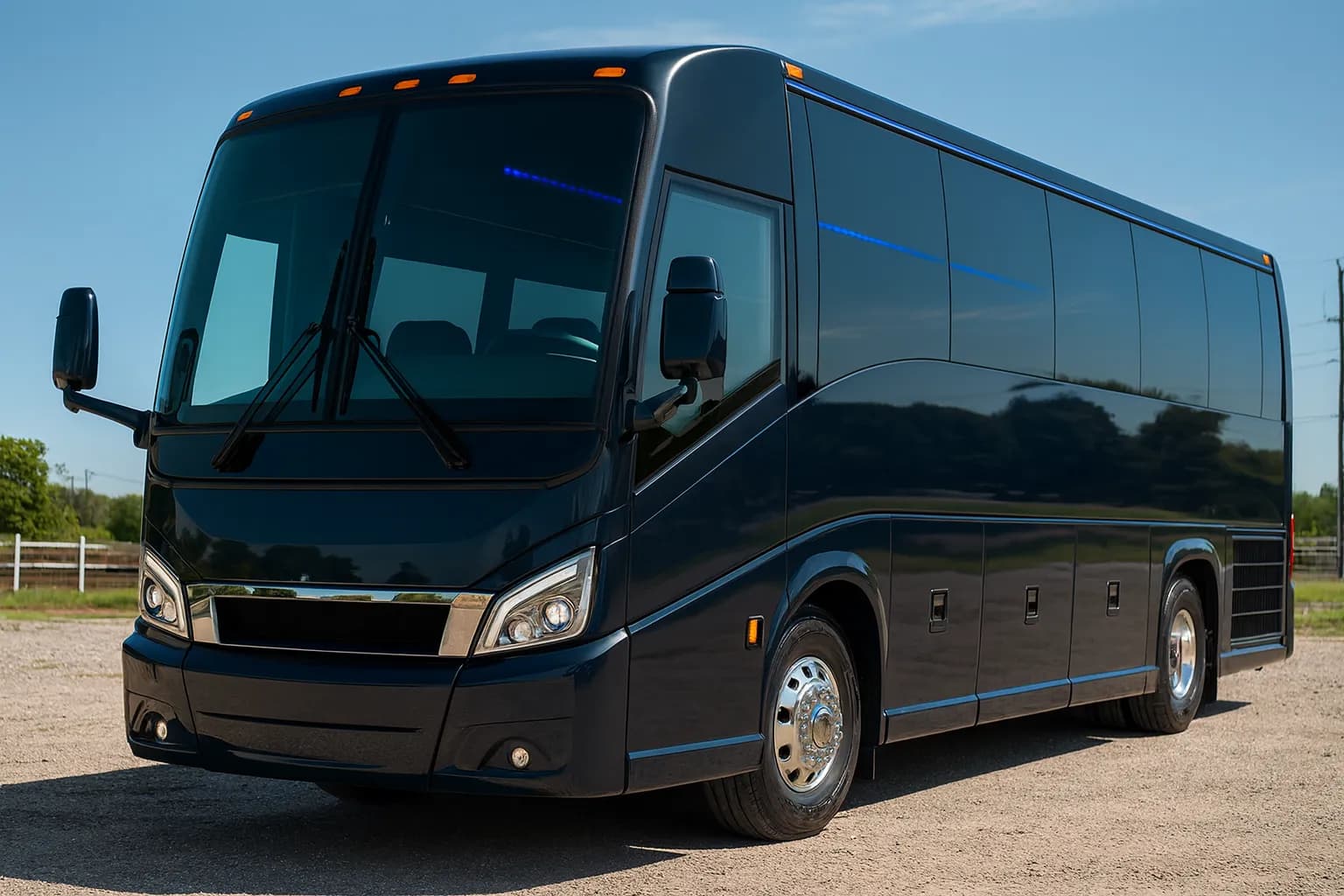
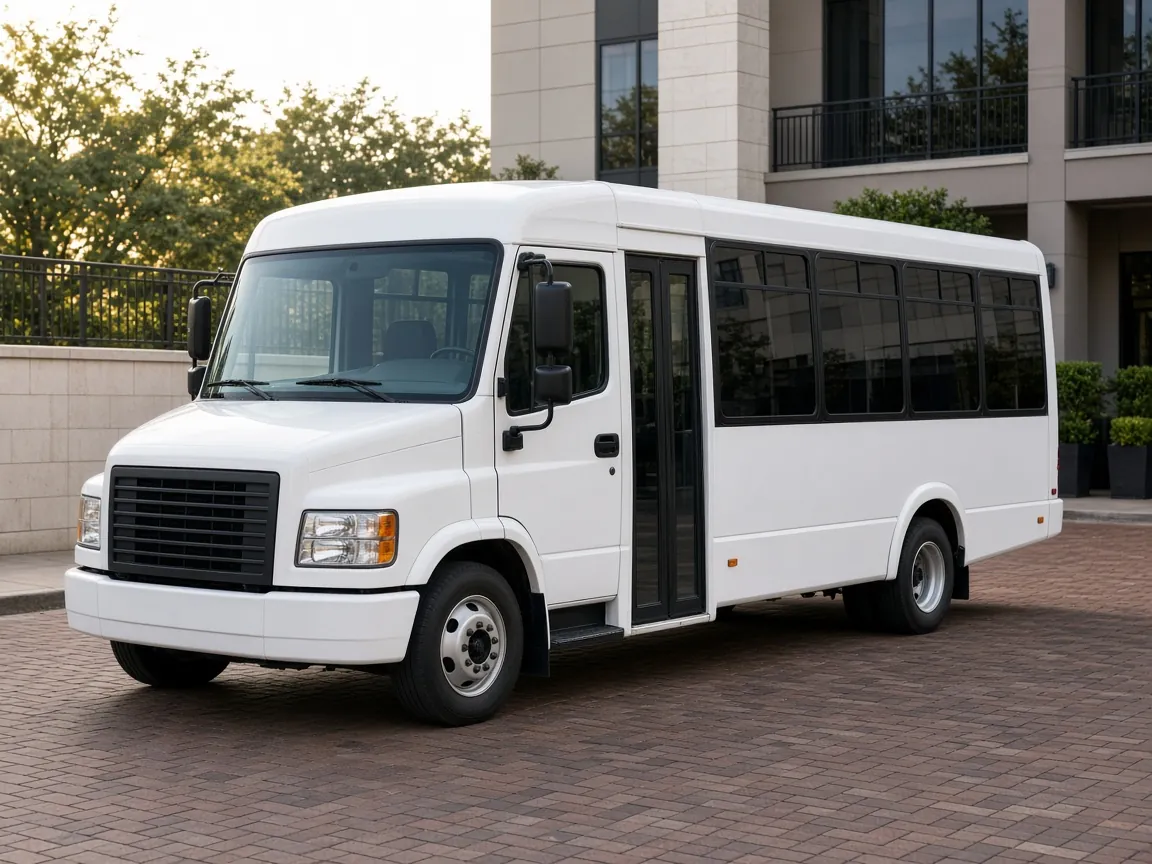
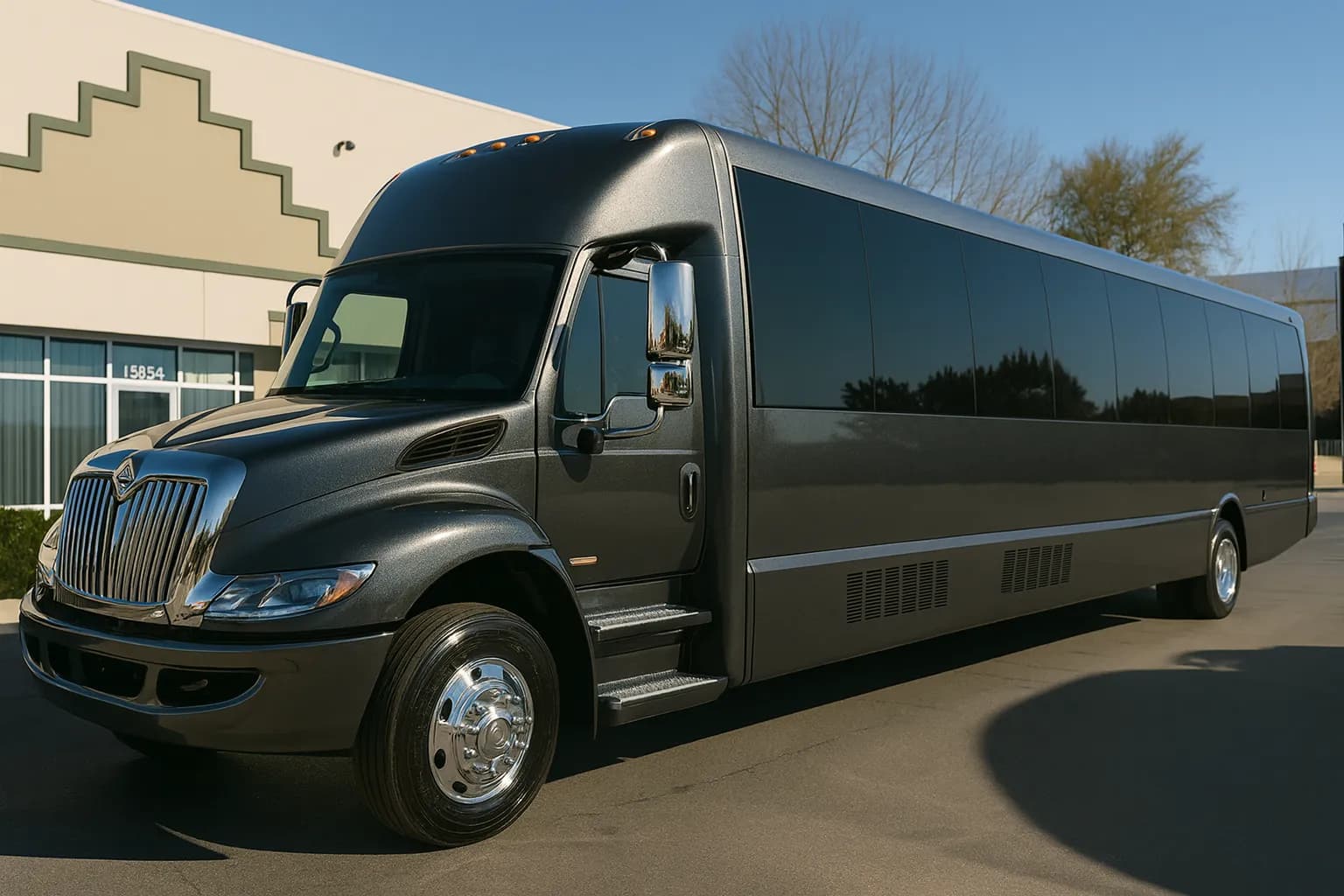
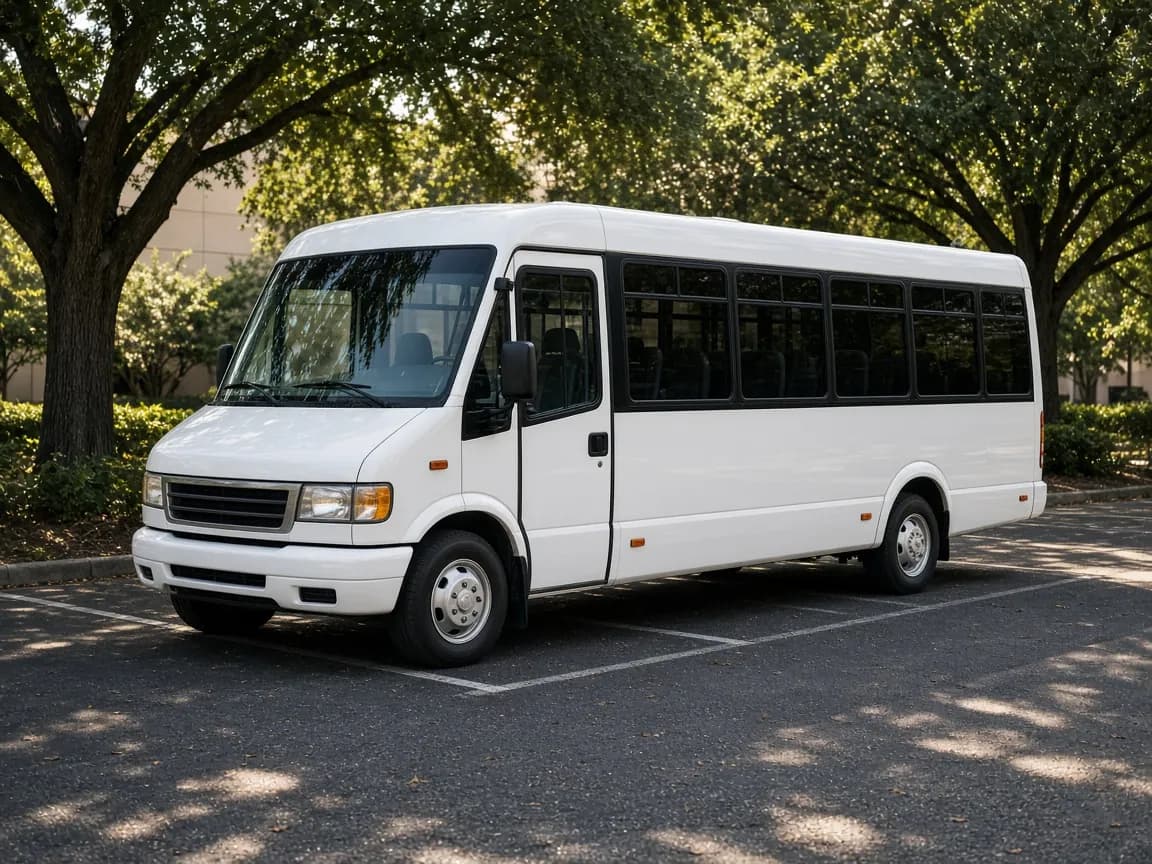
Under 24 riders, the 30 passenger shuttle bus does the job. At 36 or above, or for a group determined to carry everything in one vehicle, the 40 passenger shuttle bus or a 48 passenger coach bus with an under-floor bay solves the gear problem at the same time.
Departure morning at the church lot
Half an hour between the first parent arriving and the bus pulling out is about right.
A check-in table carries the roster, the signed permission forms, and a sealed bag of medications that travels with a named adult rather than in a camper's backpack. Bags get loaded while the goodbyes are happening, which uses the time twice, then boarding by cabin group makes the headcount trivial. Once the doors close, parents can go home instead of waving at tinted glass for ten minutes.
The lot itself has to be somewhere a bus can turn. Most church properties are fine. A cul-de-sac in a Kingwood or Atascocita neighborhood is not, and finding that out at 8 am with thirty families watching is a bad morning. The safety planning checklist makes a decent pre-trip read for whichever adult is in charge.
The drive north, and the stop in the middle
Most of these camps sit in the Piney Woods: around Lake Livingston, near Huntsville, out toward the Sam Houston National Forest.
From Kingwood, US-59/I-69 north toward Livingston typically runs 60 to 90 minutes. From the west side it is I-45 north to Huntsville, closer to 75 to 100. About 53% of Houston inquiries with a stated duration asked for three to four hours, though a camp drop-off is described better by its route than its clock: give the camp address and the times you need, and let the quote work the rest out.
Build in one comfort stop at roughly the halfway mark even on a 75 minute run, because somebody will need it and the alternative is worse. Kids prone to motion sickness go near the front, snacks stay simple, and if the leaders want music or announcements on the way it is worth asking whether the bus has a PA or speakers. Our church events and school field trips pages have more on youth group logistics.
Stop around Cleveland. You are stopping either way.
Sample Sunday drop-off: 29 students and 6 leaders, Kingwood to a camp near Lake Livingston
A one-way morning run. The Friday pickup is booked as its own trip.
8:00 am
Parents pull into the church lot. Check-in, forms, and the medication bag handed over to the lead chaperone.
8:20 am
Bags go on while the goodbyes happen. A parent's pickup takes the overflow sleeping bags and fans.
8:35 am
Boarding by cabin group, headcount, and out north on US-59/I-69.
9:15 am
Comfort stop around Cleveland.
10:05 am
Arrival ahead of a 10:30 registration. Bags unloaded and matched to cabins.
10:30 am
The bus heads back to Houston empty. Friday pickup is confirmed for 1:00 pm.