Who actually needs a shuttle loop?
Not everyone who asks for one.
If your people are sleeping in the hotels that back onto George R. Brown, they can walk, and a shuttle is money spent on a problem you do not have. The loop pays off when the block landed somewhere else: Uptown near the Galleria, Greenway Plaza, the Texas Medical Center, near NRG Park. A big convention week can absorb every downtown room, which is how an association ends up housing four hundred attendees six or eight miles from the hall with no easy transit link between them.
Exhibitors are the other case, and a more urgent one. Booth staff have to be on the floor before doors open and are often still out at a client event at nine. A private bus on a posted timetable means nobody is circling downtown for parking at seven in the morning, five mornings running, and expensing it.
Nobody thanks you for the shuttle. They only notice the week you skip it.
How often can one bus come around?
Everything depends on one number: how long the full circuit takes. In, unload, out, load.
Uptown to George R. Brown is typically 20 to 35 minutes each way at rush hour on US-59/I-69 or Allen Parkway, and 12 to 20 in the middle of the day. The Medical Center sits closer, usually 15 to 25 minutes by Main Street or SH 288. Which means a peak-hour loop from Uptown is close to an hour end to end, and an hour is your headway. One departure from the hotel, per hour, whatever the timetable you would like to publish says.
Ninety people who all want to be on the floor by 8:30 therefore cannot travel on one bus. You add a vehicle, stagger the waves with an early run for booth setup, or step up in capacity. The route planner gives typical drive times from each hotel area, and that is the number to settle before anyone decides how many buses to hire.
Sizing a booth team or a room block
Groups of this size are a minority of what we are asked about, which is worth knowing before you assume availability.
In our Houston inquiry records, about 13% of requests with a valid group size were for 21 to 30 passengers and about 5% were for 31 to 40. Across all markets, around 14% of inquiries mentioning a shuttle fell in that 31 to 40 range. The upper band is roughly one large exhibitor's booth team, or the working core of an association's block.
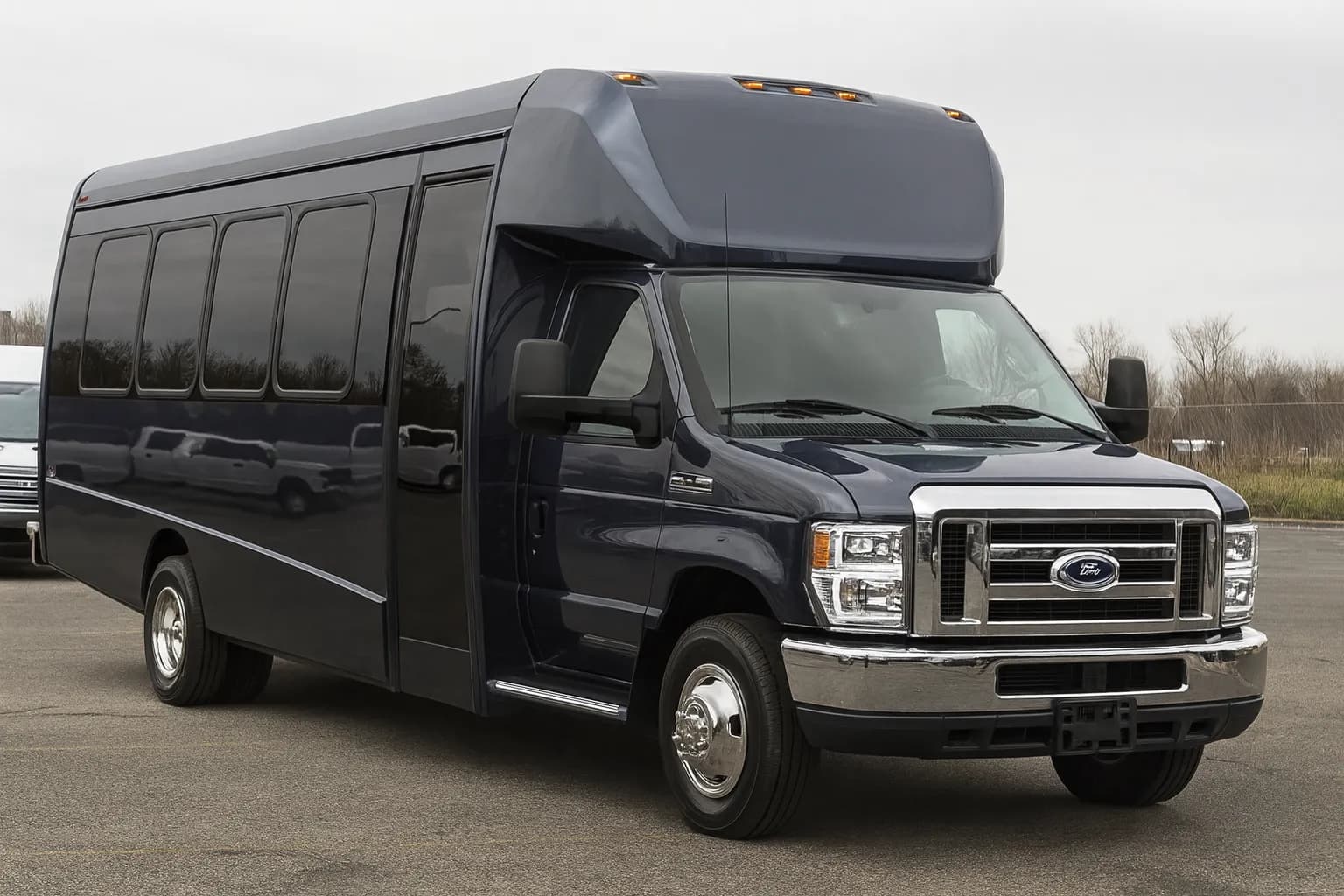
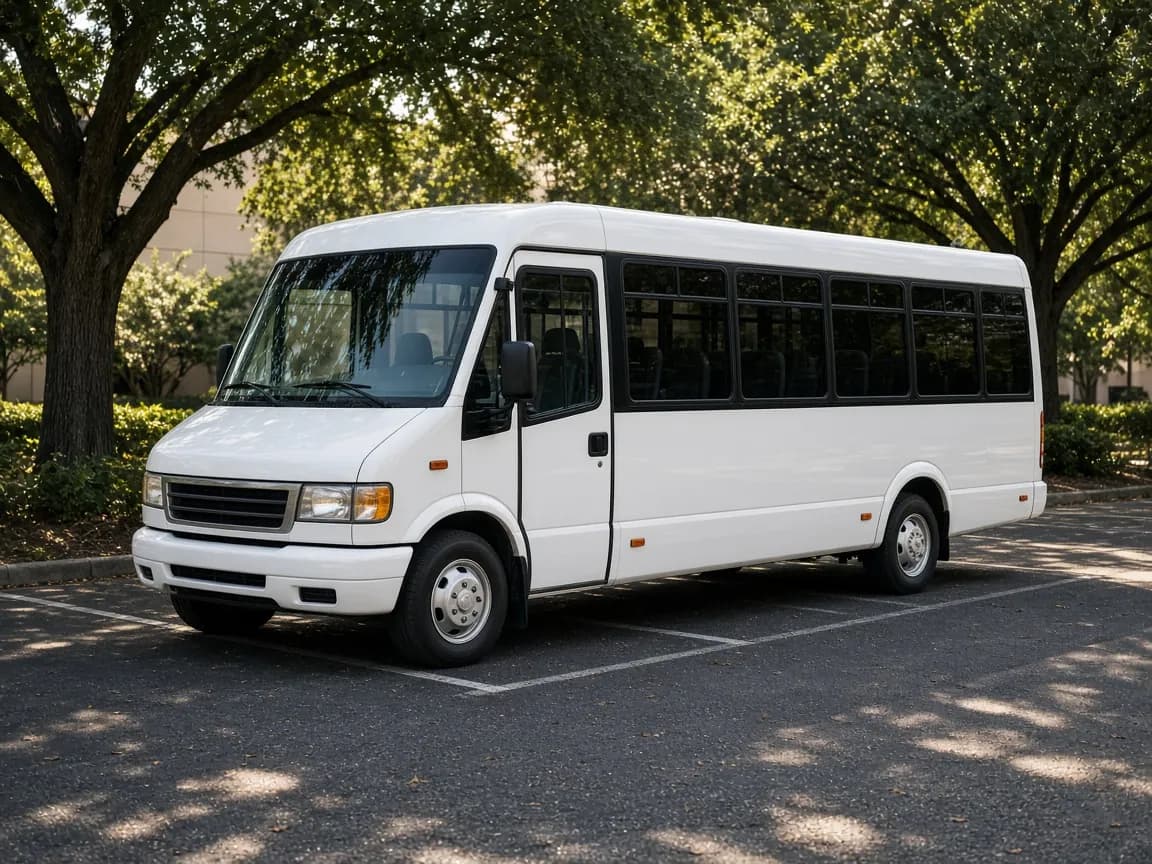
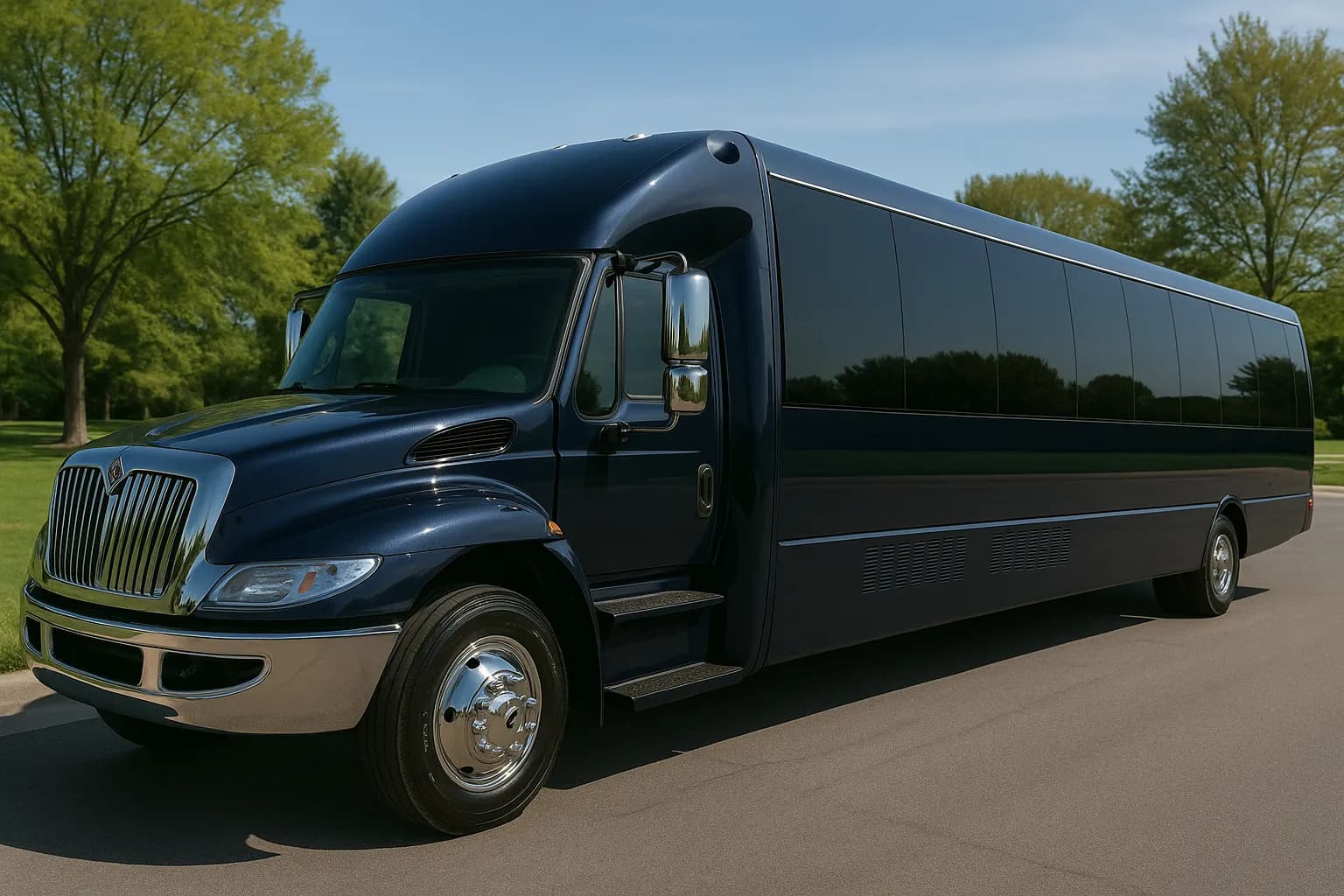
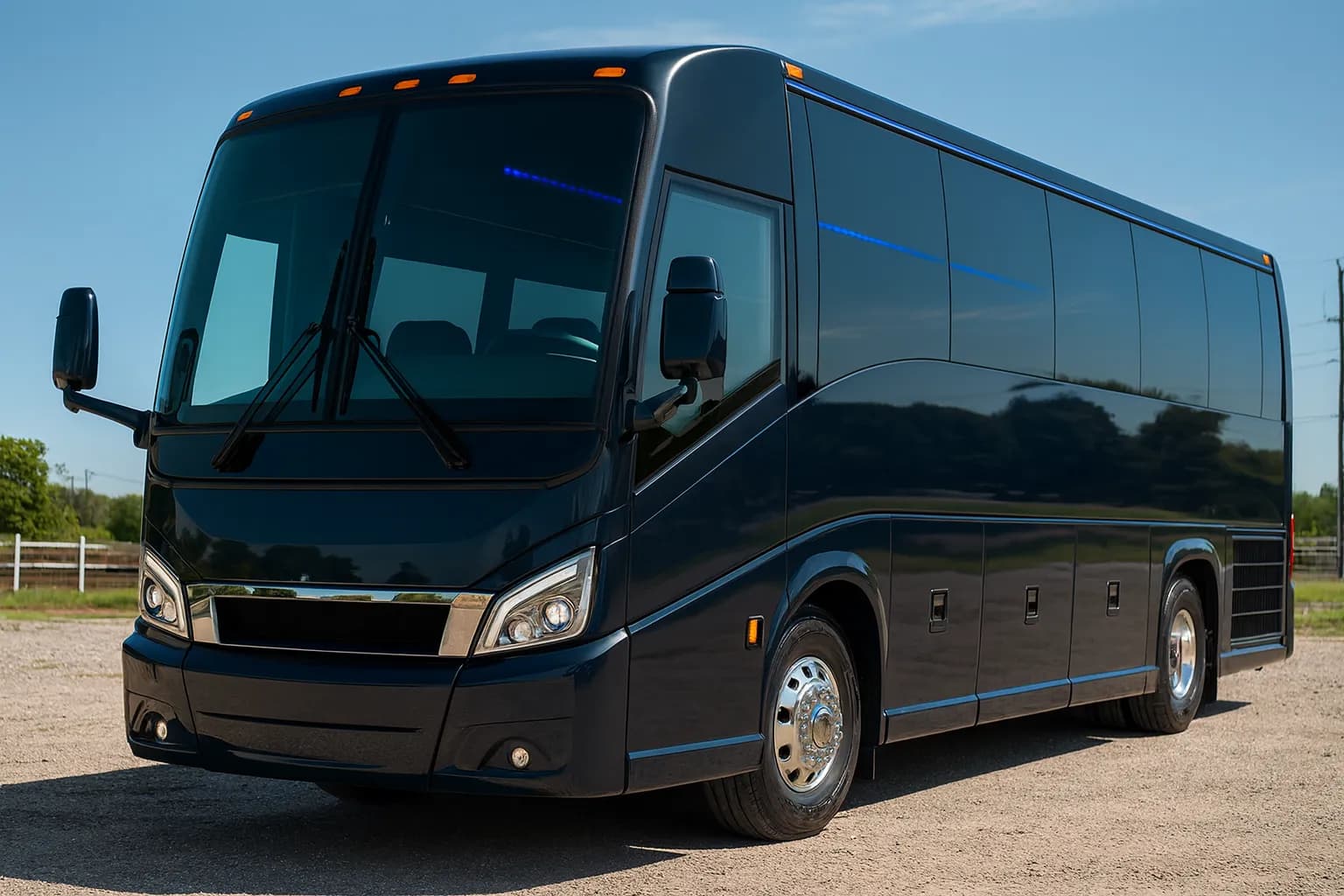
At 34 seats this bus takes a morning wave of about 30 with room left for tote bags and a few cartons of literature. A booth team of 15 to 20 is well served by the 24 passenger shuttle bus. At 30 to 36 a wave, the 40 passenger shuttle bus gives you breathing room. Past 40 in a single wave you want the 46 passenger shuttle bus or a full-size 56 passenger coach bus so the whole group travels at once. The guest count calculator turns a registration list into a vehicle plan.
Where the bus is allowed to stop
George R. Brown sits on the eastern edge of downtown, across from Discovery Green, a few blocks from Toyota Center and Daikin Park.
Which is lovely until the Rockets or the Astros play. Then the streets around the center seize up in the late afternoon, at precisely the hour your exhibit hall closes and four hundred people want to go back to the hotel. Pull the game and concert calendar for your show dates and pad the evening returns accordingly.
Large shows usually assign loading areas for private buses rather than letting them improvise. Your show organizer or exhibitor services contact knows where charter vehicles load, and the driver needs that in writing before the first morning. Stopping at the wrong door on Avenida de las Americas during the morning rush costs more time than any traffic jam will.
The wrong door on Avenida de las Americas at 7:50 am is worse than the right door ten minutes late.
Running the loop across a multi-day show
Show days run from before the hall opens to after it closes, and a first-time transport lead rarely budgets for that.
A convention loop can run from seven in the morning to seven at night without anybody padding it. About 11% of Houston inquiries with a stated duration asked for seven to eight hours, and a show day sits at or beyond that. If your riders only really move at the peaks, ask whether a morning block and an evening block with a gap between them prices better than one unbroken day.
Whatever the timetable ends up being, publish it in the places people already look: the hotel lobby, the group's app, the email that goes out the night before. Departure times from the hotel, return times from the center, and a phone number for the transport lead. Our convention shuttles page covers larger multi-bus programs.
Sample show day: 60 exhibitors from an Uptown hotel to George R. Brown
One 34 passenger shuttle on a published morning and evening timetable, with a midday relief run.
6:45 am
First departure carries the setup crew and their supply boxes, while the hotel lobby is still quiet.
7:50 am
Second departure. Doors open at 9:00, so this wave arrives with time to spare.
12:30 pm
Midday run for the shift swap, and for whoever needs an hour back at the hotel.
5:10 pm
First return once the hall closes.
6:20 pm
Second return, timed around the traffic already building for a Rockets game at Toyota Center.
7:30 pm
Optional hotel run out to a client dinner in Midtown.