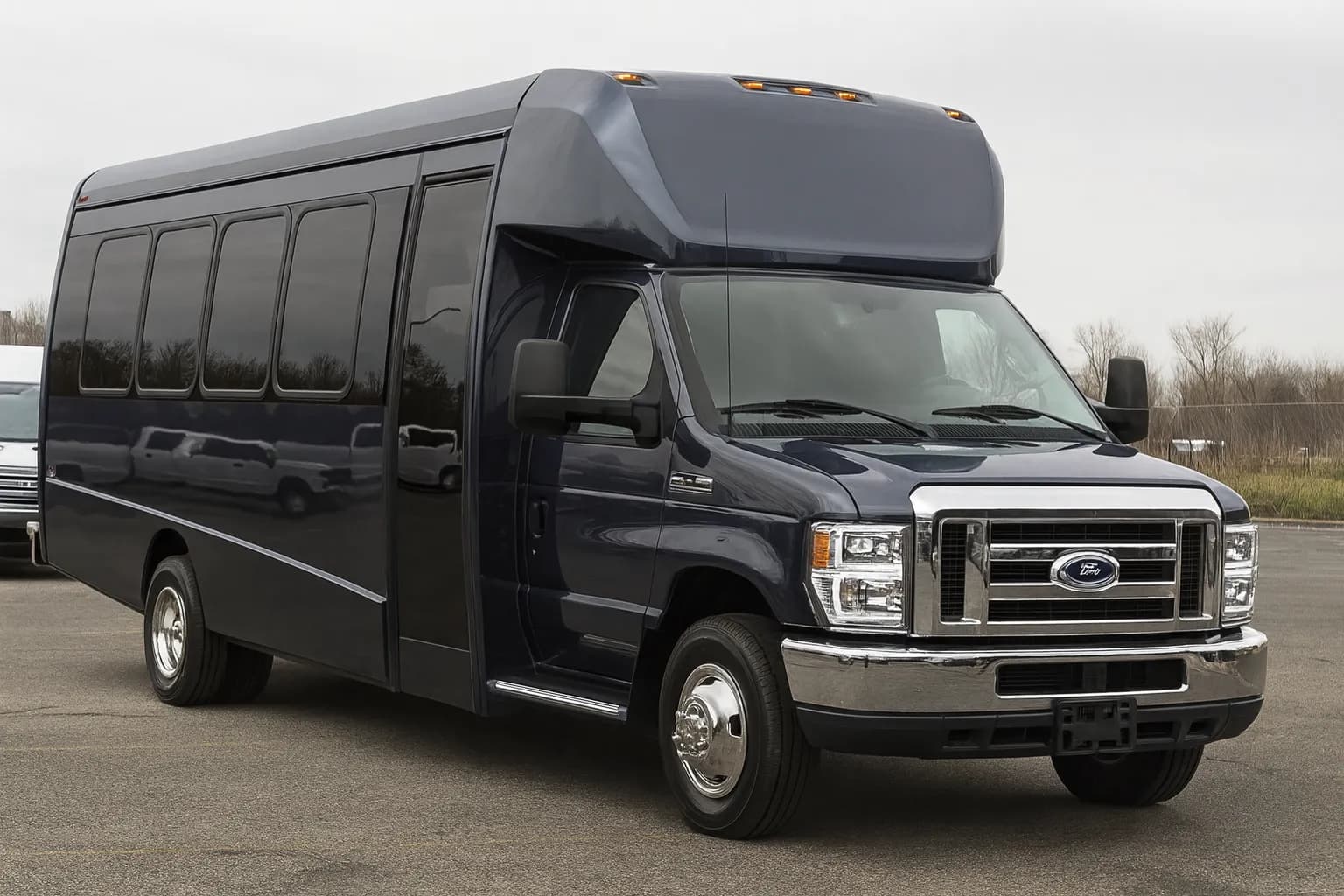
Why families travel together
Driving is the last thing anyone should have to think about that morning.
Relatives arrive from out of town without cars. Older family members should not be finding their way around an unfamiliar cemetery. Fifteen private vehicles trying to hold a line on a Houston freeway is its own small ordeal. One vehicle and one driver takes all of that away from the family.
There is a quieter reason as well. The time between the service and the cemetery is often the first chance relatives have had to sit down together. Keep it simple: no music unless the family asks for it, water and tissues within reach, and the front rows left for the people who need them.
The ride between the church and the cemetery is often where the family finally talks.
How many relatives ride
Funeral transport usually splits in two.
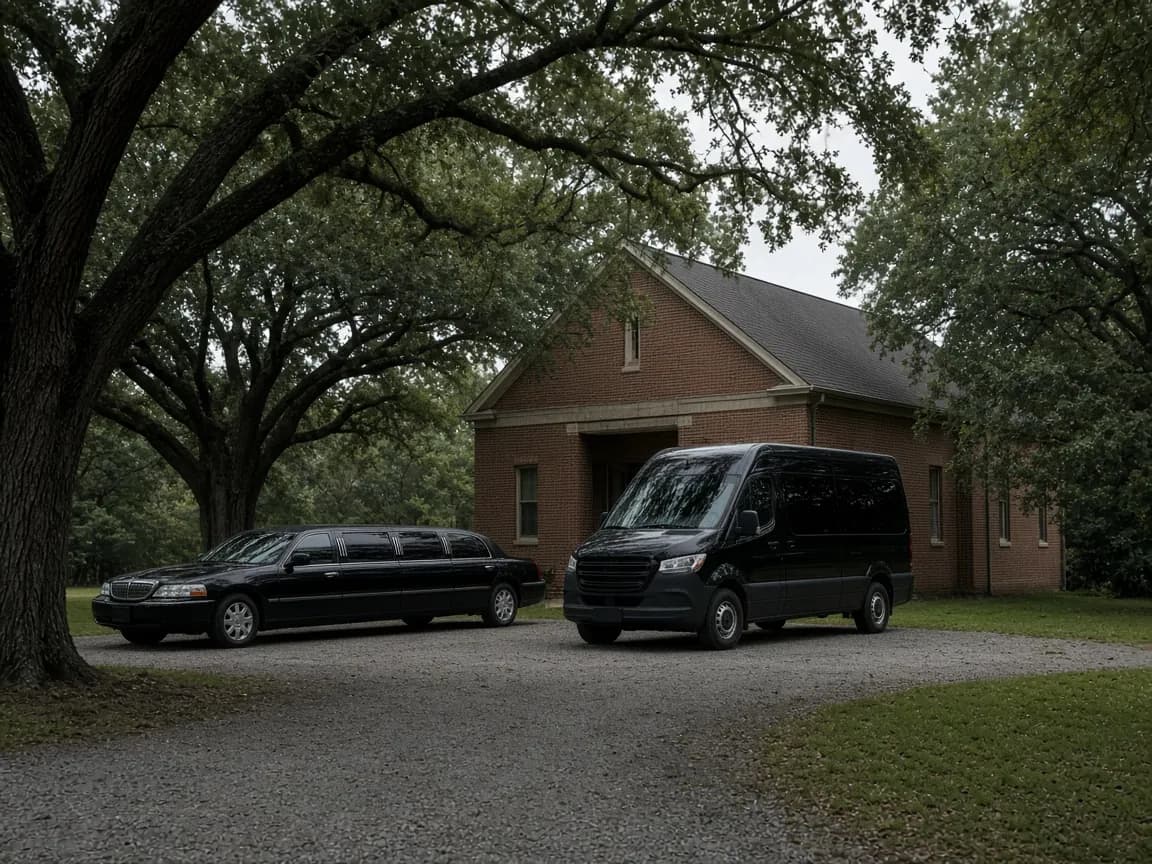
The immediate family rides in a limousine behind the hearse, and the shuttle carries the wider circle: grandchildren, cousins, and the close friends who flew in. In our Houston inquiry records, about 49% of requests with a group size were for 11 to 20 passengers and about 13% were for 21 to 30, and the wider circle at a large funeral sits in that second band.
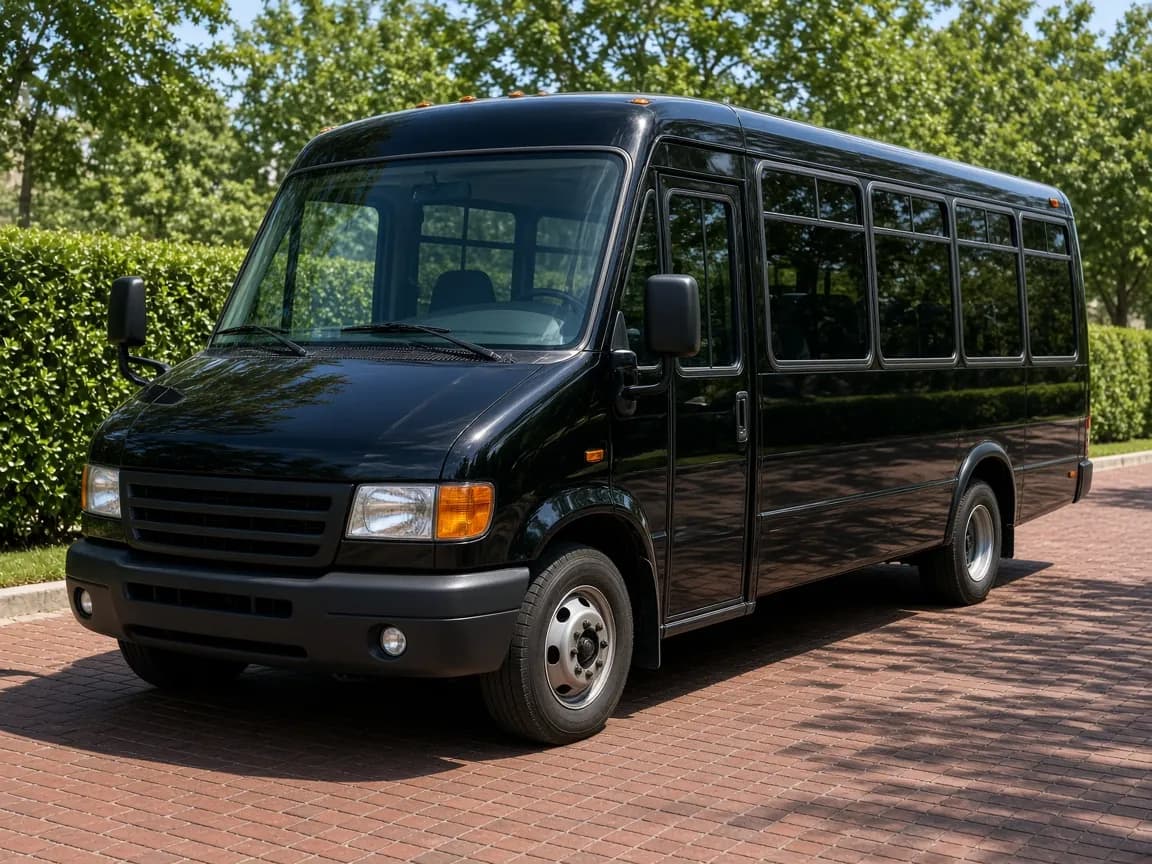
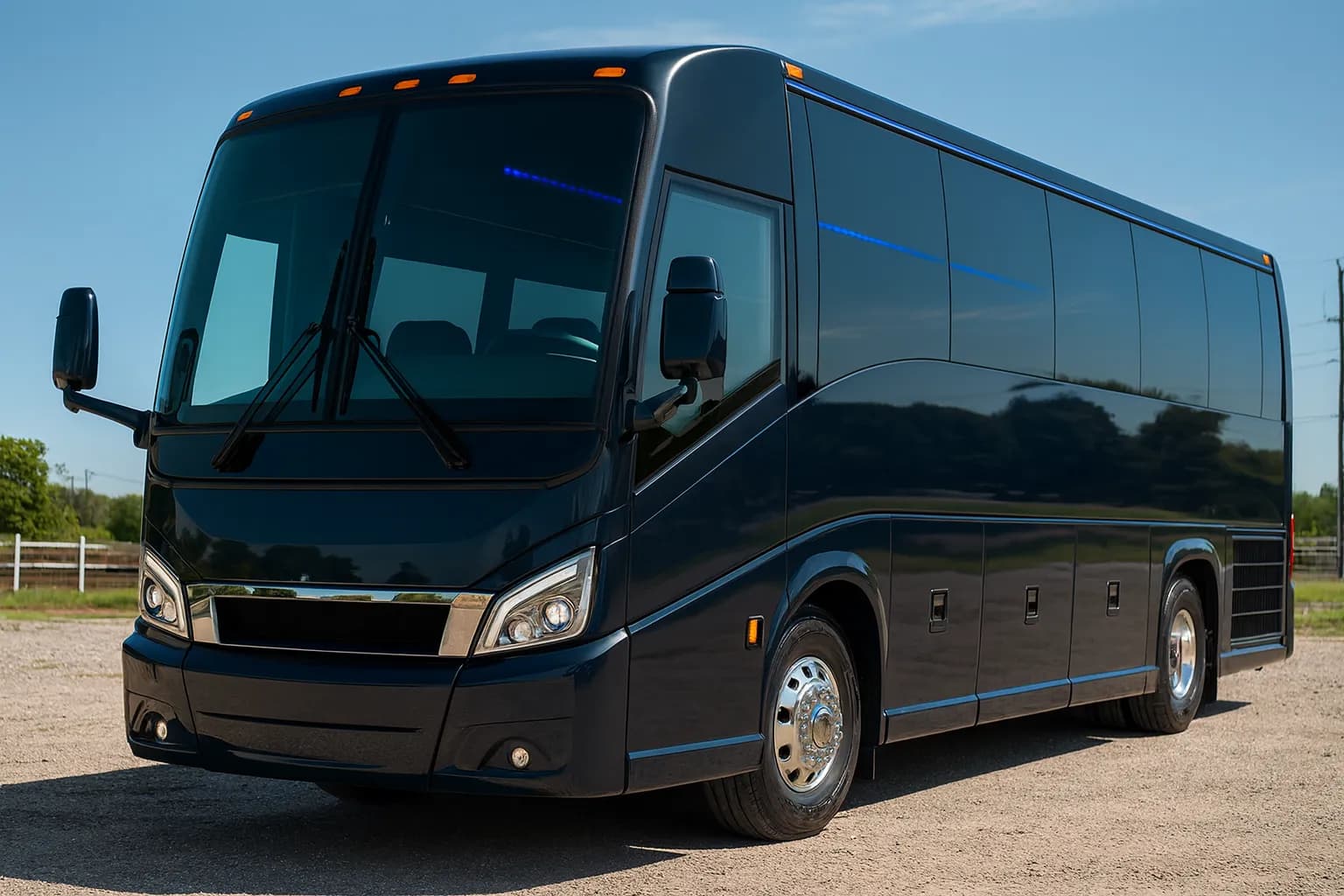
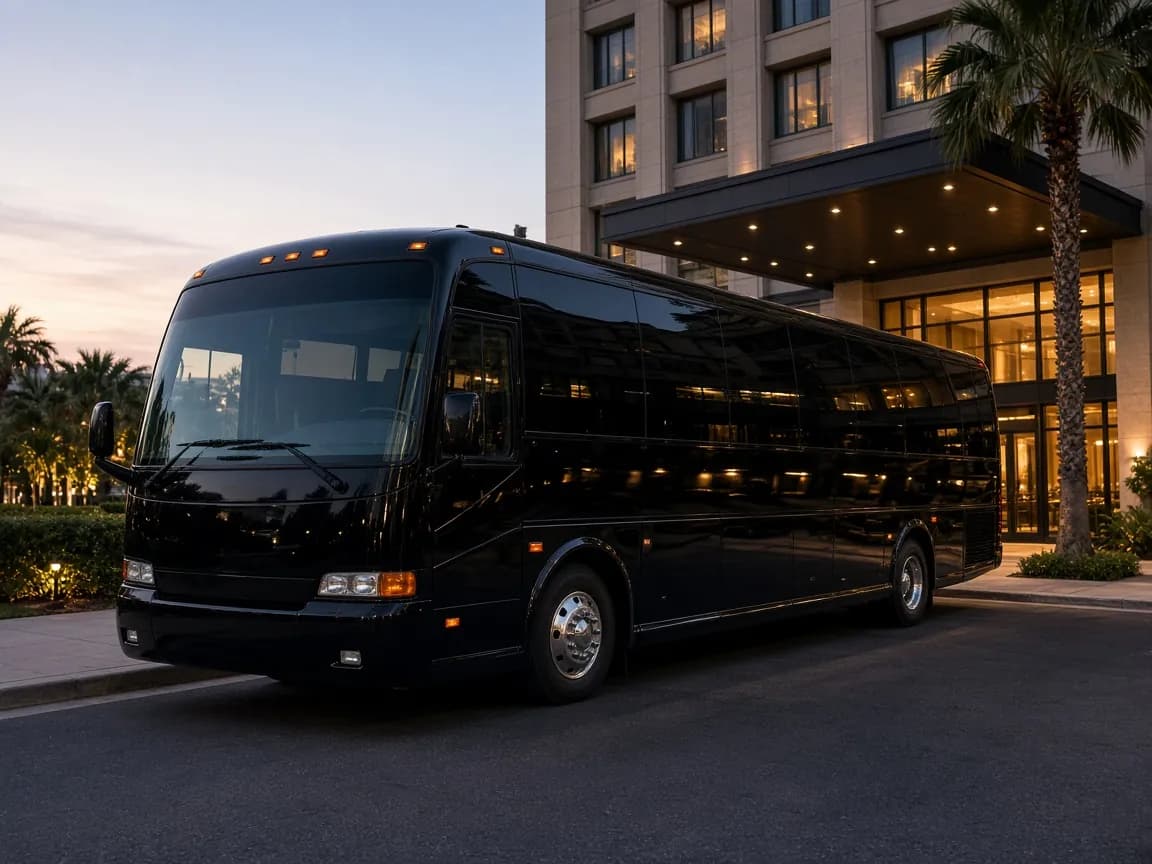
A shuttle this size is comfortable for 24 to 30 people with room for handbags, umbrellas and a folded wheelchair. For a family of 10 or 12, a 14 passenger executive sprinter is quieter and simpler to park. For closer to 20, the 28 passenger shuttle bus is enough. Beyond 30, the 36 passenger shuttle bus keeps everyone in one vehicle. For the immediate family, a 10 passenger black Lincoln stretch limo is the traditional choice behind the hearse.
Working with the funeral home
The director runs the day. Transport fits around that plan, not the other way round.
Share the funeral home contact with the booking, and ask the director where the shuttle should wait, when it should line up, and where it falls in the procession, which is normally directly behind the family limousine.
Processions move slowly and stay together, and Houston cemeteries can be a long way from the church. A service in the southwest with burial on the north side can mean 45 to 70 minutes in line. Give the driver the cemetery address, the gate to use and the section number ahead of time, because large cemeteries are difficult to navigate once you are inside the grounds.
Timing the service, the burial, and the meal
A funeral day almost always runs longer than the family expects.
About 53% of Houston inquiries with a stated duration asked for three to four hours and about 34% asked for five to six; this kind of day usually falls between the two. An hour of service, 30 to 60 minutes of procession, 20 to 30 minutes at the graveside and a meal afterward adds up quickly, particularly when relatives are collected from a home or a hotel first.
Veterans' burials need extra care. National cemeteries, Houston National Cemetery on the north side among them, schedule committal services in fixed slots, so the arrival time is not flexible and the rest of the day has to be built backward from it. The event timeline builder helps lay the steps out, and the route planner gives typical drive times between the areas where the church, the cemetery and the gathering place sit.
Fixed committal times do not move. Everything else in the day bends around them.
Small things that help on the day
Most of what makes the day easier comes down to one relative willing to handle the logistics, so everybody else can simply be present. That person holds the list of who is travelling, the driver's number and the schedule.
- Keep the first rows free for elderly relatives and anyone with a cane or a walker.
- Bottled water, tissues and a couple of umbrellas, because Houston weather turns quickly.
- Tell the booking about any rider who uses a wheelchair, since lifts vary from vehicle to vehicle.
- Ask for a final stop at the family home so relatives can collect their cars.
A veteran's service: 26 relatives, Missouri City to the north side
About eight hours, with the procession led by the funeral home.
9:15 am
Relatives gather at the family home in Missouri City and board together.
9:40 am
Arrive at the church for visitation, well ahead of the 11:00 service.
12:15 pm
Fall in behind the family limousine as the procession leaves for Houston National Cemetery.
1:30 pm
Committal service at the scheduled time, with military honors.
2:15 pm
Back south to the church fellowship hall, typically 50 to 70 minutes.
3:15 pm
A meal and time with the wider congregation.
5:00 pm
Return to the family home so relatives can collect their cars.