One big bus or two small ones?
Two halves do not cost what one whole costs. They rarely come close.
Each vehicle brings its own driver, its own hourly minimum, its own fuel and its own gratuity line, so doubling the vehicles pushes the combined total well past the single-bus figure. As a made-up illustration of the shape: one large bus at $1,900 for six hours against two smaller buses at $1,250 each makes $2,500 for the pair. Spread over 28 riders that is about $68 a head one way and about $89 the other. Your real quotes will land somewhere else, and now and then the pair comes close, which is why you ask for both.
For reference, across all the markets in our records about 37% of party-bus inquiries with a historical quote on file fell between $1,500 and $1,999, and about 17% fell between $2,000 and $2,499. Those cover every size and season and are past quotes rather than a price list; what you are offered depends on the Saturday, the hours, the bus and how far past the causeway you go. Put your own two numbers through the group split calculator once both are in hand.
Two buses is two of everything, including two hourly minimums.
When splitting is the smarter move
Geography makes the case better than money does.
Say half the group lives in Kingwood and the other half in Sugar Land. A single bus collecting both ends burns well over an hour on Beltway 8 or US-59 before the day has started, and that hour is billed. Two buses, each starting near its own riders and meeting at the destination, can shorten the clock for everybody.
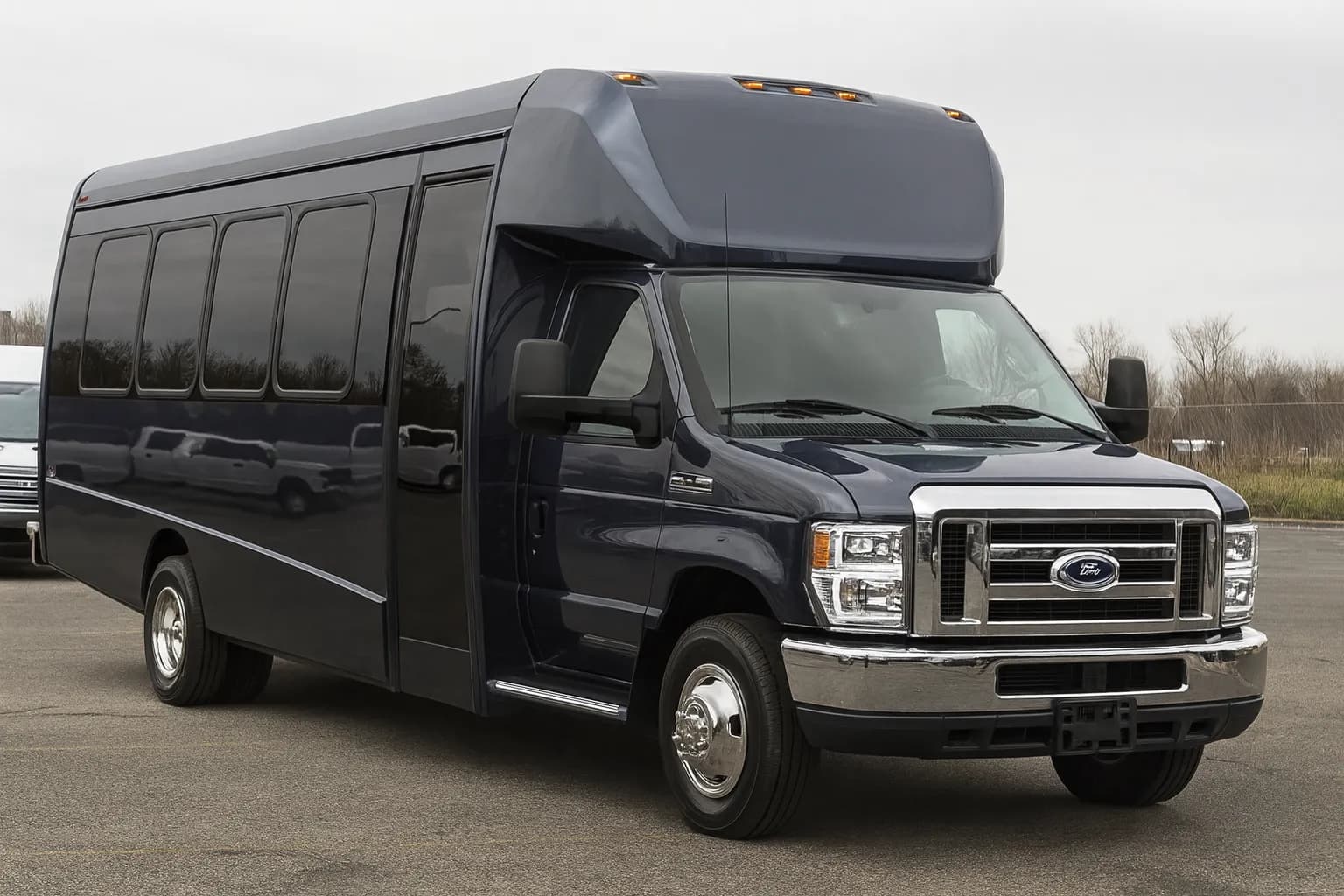
Availability makes the other case. In Houston, about 5% of the inquiries we have on record with a headcount were for 31 to 40 passengers, and the national party-bus figure for that band is also about 5%. That is a thin band to shop in, and rodeo weekends, prom Saturdays and December are when everybody shops in it at once. If the 32 is gone, a 16 passenger party bus beside an 18 passenger party bus is a workable plan B. Its cost is social: two playlists, two coolers, and someone always decides they got the quiet bus.
A beach day on a bus this size
Sand is the thing nobody thinks about until the ride home.
The island is the classic long day for a big Houston group. The run down I-45 from central Houston typically takes 60 to 75 minutes when the causeway behaves, longer on a summer Saturday morning, which makes more than two hours of round-trip road time where the bus itself is the entertainment. About 11% of Houston inquiries with a duration attached asked for seven to eight hours, and beach days are a fair share of why that band fills up.
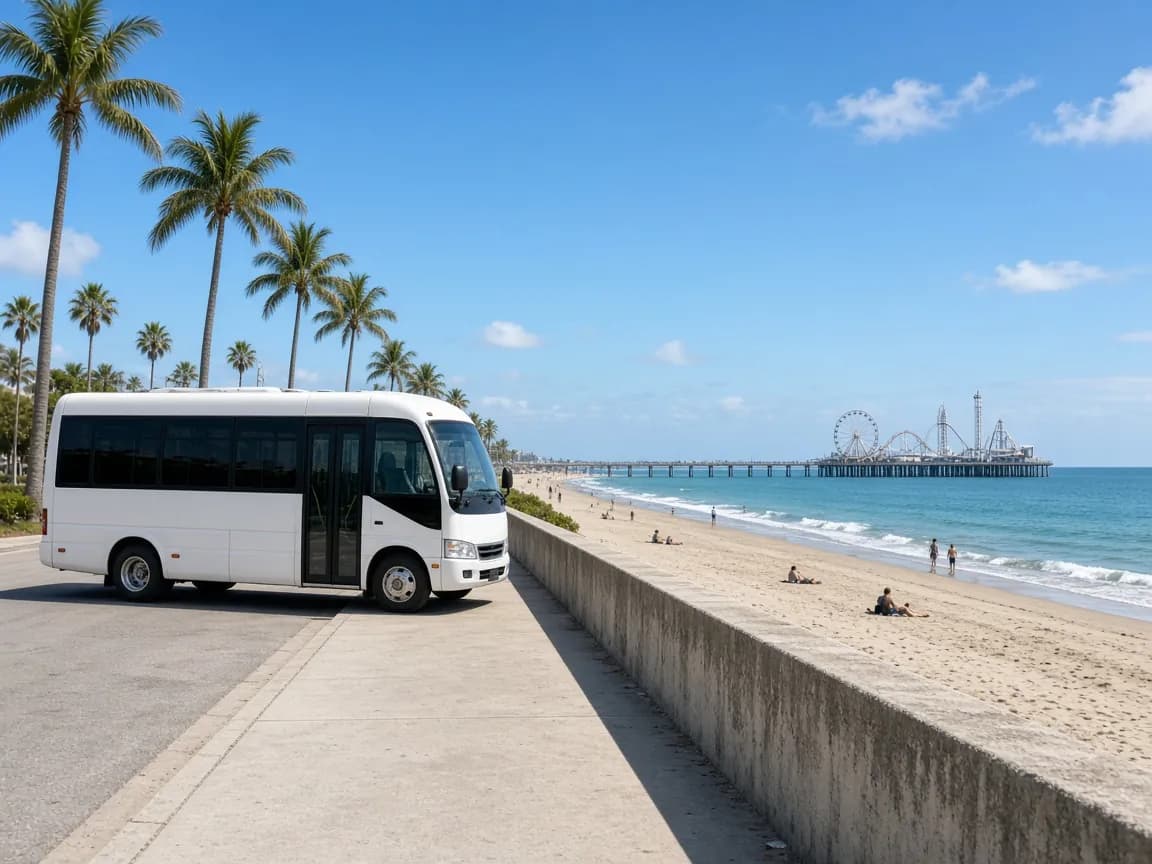
On the island, think about where something this long can stop. Seawall Boulevard is wide with long runs of open curb, so a drop near Pleasure Pier or at a beach access point is straightforward. The Strand is older and tighter, with short blocks, so expect a drop at the edge and staging somewhere else. Sand on upholstered benches is a real issue: bring towels to sit on and dry clothes for the return, and ask whether the vehicle carries a cleaning charge for sand. Our Galveston trips guide and the Galveston location page cover cruise terminal drops and seasonal events.
Towels on the benches. The ride home is an hour long either way.
Staggered pickups without losing an hour
With 28 people, door-to-door collection is not a plan. It is a morning.
What works is two or three gathering points arranged in a line toward the destination. For an island day that might be a lot in the Heights and then a shopping center in Pearland or Webster right off I-45. Ten people boarding takes about ten minutes if they are standing at the curb when the bus arrives, and twenty if they are not.
Give each stop a captain holding everybody's number, publish a boarding time ten minutes ahead of the real one, and agree out loud that the bus leaves on schedule. Map the order in the route planner before you request hours, because the pickup loop is billed time like any other.
- Choose lots where cars are allowed to sit all day, and ask the property if you are unsure.
- Reverse the order coming home so the first group on is not also the last group off.
- Send the driver's arrival window to the stop captains rather than the full group chat.
What 32 seats holds once the gear is in
Equipment eats seats, and a party bus has nowhere else to put it.
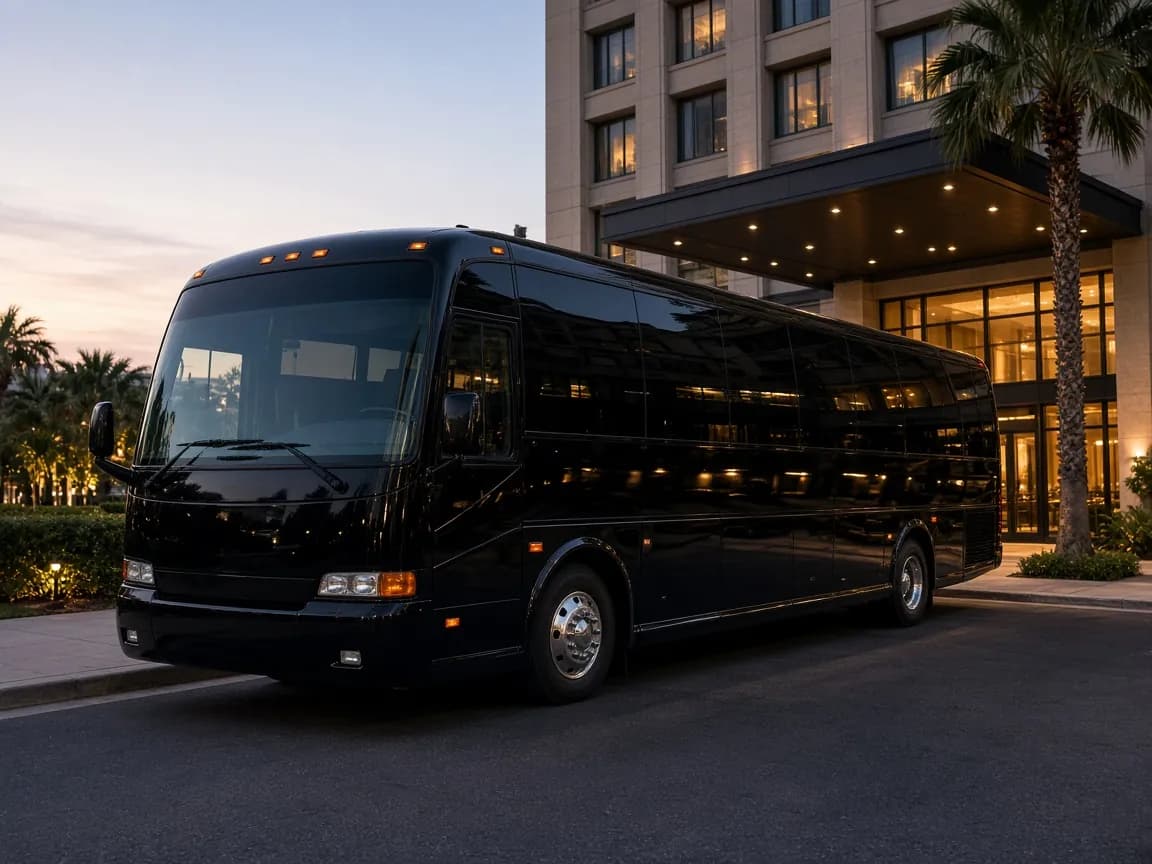
A tailgate crew arrives with folding chairs, a canopy, a grill and four or five full coolers, and there is no luggage bay underneath, so all of it rides in the cabin with you. Loaded like that, treat this bus as 24 to 26 people plus their kit. For a game at NRG Stadium, oversize vehicle parking is sold and assigned differently from car parking, so the pass is a job for the week before, not game day. The tailgating page walks through it.
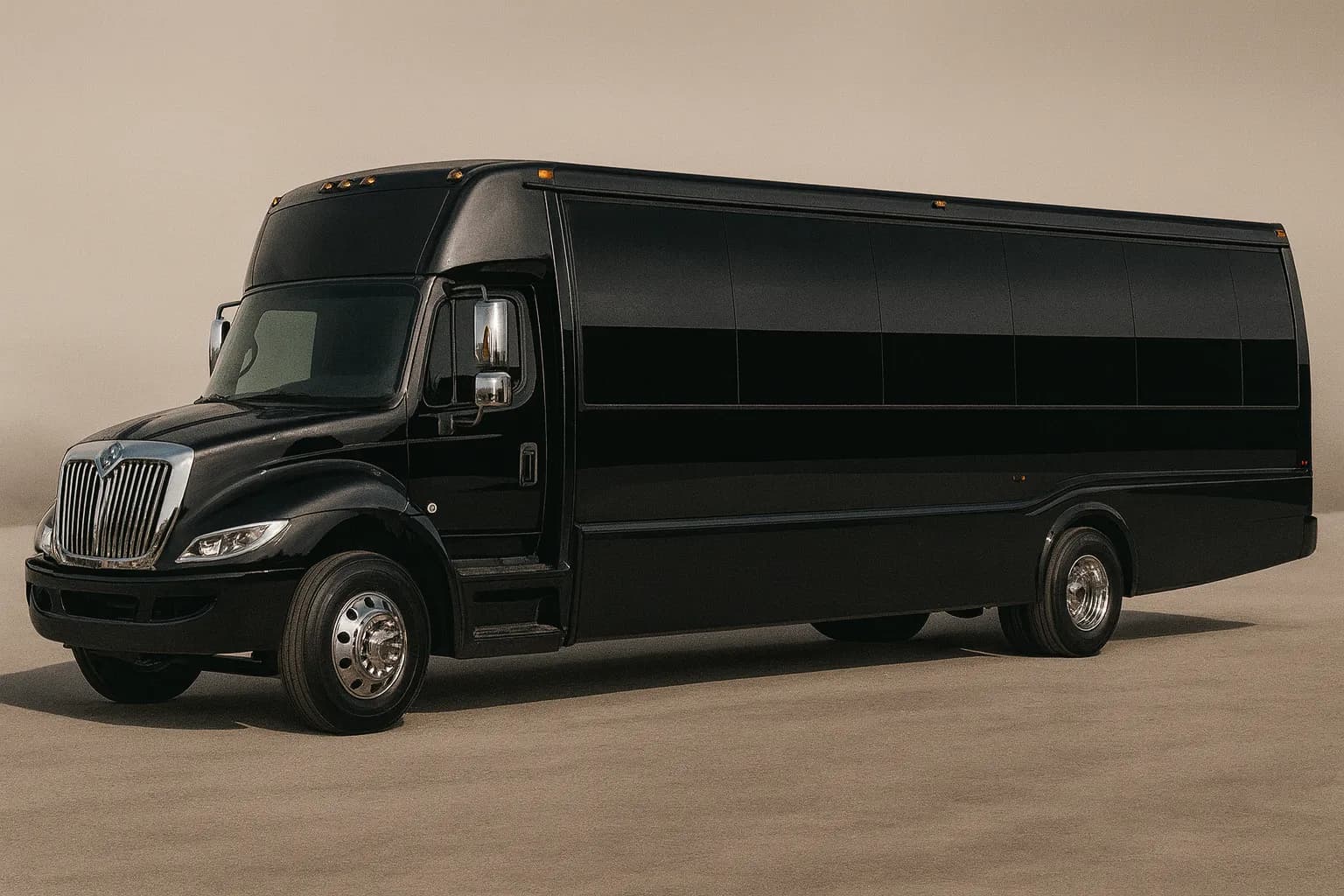
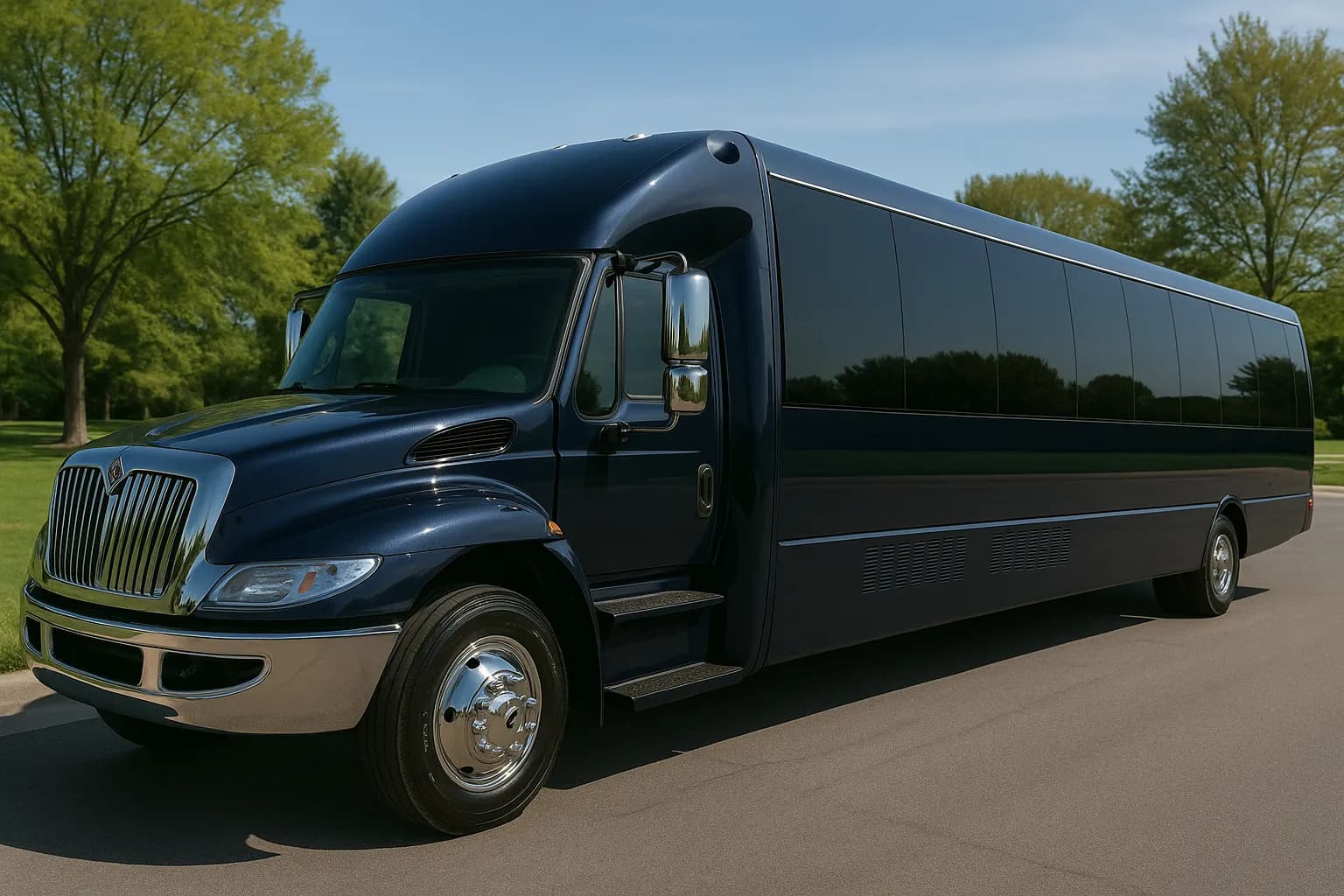
If the crew is closer to 20 and gear was the only reason you were sizing up, the 22 passenger party bus may cover it. If you are genuinely at 30 bodies or more, take the 34 passenger party bus. The capacity finder lists everything that fits a given count.
28 coworkers and friends: Heights and Webster to the Seawall
An eight-hour Saturday in June, two pickup lots, one island drop zone.
9:00 am
First pickup at a lot near I-10 and Heights Boulevard. Sixteen riders, coolers and beach bags aboard in about ten minutes.
9:45 am
Second pickup off I-45 in Webster, where the Clear Lake half left their cars.
10:40 am
Over the causeway and down to Seawall Boulevard near Pleasure Pier. The bus stages off the Seawall until called.
2:30 pm
Reload for the ten-minute ride to the Strand for a late lunch and a walk around.
4:15 pm
Off the island before the evening backup builds toward Houston.
5:00 pm
Webster drop, then the Heights lot by about 5:50, inside the eight hours.