What each district does to a bus
The districts are close together and behave nothing alike.
Downtown and the Theater District run on one-way streets. On show nights the curbs at the Wortham Center, Jones Hall, the Hobby Center and the Alley Theatre are shared with valets and rideshare, so name a side-street corner rather than a venue. Toyota Center, Daikin Park and the George R. Brown Convention Center pull heavy traffic in the hour before anything starts.
Midtown and Washington Avenue work in opposite directions. Midtown's bars cluster, so the bus drops at one end and everybody walks. Washington Avenue is a long strip, and the bus is what connects its ends. Lots along both are private and posted for towing.
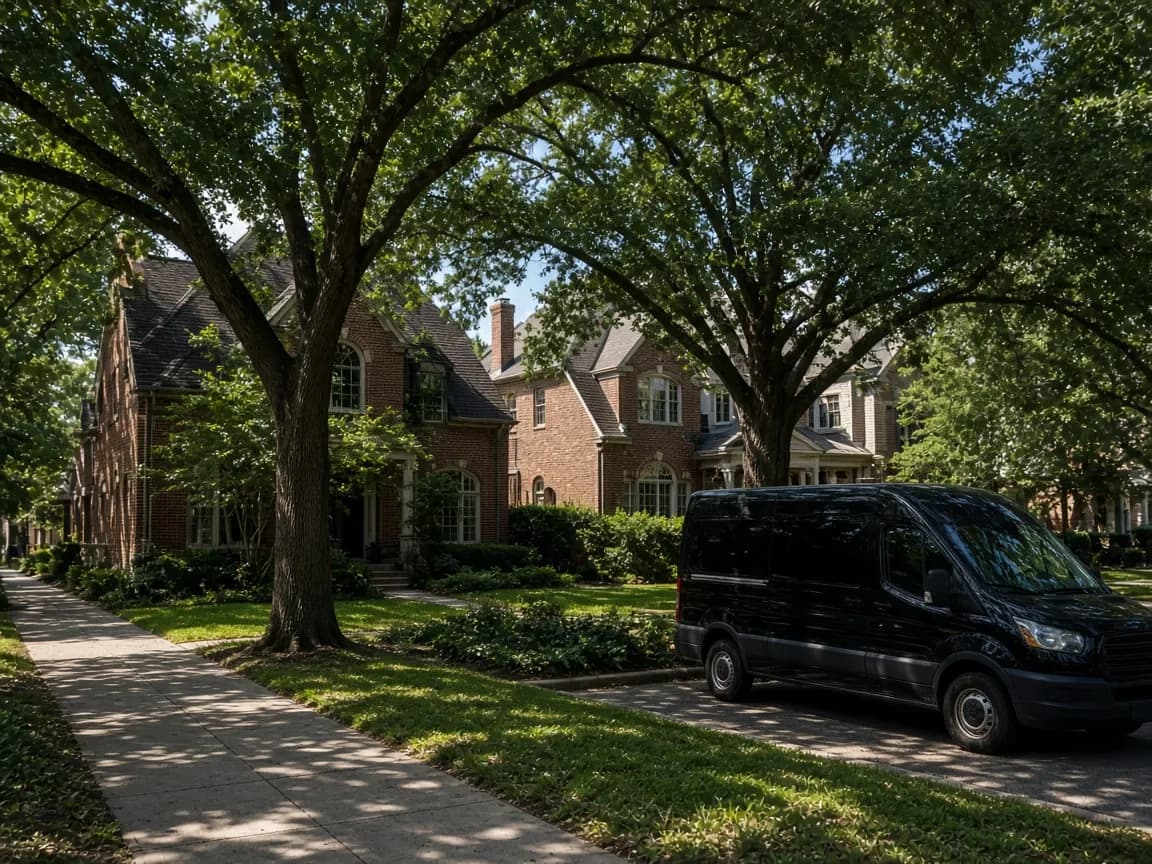
The Heights, Montrose and EaDo each have a quirk. Heights side streets are narrow with cars parked down both sides, so drivers stay on Heights Boulevard, Yale and the main roads near the White Oak Drive bars. Westheimer through Montrose is tight, with sharp turns into small lots. EaDo's wide streets make staging easy, right up until there is a match at Shell Energy Stadium.
Name a corner, not a venue. The venue will have forty people standing outside it.
Uptown, the museums and NRG
The Galleria and Uptown mean dinner reservations, hotels and the Waterwall as a photo stop on the way somewhere else.
It also sits on the West Loop between I-10 and US-59, one of the most congested stretches of road in Texas, so any plan crossing it at 5 pm needs another 15 to 20 minutes written in.
The Museum District and Hermann Park are mostly daytime trips. The Texas Medical Center just south carries the heaviest weekday traffic in the city, and no bus fits a hospital garage, so curbside pickup at a main entrance is the arrangement to make. At NRG Park, for Texans games, the Houston Rodeo and stadium concerts, buses use designated lots and leaving is the slow half. Fix the lot and a meeting time before you walk in, while you can still hear each other.
Rings, spokes and where the time goes
Houston is rings and spokes, and your schedule lives or dies on which you are using.
Loop 610 circles the core, Beltway 8 the inner suburbs, the Grand Parkway (SH 99) farther out again. The spokes are I-10, I-45, US-59/I-69, US-290 and SH 288. Run straight along a spoke and the timing is predictable. Cut diagonally and you are borrowing part of a ring to do it, which is where the minutes go.
Weekday rush points toward downtown and the Galleria in the morning and away from them from about 3:30 to 6:30 pm. A Friday pickup in the Heights bound for the Galleria at 5 pm crosses the West Loop at its worst; the same trip at 7:30 takes half as long. TxDOT schedules weekend freeway closures too, so check the week before. The route planner gives typical times between neighborhoods.
Same two addresses, same bus, two hours apart. Half the drive.
Getting a group to IAH or Hobby
Bush Intercontinental (IAH) is about 23 miles north of downtown by I-69/US-59 or the Hardy Toll Road: typically 30 to 45 minutes, nearer an hour at weekday peaks, plus 10 to 15 more from the Galleria. Hobby (HOU) is southeast off I-45, typically 20 to 30 minutes from downtown and closer still to NRG Park. IAH carries most international flights; Hobby is Southwest country.
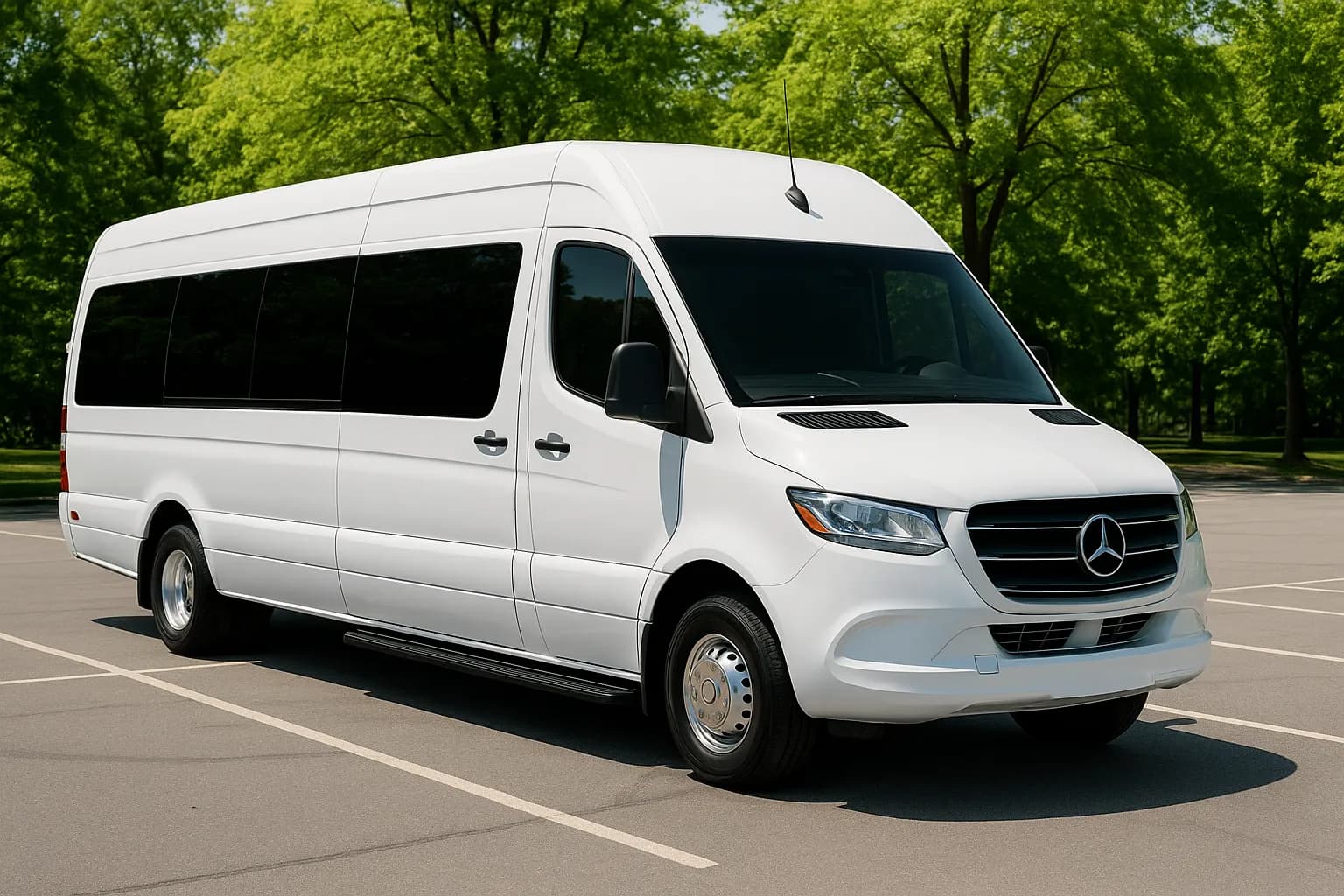
Luggage changes the vehicle. A party bus has benches and nowhere to put a suitcase, so ten people with checked bags are happier in a 14 passenger executive sprinter. Large vehicles cannot sit at the arrivals curb either, so share flight numbers and agree a meeting point. See airport transportation for the rest.
Which vehicle suits a night in the city?
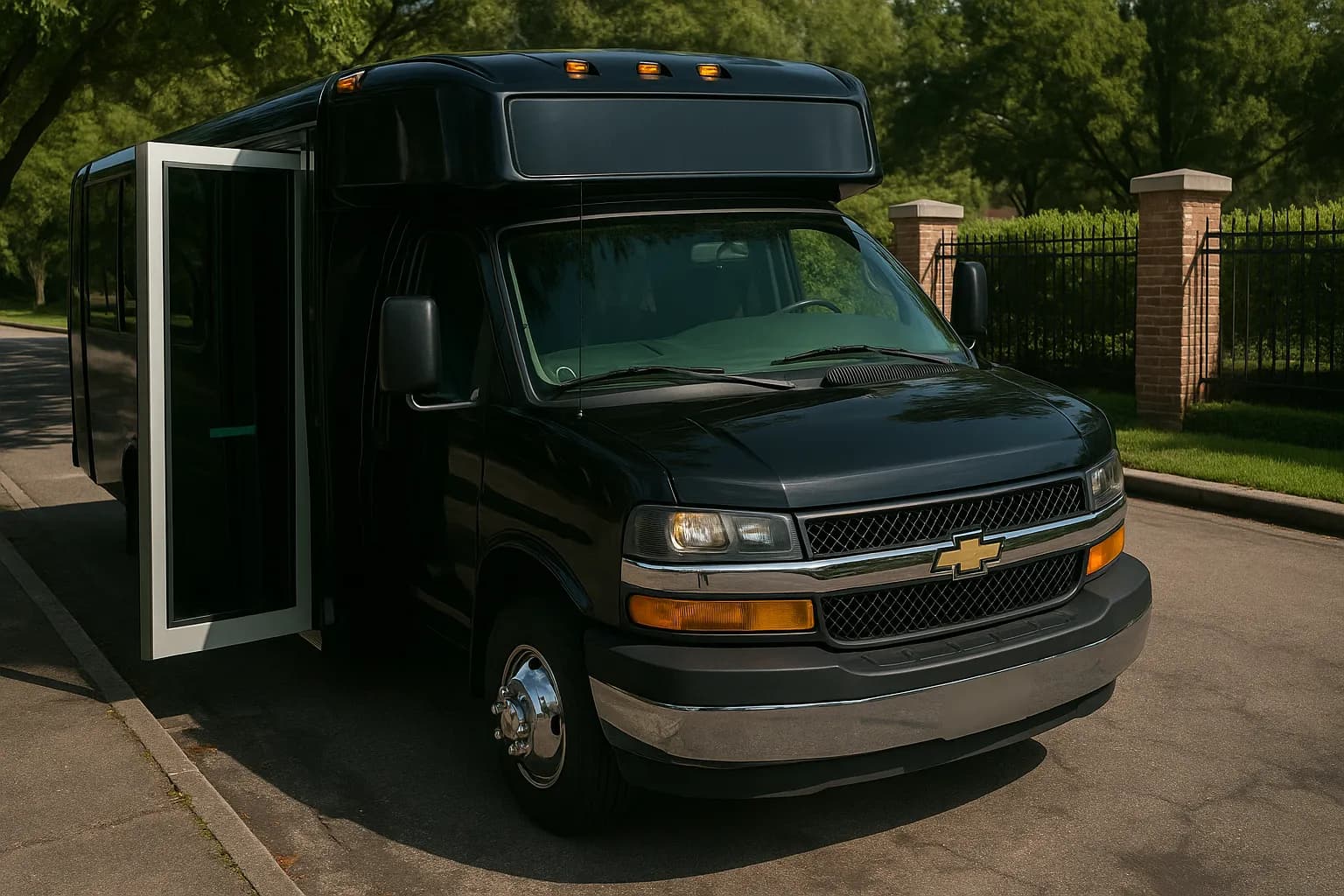
Among Houston inquiries in our records with a vehicle type noted, about 72% mentioned a party bus, about 16% a limousine and about 7% a Sprinter van. In-town nights are social and multi-stop, which is why the 20 passenger party bus comes up over and over for groups in the mid-teens.
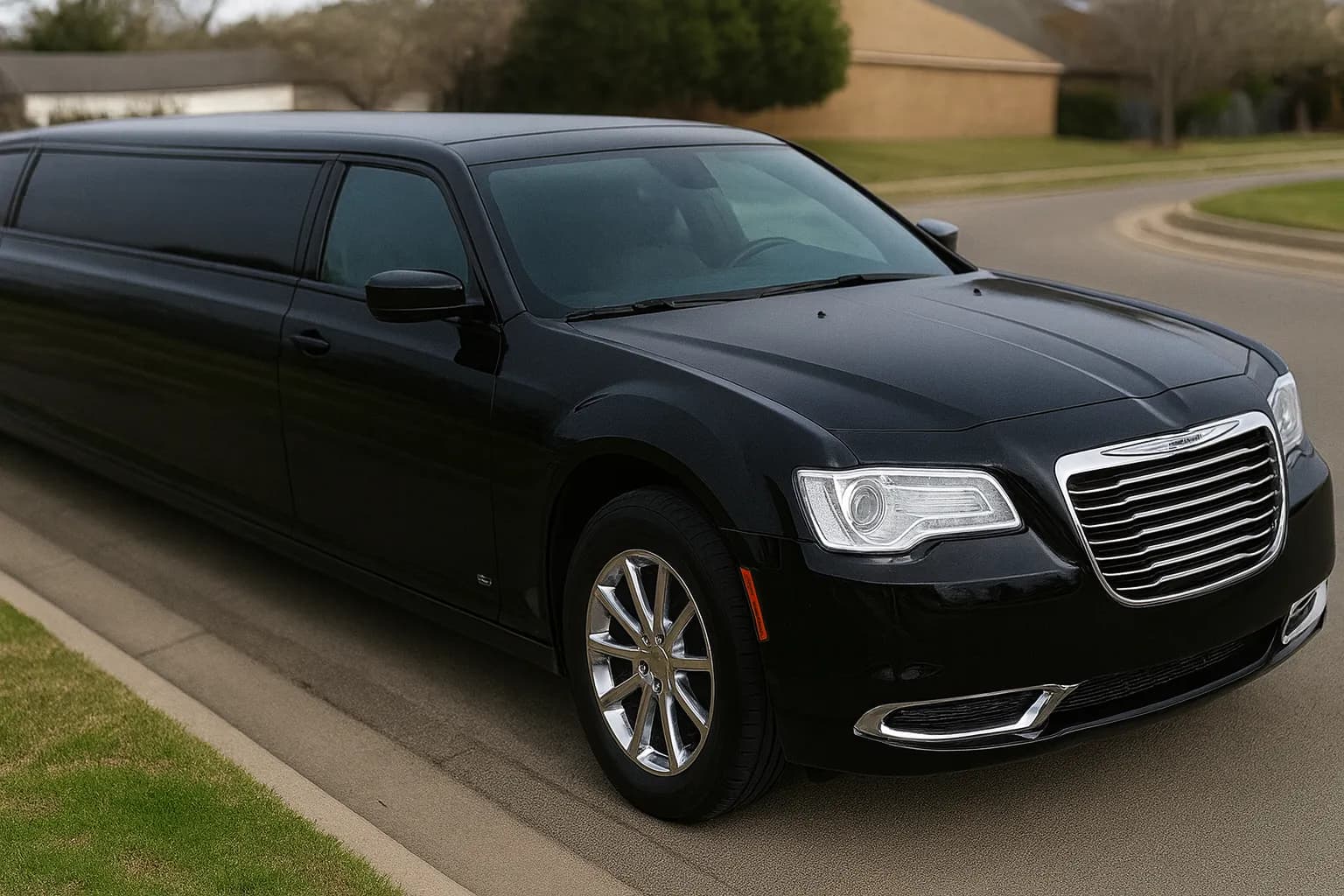
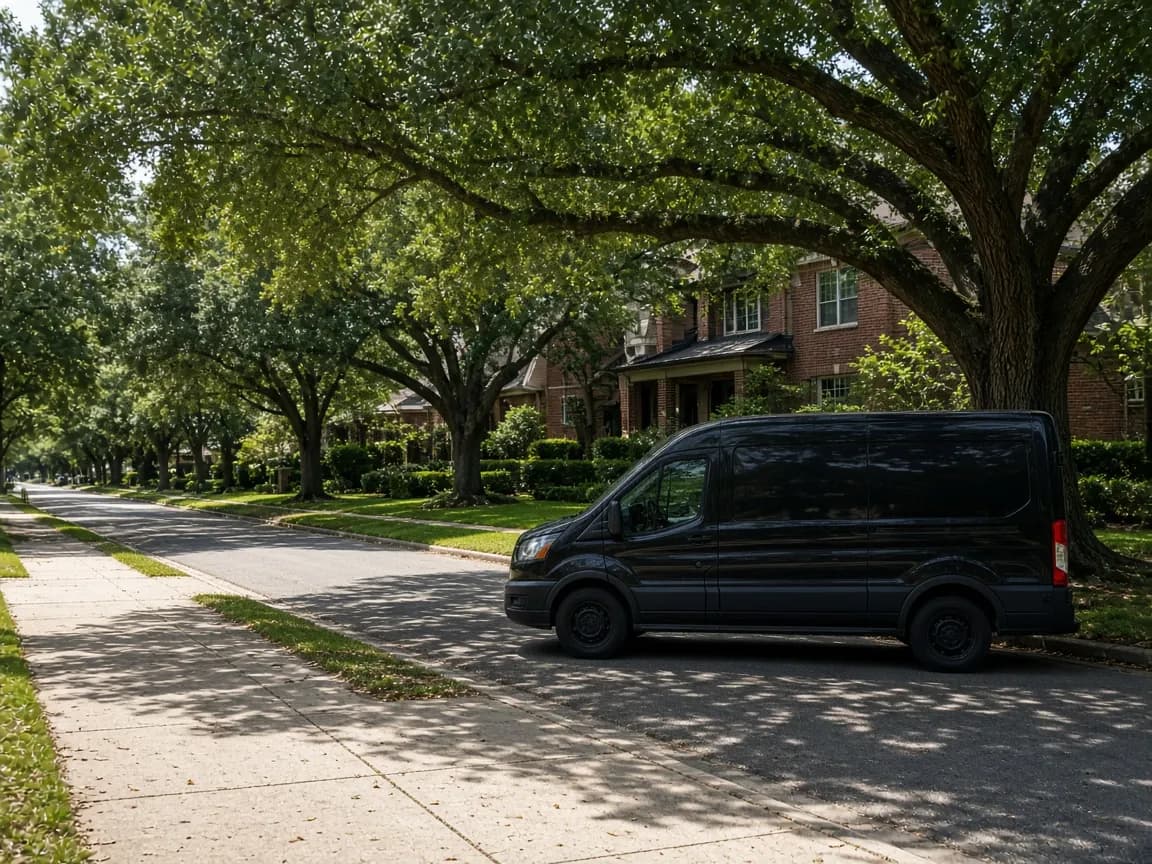
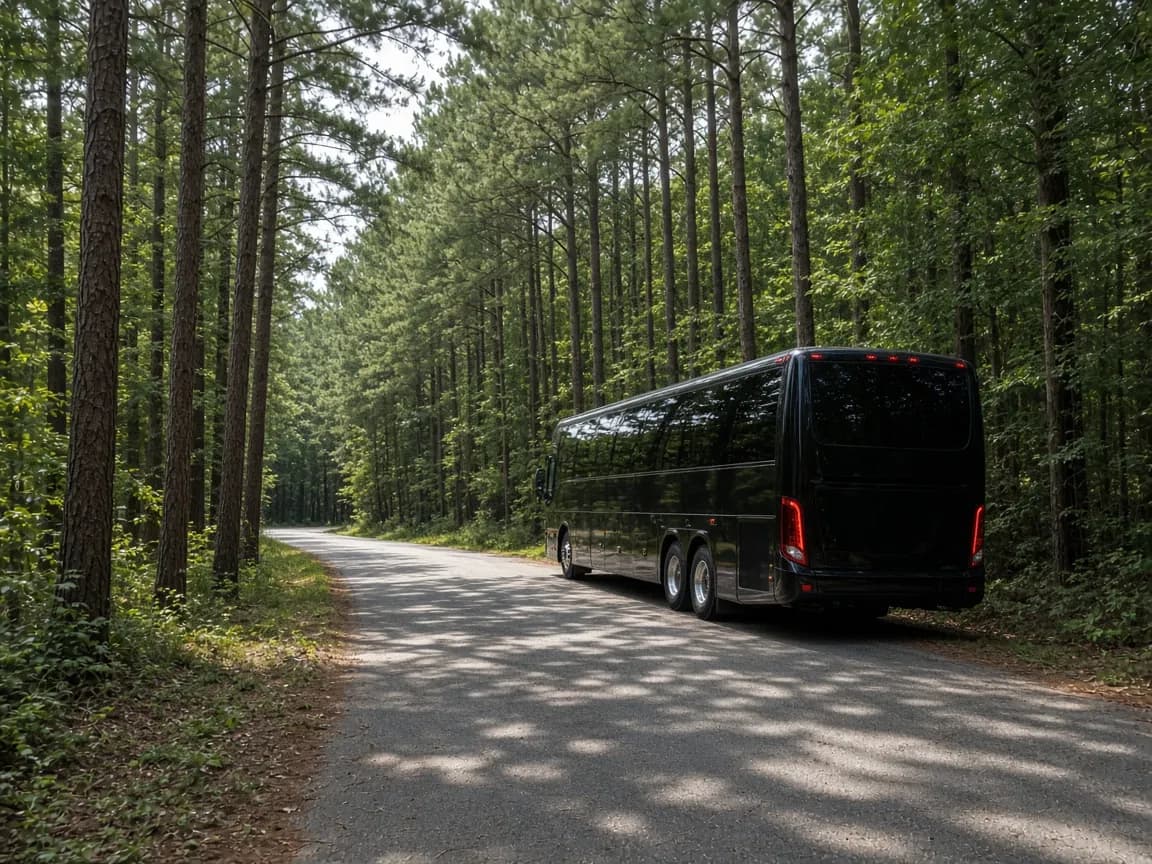
The streets argue the other way. A limo or a sprinter takes corners a 40-foot bus has to think about, and fits lots a bus drives past. The 10 passenger Black Chrysler 300 limo suits a dinner-and-show night, and the 14 passenger limo sprinter keeps the party feeling for 12 to 14.
About 72% of Houston-area inquiries with a city on file came from Houston itself, the rest from surrounding communities. For pickups outside the city line, see Bellaire, West University Place and The Woodlands.
How many hours is a Houston night?
About 53% of Houston inquiries with a requested duration asked for three to four hours, and about 34% for five to six. Three to four is plenty inside one quadrant, say dinner in Montrose and drinks in Midtown. Five to six is what a night crossing town needs, because a Heights to Galleria to EaDo loop burns an hour just driving. For a night out or a bar crawl, the route stop planner puts the stops in a sane order.
About 47% of Houston inquiries with a historical quote on file fell between $1,000 and $1,499, and about 30% between $300 and $999. Those are past quotes across every vehicle and date, not current prices, and yours turns on date, vehicle, hours and route. The party bus cost guide explains what moves the number.
The hour you skip is always the one at the end of the night.
Sample Saturday: 18 friends, dinner, a show and a Washington Avenue nightcap
Six hours on the 20 passenger party bus, one pickup address, three stops, all inside Loop 610.
5:30 pm
Pickup off Westheimer in Montrose. The bus holds the main road, the group walks half a block.
5:50 pm
Early dinner on 19th Street in the Heights, with the bus staged on a wider road nearby.
7:30 pm
Ten minutes east to White Oak Music Hall for the headliner.
10:15 pm
Pickup at a corner agreed before the show, away from the exit crowd.
10:35 pm
Washington Avenue. Drop at one end, walk between two bars, pickup at the other at 11:10.
11:25 pm
Back in Montrose, inside the booked six hours.