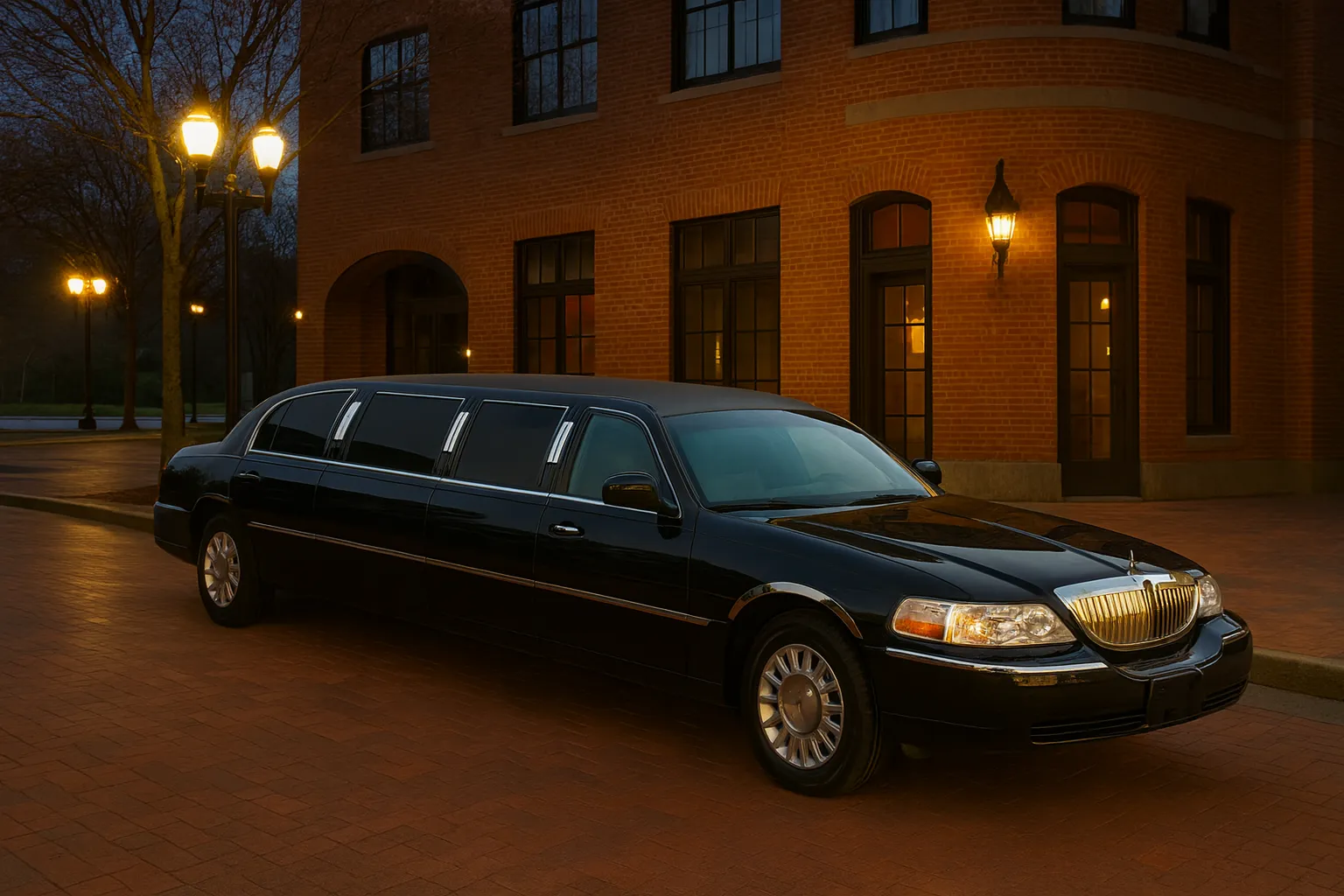
Why this shape still reads as formal
Ask anyone to draw a limousine and you get this car.
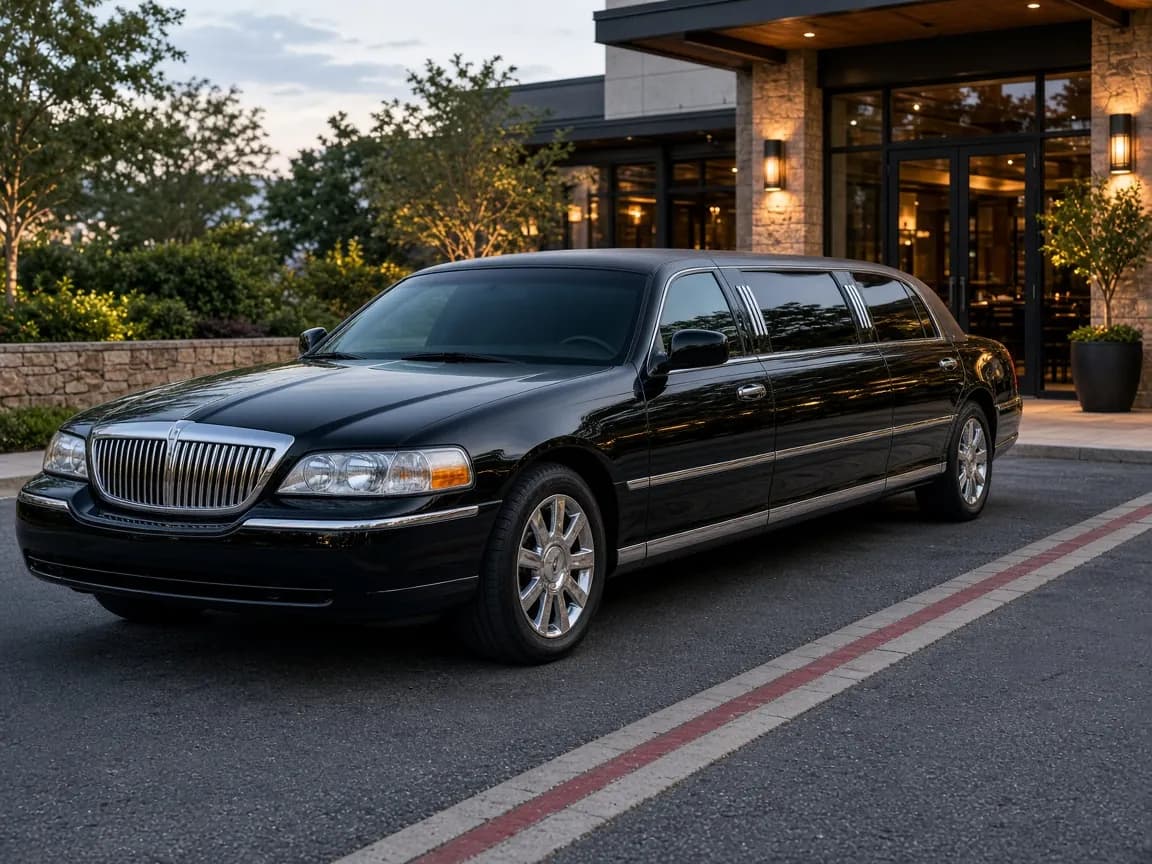
A long sedan, a flat roofline, a chrome grille, an extra set of windows in the middle. The Lincoln stretch has been the default formal car in this country for decades, and the familiarity is the whole point. Nobody standing outside a memorial service or a fiftieth anniversary dinner has to work out what the vehicle is saying. It simply looks correct, and then it gets out of the way.
In black it is also discreet. It does not gather a crowd in a hotel porte-cochère the way a Hummer limo does, and it hides the thin film of road dust that any car picks up crossing Loop 610. For clients, for board members, and for older relatives, understated is the goal rather than a compromise.
The best compliment this car gets is that nobody mentioned it.
The family car at a funeral
Grief is a bad time to be navigating.
This vehicle is featured on our funeral transportation page, and families use it to keep the closest relatives together between the house, the service, and the cemetery. Nobody should be driving, parking, or trying to follow a procession through streets they do not know. A family car also settles a quieter worry: the people who most need to arrive together do.
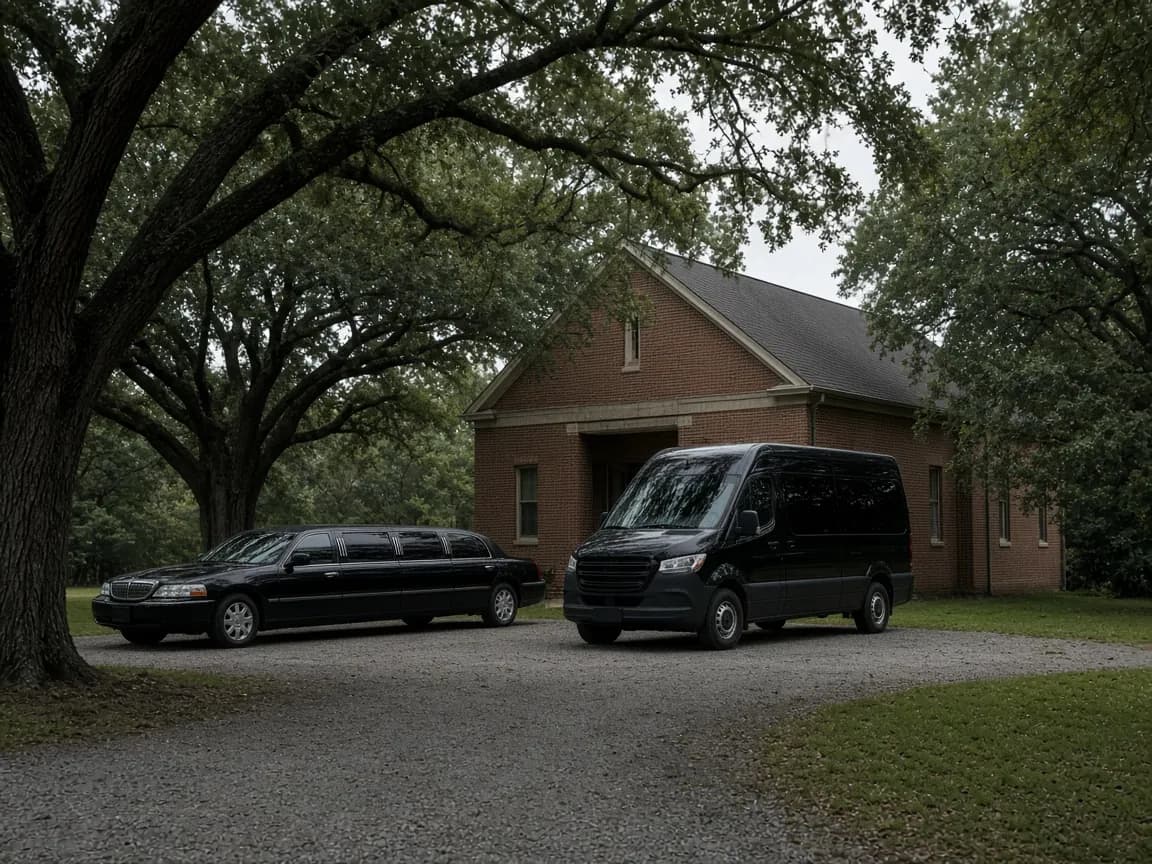
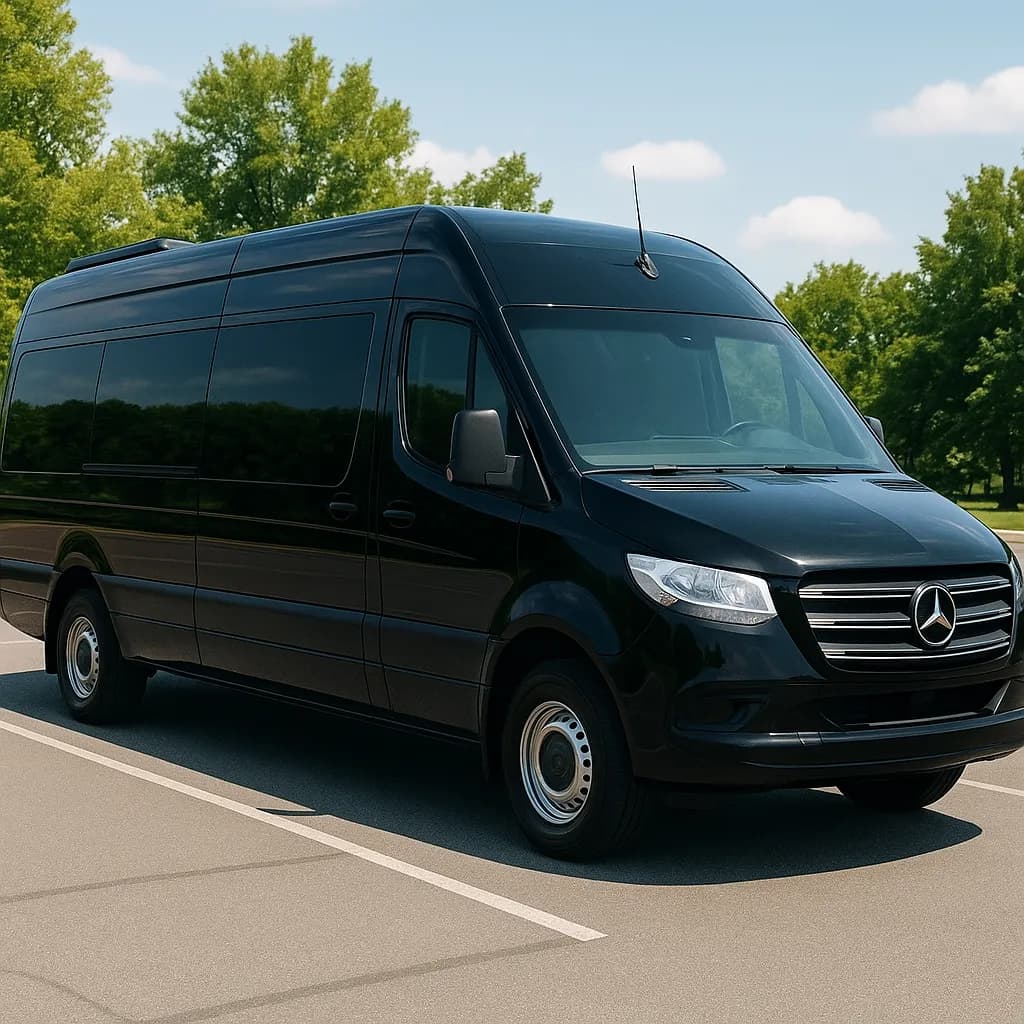
Three details make the day easier. The funeral director should have the driver's contact, so the car can be placed directly behind the hearse. Count riders honestly, because eight adults in dark suits and overcoats fill a sedan stretch completely. And leave slack at the end, because services run long and graveside gatherings do not keep to a printed schedule. If more relatives need a ride, a 14 passenger executive sprinter pairs well with the limo, with forward-facing seats and a low step for older passengers.
Anniversaries and formal dinners
The happier half of this car's calendar.
On an anniversary celebration, where it is also a featured vehicle, grown children tend to book it as a surprise. The car collects the couple first, gathers the rest of the family, and delivers everyone to a private room at a steakhouse in the Galleria area or a dining room downtown. Partition raised, lights warm and low, and the ride becomes the first toast of the evening.
Small parties are the rule with limousines. Among Houston inquiries mentioning a limousine that had a headcount attached, about 89% involved ten passengers or fewer, and the pattern holds nationally, where about 64% of limousine inquiries sat in that same one-to-ten range. Six or seven people for a milestone dinner is precisely the group this car was drawn around.
Inside, and how many it really suits
Everything in the cabin can be turned down, which matters more than what it can do.
Limousines of this type typically have leather seating along one side and across the back, a driver partition, color-adjustable accent lights, a sound system, a bar area, and rear climate control. On a formal booking almost all of that stays in the background. The lights get set to a plain warm white, the music stays low or off entirely, and the bar holds water and perhaps one bottle for a toast. Equipment differs by vehicle, so confirm whatever matters to you on the quote.
The seat count deserves candor. Ten average adults can sit down in it. Six to eight is where people can cross their legs and set a handbag beside them. Older passengers belong on the rear bench, which is the easiest seat to reach from the door, and anyone using a walker or struggling to bend will be steadier in a sprinter than in a car that sits this low.
Book for the people, not for the number on the listing.
Hours, distance, and earlier quotes
Houston is the variable nobody builds in.
About 53% of Houston inquiries with a stated duration asked for three to four hours, and a dinner booking sits comfortably inside that. A funeral often needs the same or a little more, depending on the distance between the service and the cemetery, and those distances surprise people: a service in Meyerland with a burial on the east side means crossing the whole city, and a procession moves slower than the traffic around it. The venue distance calculator gives a realistic figure to plan from.
On money, about 47% of limousine inquiries nationally that carried a historical quote fell between $1,000 and $1,499, and about 9% came in under $1,000. Read those as a record of what was quoted in the past, across every limo size and every kind of date, rather than as a rate. Your number depends on the date, the hours, the vehicle, and the route. Weekday daytime bookings, which is most funerals, face less competition for cars than a Saturday night does.
The four ten-seat limousines, briefly
Same capacity, four different jobs.
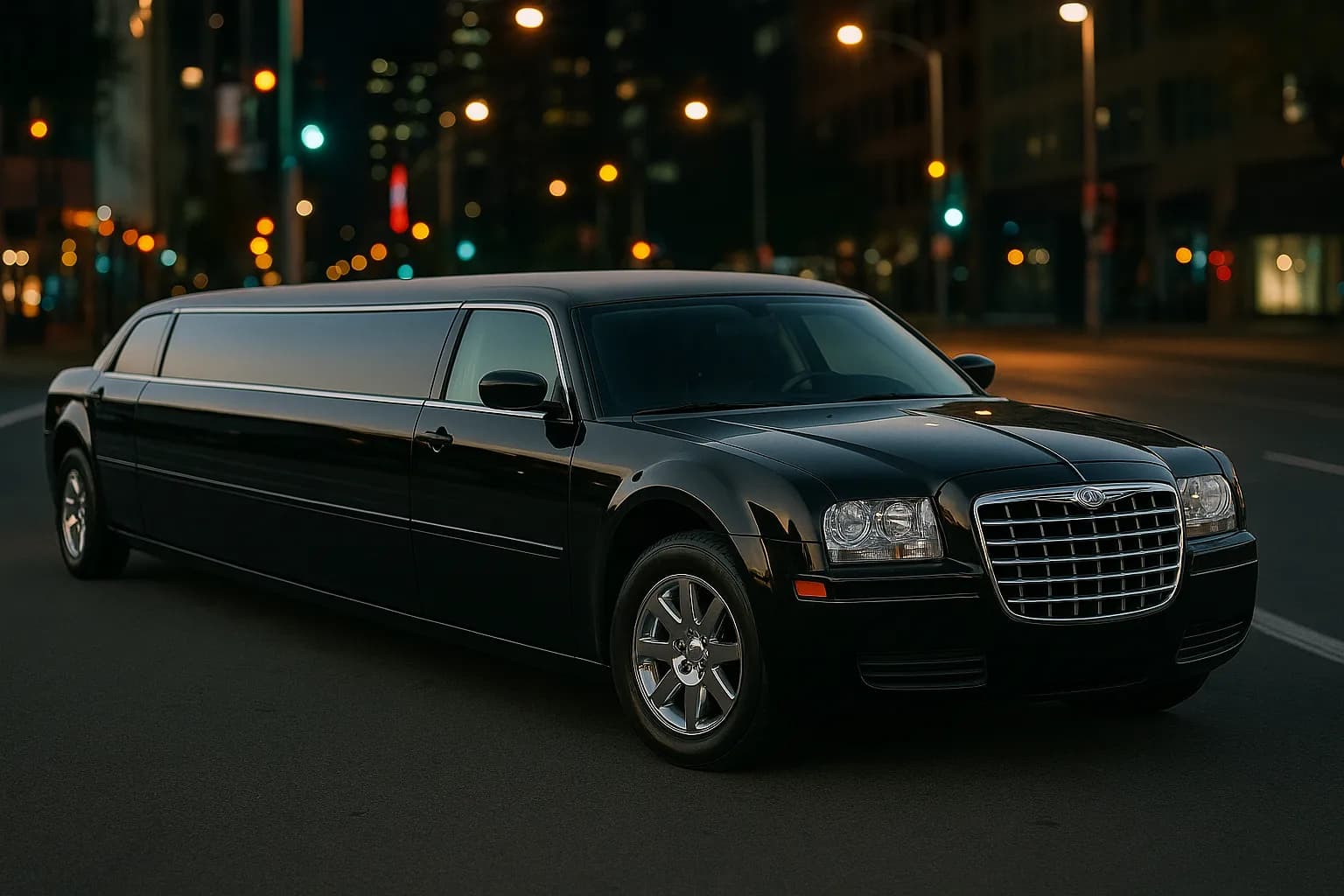
This one is the quiet one. The 10 Passenger White Lincoln Stretch Limo shares its outline and takes over when the occasion is a wedding shot in daylight. The 10 Passenger Black Chrysler 300 Limo has a bolder, newer front end and belongs to birthdays and prom. The 10 Passenger White Chrysler 300 Limo is the celebratory option, for quinceañeras and bachelorette groups.
If the choice will not settle itself, the vehicle comparison tool puts any two next to each other, and the whole set is laid out on the limousines page.
Sample day: a family of seven, a service in Meyerland and a burial on the east side
Four hours on a weekday, coordinated with the funeral home.
9:15 am
The car arrives at the family home in Meyerland. The driver has already spoken with the funeral director about where the car sits in the procession.
9:40 am
Arrival at the funeral home ahead of other guests, so the family can go in without an audience.
11:15 am
The service ends and the limo takes its place behind the hearse for the drive east on Loop 610 and I-45.
12:00 pm
Forest Park Lawndale Cemetery, after a run that usually takes 35 to 45 minutes at procession pace.
12:45 pm
The graveside service finishes. The family takes whatever time it needs before walking back to the car.
1:20 pm
Drop-off at a relative's house in Bellaire for the reception, inside the booked window.