Why not just let everyone drive?
Because the start time belongs to someone else.
The plant's safety orientation opens at 9:00 sharp, the tour follows it, and a group arriving in fifteen separate cars trickles through the gate over forty minutes while the host waits. One coach puts everyone there together on a single visitor list. It also keeps fifty employees off a two-hour highway drive on company time, which plenty of firms would rather not be responsible for.
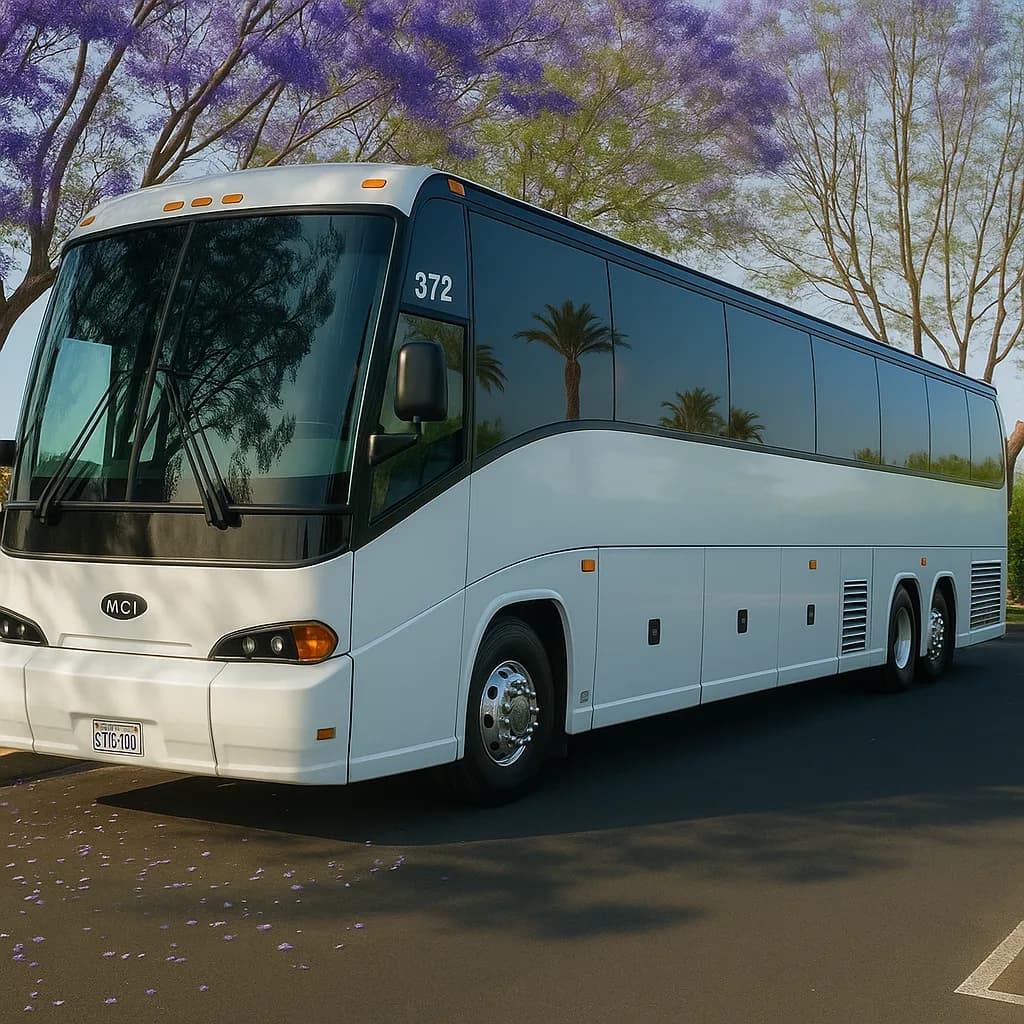
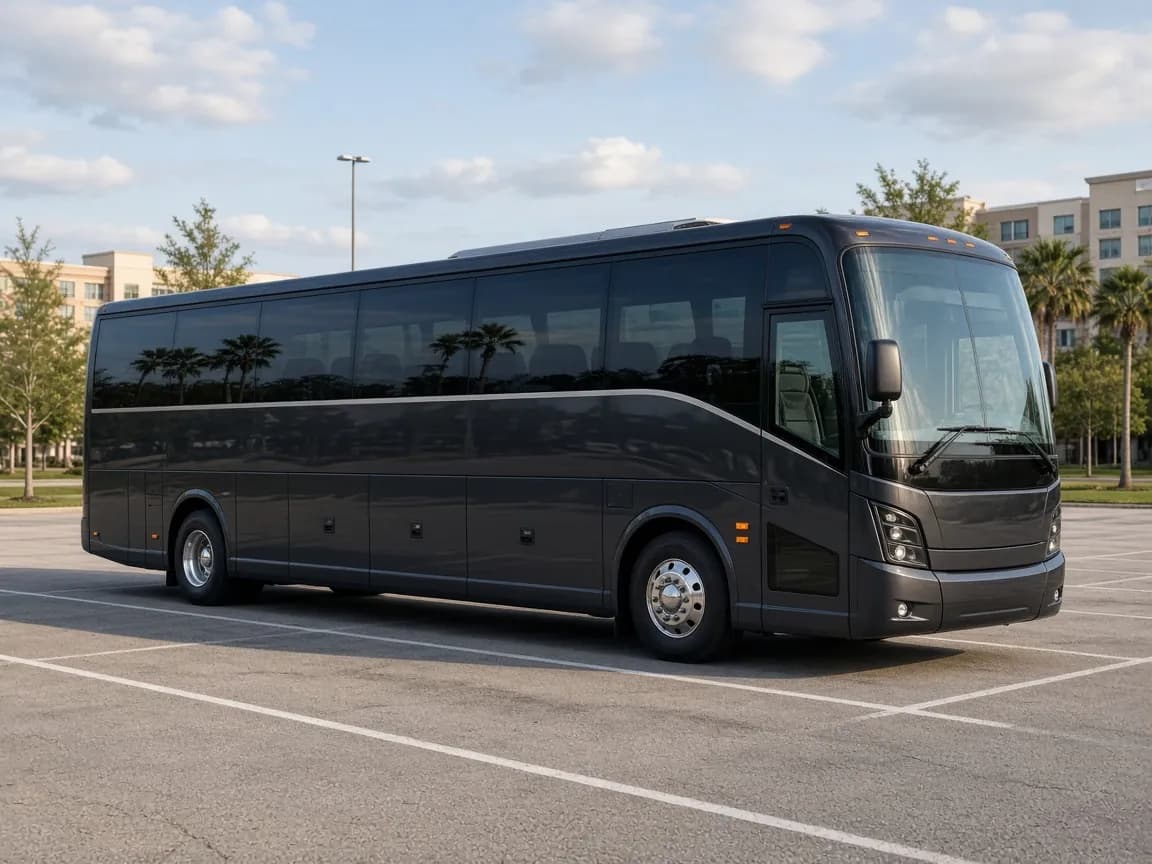
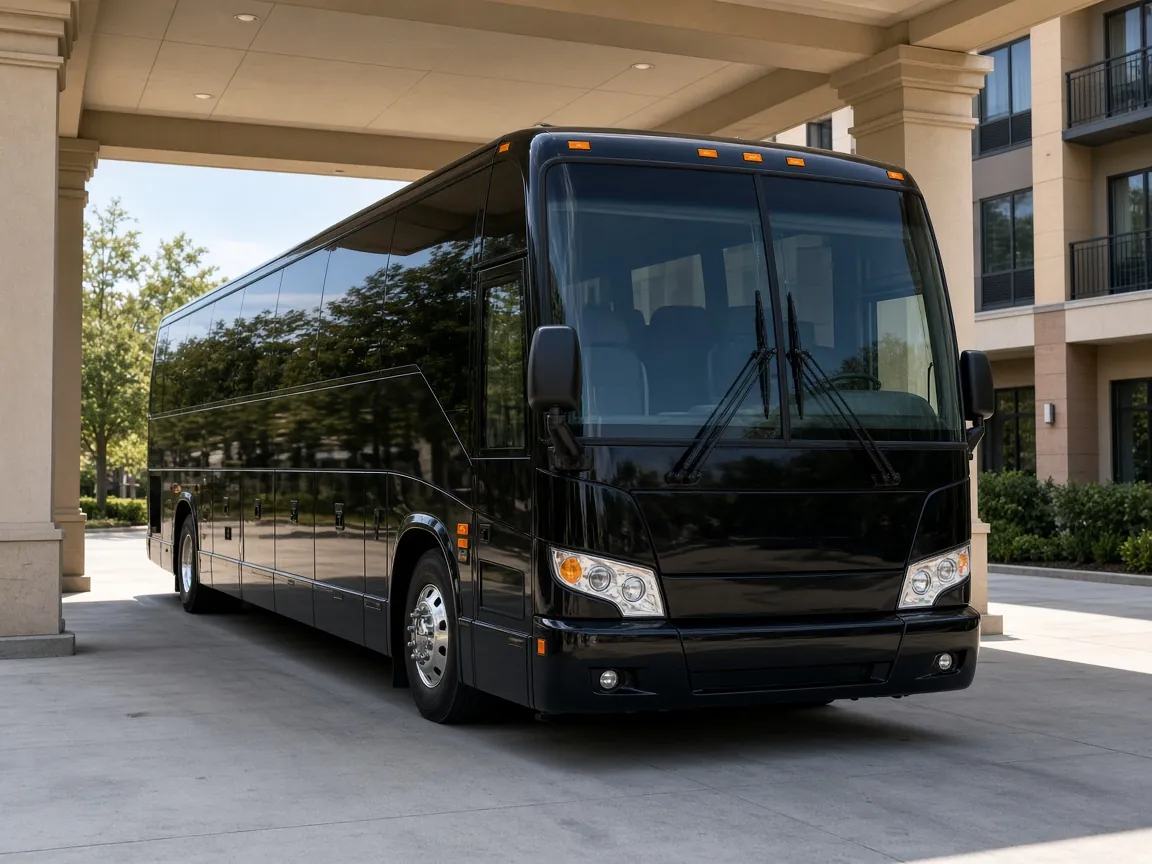
The ride turns productive, too. Coaches in this class typically carry a PA system, so a program lead can run the agenda, introduce the host and cover expectations before anyone sets foot on site. On the way back the same microphone handles the debrief while the day is still fresh in everyone's head. Check what the specific coach offers when the quote lands, including restroom, outlets and Wi-Fi, since those change from vehicle to vehicle.
Gates, visitor lists and PPE
An industrial site controls who comes through the fence, and arriving on a coach does not change that.
Expect the host to want a visitor list with full legal names well ahead of the day, and expect a check against photo ID at the gate. Some facilities let a coach drive to the visitor building; others want it parked outside the fence while a site vehicle or a walk handles the last quarter mile. Ask which, then pass the answer to the driver so nobody is improvising at 8:40 in the morning.
Port and terminal facilities layer on more. Ask whether visitors without a TWIC card need an escort inside secure areas, because that can cap the group or split it into shifts. Settle the tour schedule with your host first and build the transportation around what they say.
- Visitor list to the host; headcount and gate address to the quote request.
- Hard hats, safety glasses and any flame-resistant clothing packed in labeled bins for the bays.
- A reminder the day before about closed-toe or safety-toe shoes.
- One question worth asking early: are phones and cameras allowed on site?
The gate does not care that you arrived together. It cares about the list.
Three runs out of Houston
Beaumont. About 85 miles east on I-10, typically 1.5 to 2 hours from downtown, past Baytown and across the Trinity River bottoms. Refinery and petrochemical sites around Beaumont and Port Arthur pull engineering and operations groups out this way. Morning traffic heading east is kinder than the inbound crush, but a 5 pm return meets westbound congestion from Baytown onward.
Freeport. Roughly 60 miles south on SH 288 through Pearland and Angleton toward Lake Jackson, usually 1 to 1.5 hours. Chemical plants and Port Freeport are the draw. A straightforward run, except that 288 through Pearland sours at rush hour.
College Station. About 95 miles northwest on US-290 and SH 6, typically 1.5 to 2 hours. Company groups go for campus recruiting, research partnerships and training at Texas A&M. On a home football weekend the traffic and the hotels become a different problem entirely, so check the schedule before you pick a date.
One coach or two vehicles?
Fifty-two seats is the right call when your roster reads 44 or more and you want one or two spare for a host who decides to ride along.
Most requests are nowhere near that. About 49% of Houston inquiries with a group size were for 11 to 20 passengers. Even inside coach requests across all markets, about 33% were for 31 to 40 people and about 24% for 41 to 50, which suggests a good many groups asking about a coach have seats going spare.
Split the group when the day splits. If leadership has to leave for a 2 pm flight out of Hobby while everyone else stays for the afternoon tour, a 14 passenger executive sprinter running alongside a 36 passenger shuttle bus gives each half its own clock. For a roster under 40 on a short run, a 40 passenger shuttle bus may be all you need. The vehicle comparison tool sets two options beside each other, and our corporate events page covers programs that stay inside the city.
Hours, and what finance will ask
These are long days however you count them.
About 11% of Houston inquiries with a requested duration asked for seven to eight hours, and across all markets only about 3% asked for 9 to 12. On an hourly charter the coach and driver stay with you and the waiting counts, so a two-hour tour ninety minutes away is still a seven or eight hour booking once lunch and the drive home are in. If the plan runs past ten hours, ask how many hours the driver may legally work before you publish the agenda.
For historical context, about 47% of coach bus inquiries across all markets carrying a quote on file landed in the $1,500 to $1,999 range. Past quotes for all sorts of coach work, not a corporate rate, and the figure that reaches your team follows the weekday, the coach, the nine hours and whether the gate is in Beaumont or Freeport. Finance usually wants it per attendee, which the group split calculator produces from the total in one step.
A two-hour tour is an eight-hour booking. Count the waiting.
Sample program: 46 engineers and new hires, Energy Corridor to a Beaumont-area plant
A nine-hour weekday charter reverse-engineered from a 9:00 am safety orientation.
6:20 am
Coach arrives at the office. PPE bins and boxed breakfast into the bays while the program lead reads names against the visitor list.
6:40 am
East on I-10 through downtown. Allow 1 hour 45 to 2 hours 15 for the roughly 105 miles.
8:40 am
At the plant gate for the ID check, then on to the visitor building.
9:00 am
Safety orientation, then the unit tour in two groups while the coach sits where the site put it.
12:30 pm
Lunch hosted on site.
1:45 pm
West again, with the debrief running over the PA once the coach is back on I-10.
3:45 pm
Back at the office before the Katy Freeway starts its evening.