Count the gear before the kids
Every sport owns one item that ruins the arithmetic.
For baseball and softball it is the wheeled bat bag. For hockey it is the gear bag that smells like a decision. Soccer brings ball sacks and a pop-up canopy; volleyball brings the parents' wagons full of folding chairs. Pile it all in the gym or a driveway the week before and look at it honestly, because on a shuttle the storage area behind the last row is smaller than most coaches picture it.
Whatever misses the back goes on a seat. Eighteen players with eighteen bat bags can eat 26 or 27 seats between them. Tell the booking what is coming: players, big bags, coolers, and anything long like tent poles or lacrosse sticks. It is the difference between a quiet ride and an hour on Beltway 8 with a kid holding a bag on his knees.
Gear does not have a headcount, which is exactly the problem.
How many seats a team really needs
Take the roster, then add one seat for every two large bags. That number is the bus.
Across all the markets in our inquiry records, about 49% of sporting event inquiries with a group size were for 11 to 20 people and about 16% were for 21 to 30. A single youth team with its staff usually straddles the line between those two. In Houston, about 13% of inquiries with a valid group size were for 21 to 30 passengers, and team travel is a good part of why that band exists at all.
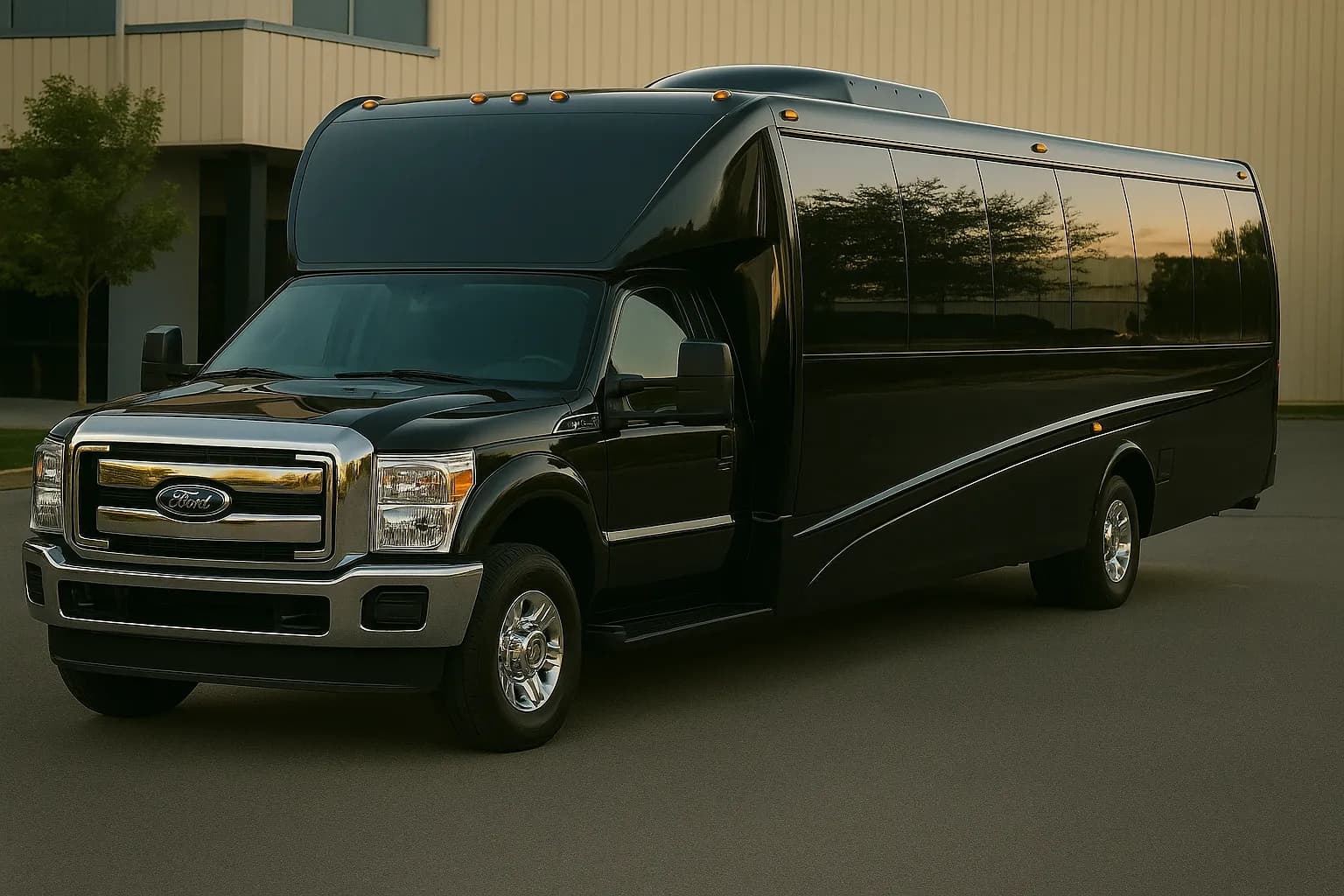
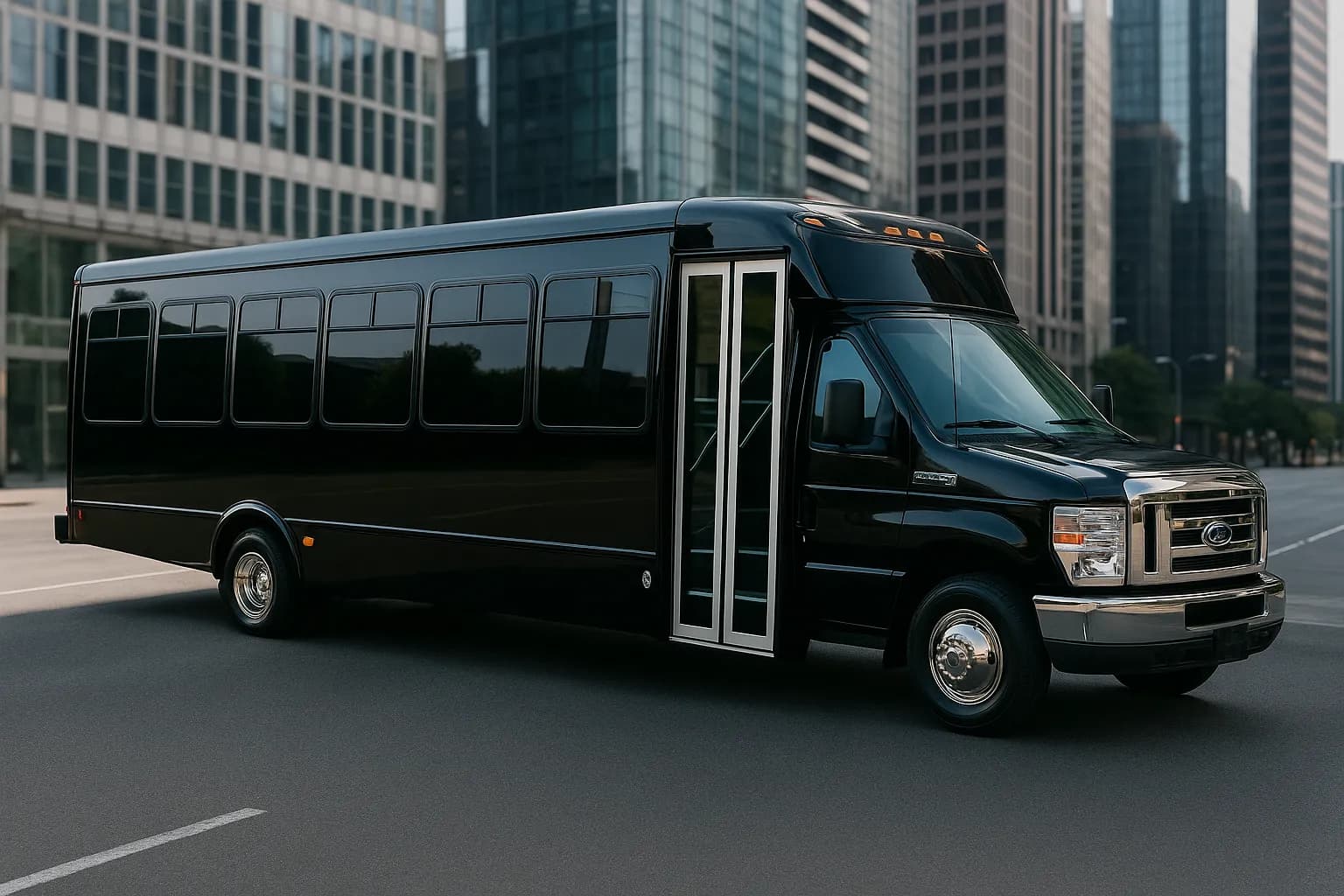
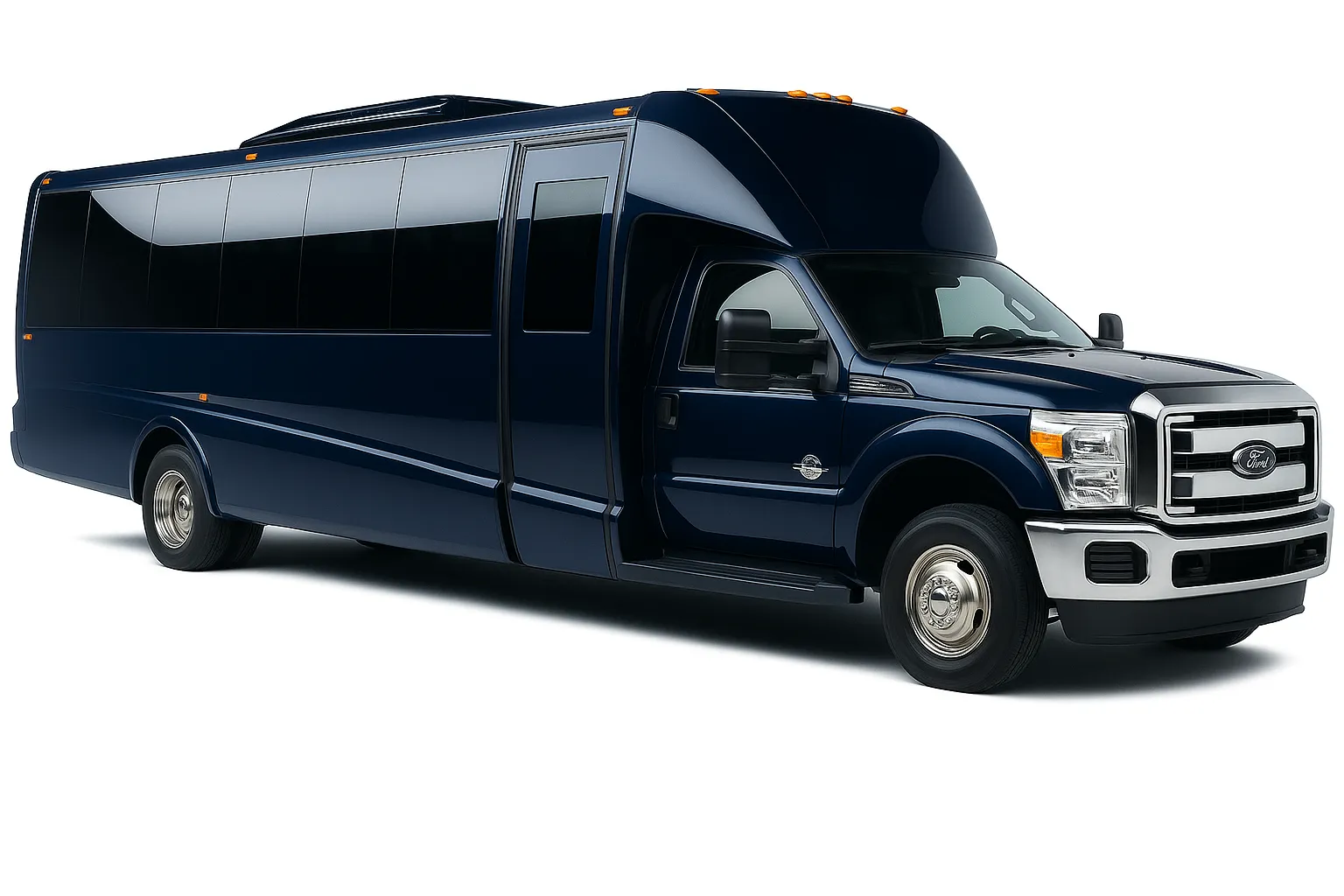
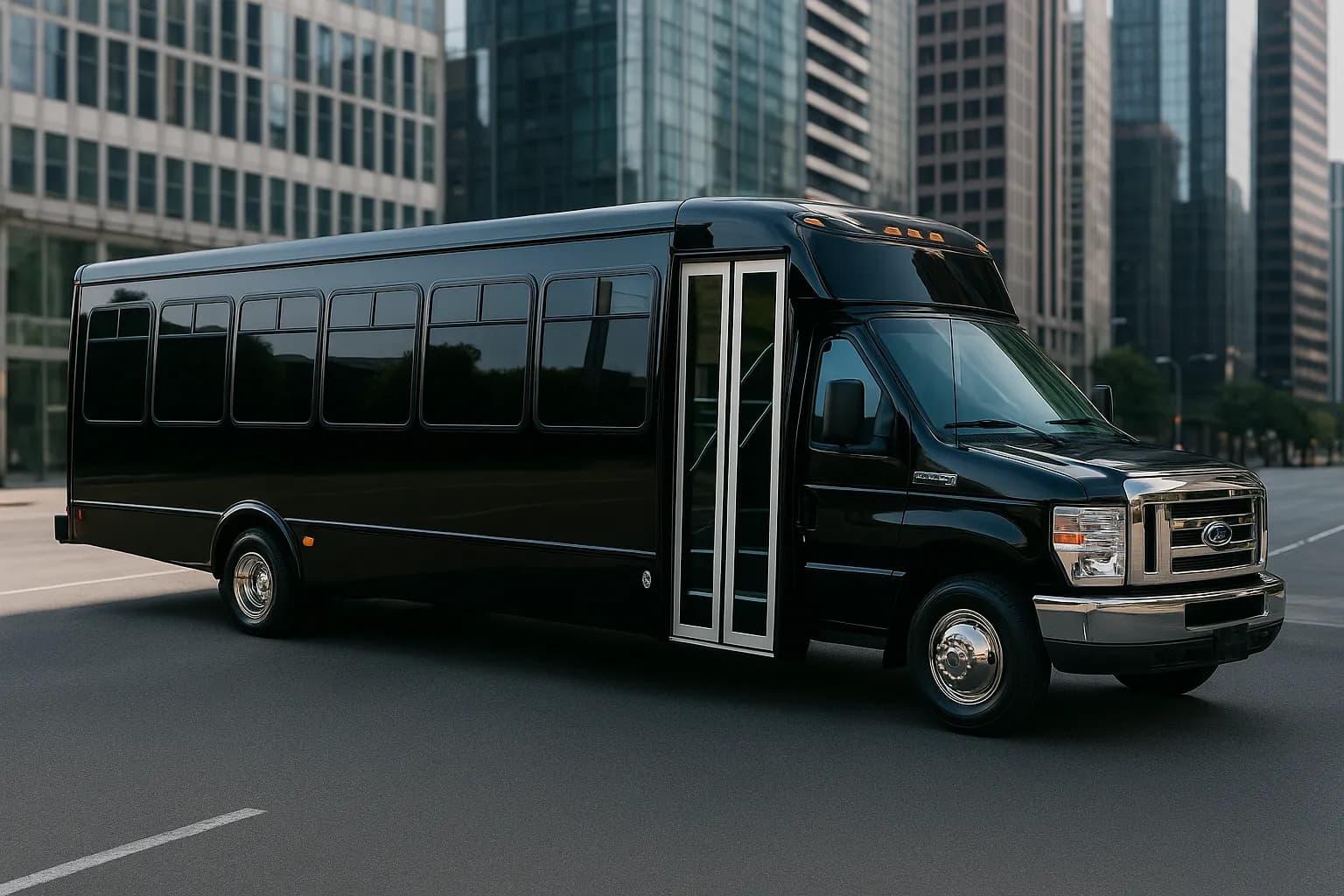
Fourteen players, three coaches and three parents is 20 people; add fourteen bat bags and you want roughly 27 seats of room, which is this bus. A small squad traveling light fits the 22 passenger shuttle bus. Two teams from one club, or a full varsity roster, belong on the 30 passenger shuttle bus or the 36 passenger shuttle bus. The guest count calculator keeps the roster and the bag tally in one place.
Nobody knows when you are playing
At 7 am on a Saturday, the answer to "what time is our last game" is a shrug.
Pool play has gaps, brackets shift, and a good morning means a longer day. About 11% of Houston inquiries with a stated duration asked for seven to eight hours, and tournament travel often wants that or more. Book the long block and treat an early finish as a gift. Trying to extend at 3 pm on a busy Saturday depends on that bus and that driver being free, and often they are not.
Plan the first leg around check-in rather than first pitch. Plenty of tournaments want teams on site 45 to 60 minutes early, and complexes on the edge of town mean a slow crawl into a full lot. Cypress to the south side, for instance, is typically 50 to 70 minutes on Beltway 8 and SH 288 on a Saturday morning.
Winning is what makes a Saturday run late. Book for the bracket, not for pool play.
The bus is the shade
In a Houston summer, the shuttle quietly turns into the team's cool-down room.
Ask ahead whether the driver can keep the air running through a long gap between games, and where the bus can park near the fields. Two coolers is the trick: one that stays on the bus for water and sports drinks, one that goes to the dugout. For spring tournaments, the Houston weather checker is worth a look the night before, because a thunderstorm can stop play for an hour and change the whole shape of the day.
Running a bus full of twelve-year-olds
One coach counts heads every single time the door closes. Everything else is paperwork.
Keep a printed roster with a parent number beside every athlete. Decide early which parents ride and which drive, so the seat count is settled before the quote goes in. Pick a pickup point with room for a bus to turn, like the school loop or a church lot, and stay out of cul-de-sacs. The team code of conduct covers the bus as much as the field, and players take that better when they hear it before the first trip.
Our sporting events page has more on team travel, and the school field trips guide covers approvals and chaperone planning if the school is involved.
Tournament Saturday: a 13U baseball team out of Cypress
Twelve players, three coaches, five parents, twelve bat bags and two coolers. Pool play today, bracket tomorrow. Nine hours booked.
7:00 am
Load at the club's practice field in Cypress. Bags first, players second.
7:15 am
Out on US-290 and Beltway 8 toward a complex on the south side.
8:25 am
Arrive with room for an 8:45 check-in before the 9:30 first game.
11:15 am
Long gap. Lunch happens on the air-conditioned bus, which is the most popular vehicle at the complex.
1:00 pm
Second pool game. Sunday seeding gets posted mid-afternoon.
2:45 pm
Board once the coaches have the bracket in hand.
4:00 pm
Back in Cypress, inside the nine hours.