How a park-and-ride works
Everybody drives five minutes instead of forty, and then nobody drives at all.
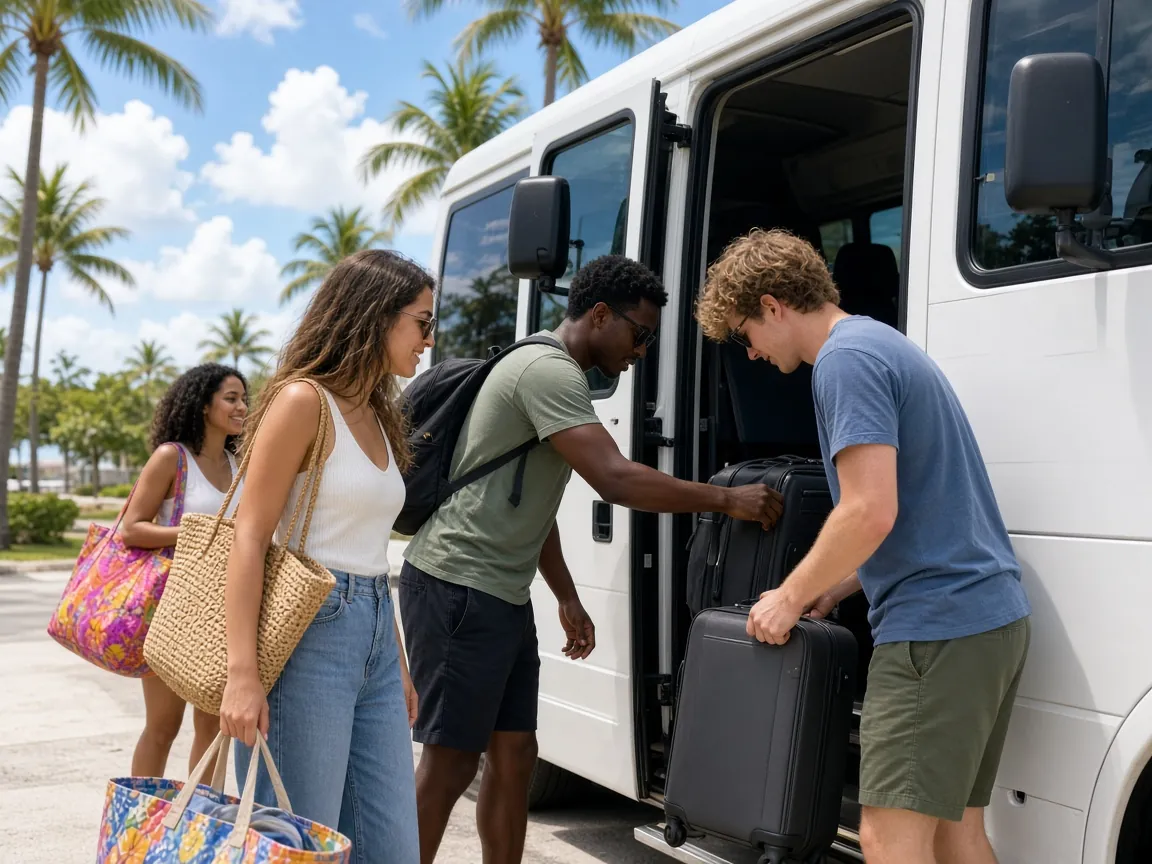
Cars gather in one big lot near home, the group boards one bus, and the bus drops as close to the venue as event-day rules permit before waiting nearby or in a staging area. Afterward the group meets at an agreed spot, boards, and is on the freeway while the people who parked at the stadium are still watching brake lights in the same row they parked in.
It works best where a group already shares somewhere: a church, a workplace, a youth league, a street. The lot needs to be one where cars can sit for eight hours without anyone objecting, which is a question for the church office or the building manager rather than an assumption. A lot in Spring, Cypress, Pearland or Katy leaves most members five to fifteen minutes from their own cars at the end of the night.
Is 42 seats right for your group?
Most sports groups are nothing like this big, which is worth knowing before you start calling around.
Across all the markets in our inquiry records, about 49% of sporting event inquiries with a group size were for 11 to 20 people, about 16% for 21 to 30, and about 4% for 31 to 40. In Houston, about 5% of inquiries with a valid group size fell in that 31 to 40 range. A park-and-ride crowd is almost always one of the larger outings: an office block of tickets, a men's group, a Little League team finishing its season.
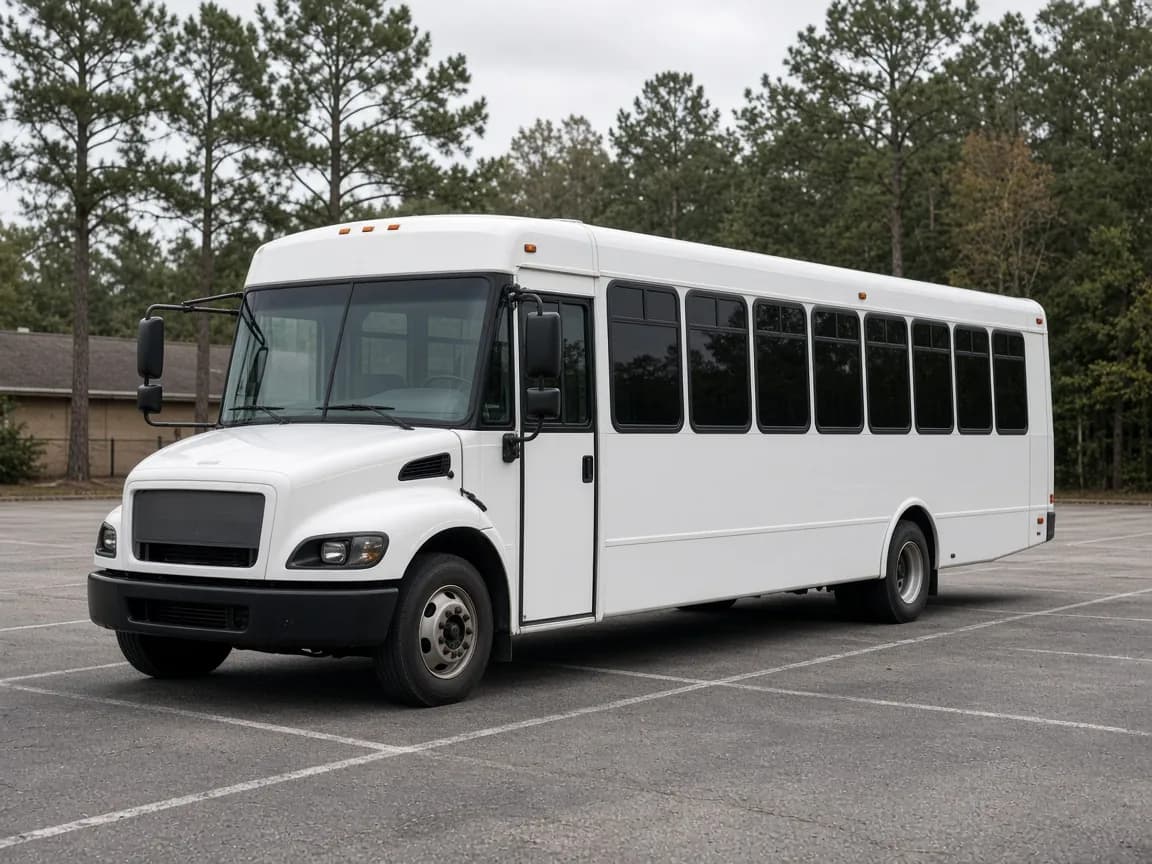
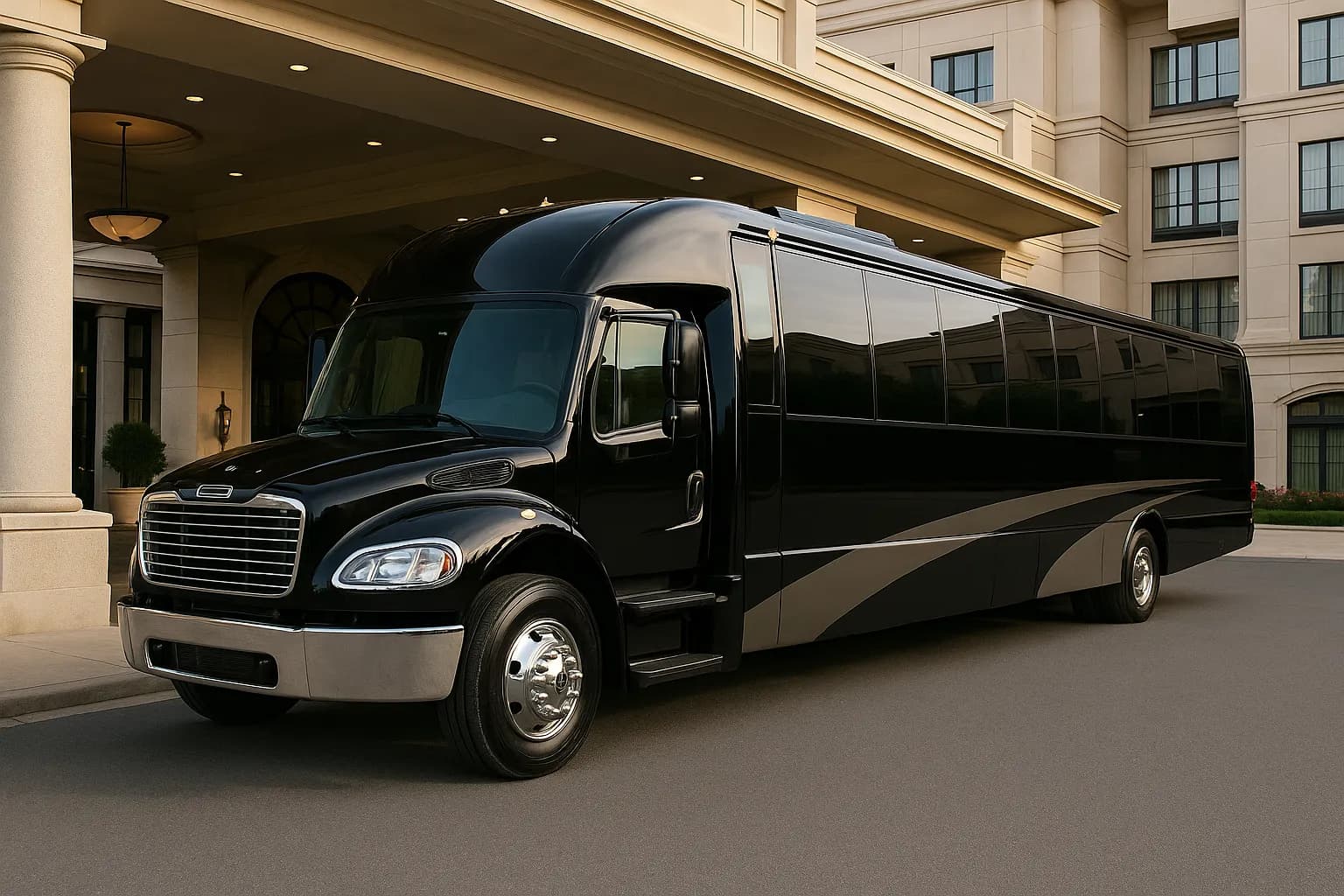
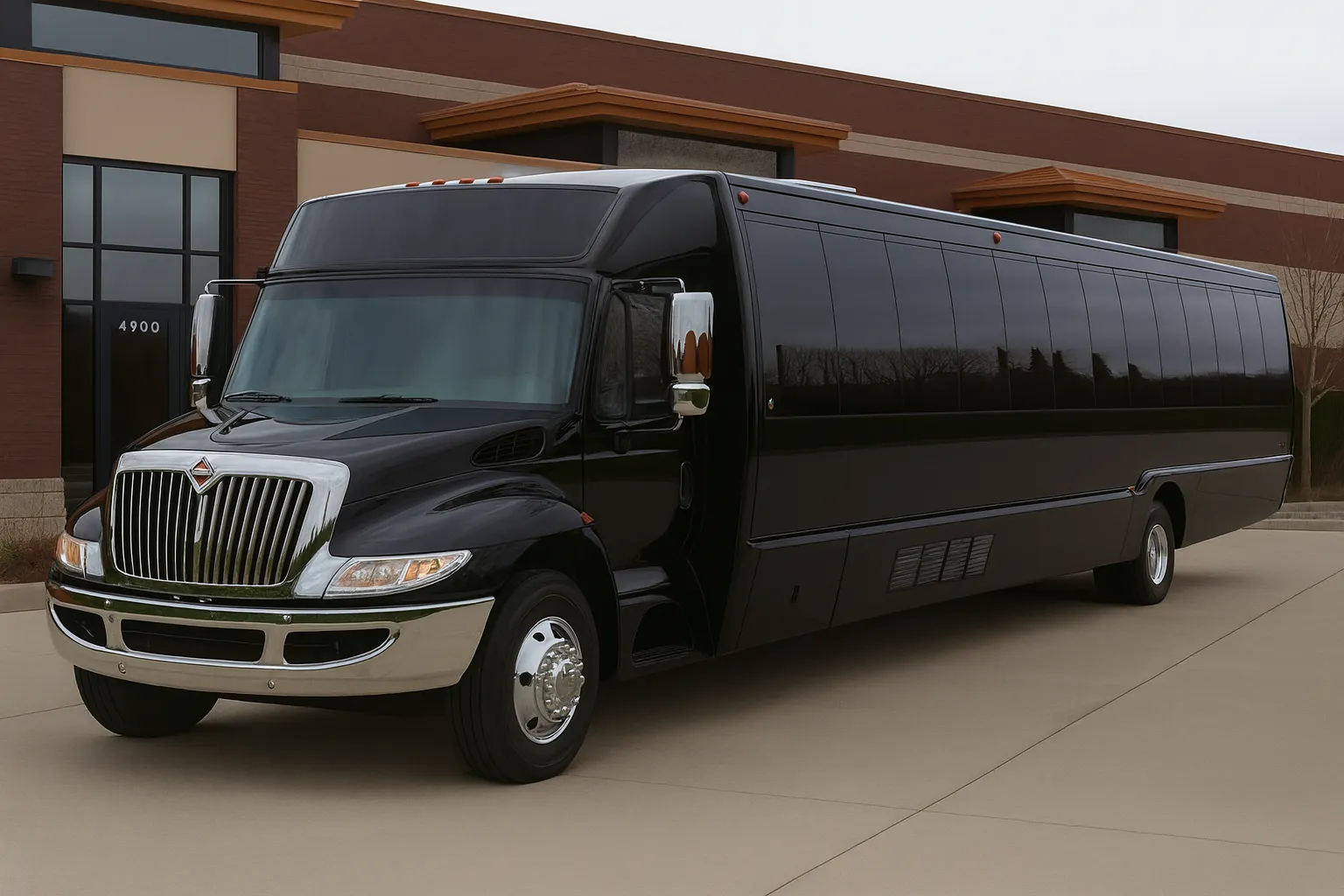
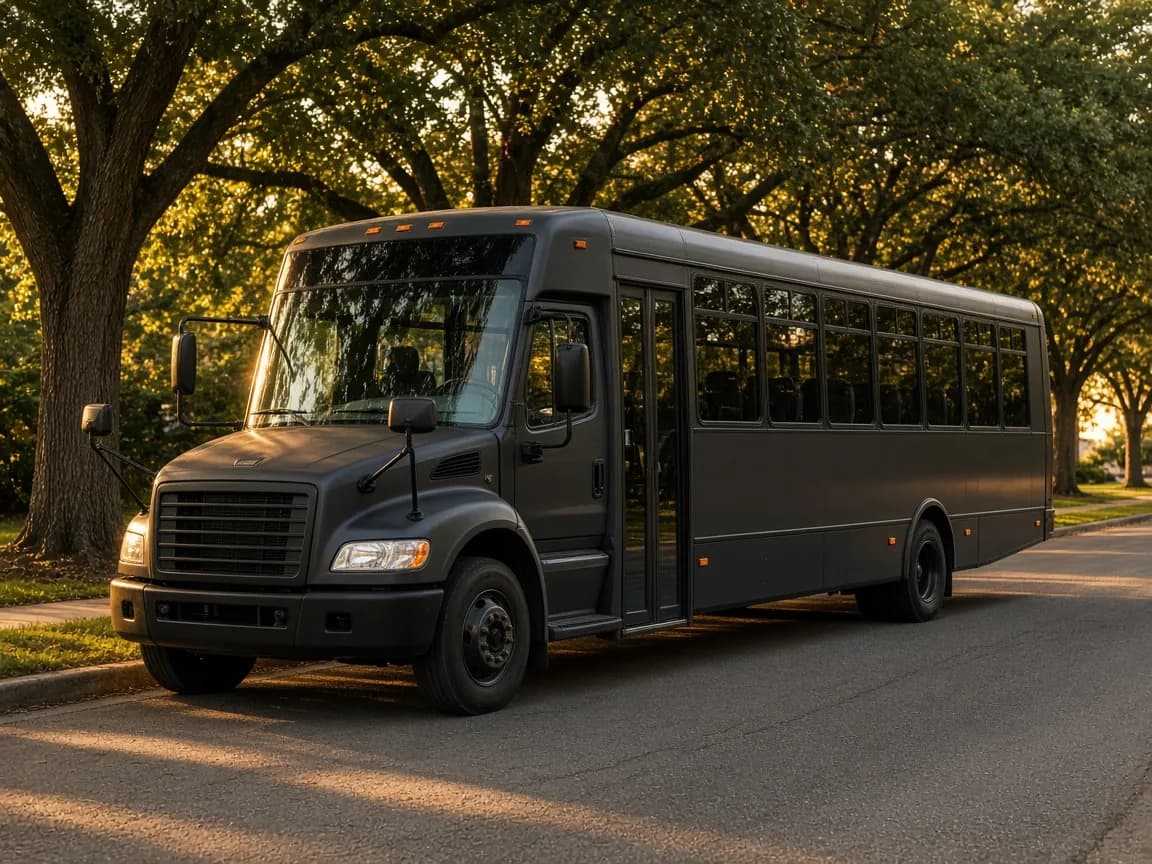
At 42 seats this bus takes a block of 36 to 40 tickets with a few spares for jackets and stadium bags. For 28 to 34, the 36 passenger shuttle bus is enough. For 43 to 46, step up to the 46 passenger shuttle bus, and at 50 or more you want a full-size 50 passenger coach bus. If the group is all adults and the real event is the tailgating, a party bus suits the mood better than a shuttle ever will.
The bus is the cheap part. The lot you leave the cars in is the favour to ask for.
Three venues, three different drop-offs
NRG, Daikin Park and Toyota Center are not interchangeable, whatever the map suggests.
NRG Park, off Loop 610 and Kirby Drive, has acres of asphalt, and on game days and through the Houston Livestock Show and Rodeo bus access to it is controlled and changes event by event. Ask when you book where charter vehicles unload and stage for your date. If tailgating is part of the plan, the group needs a parking pass that admits a bus; without one the bus drops and leaves, and the coolers go with it.
Daikin Park and Toyota Center are downtown, a few blocks apart on the east side near George R. Brown. Streets around both close or clog before and after events, so expect a short walk rather than a gate-side drop. From the north suburbs, I-45 south into downtown typically runs 30 to 50 minutes before a weeknight game; from the south, SH 288 or I-45 north is closer to 25 to 40. The route planner gives typical drive times between listed areas, The Woodlands to downtown included.
Getting everyone back on the bus
This is where park-and-ride plans fall apart, every time, in the same way.
Forty people leave a stadium through four different gates. Some stay for the last out, some left in the seventh, two are in a bar across the street, and at least one phone is dead. Three things fixed in advance solve almost all of it.
- A departure time: 30 to 45 minutes after the final whistle or last out, printed on every ticket envelope.
- A meeting place: a named landmark near the bus, with a dropped pin sent to the group chat before kickoff.
- A rule: the bus leaves at the stated time, and anyone who misses it pays for their own ride home.
Announce the rule before kickoff. Enforcing it in the NRG lot afterward is somebody else's bad night.
How long to book, and what the sky is doing
Book for the long version of the day, not the one on the ticket.
About 34% of Houston inquiries with a stated duration asked for five to six hours, which covers a weeknight Astros or Rockets game from the suburbs. A Sunday Texans game, with an early arrival for the pregame and the slow crawl out of NRG afterward, more often wants seven or eight. Overtime and extra innings are not things to be negotiating with a driver at eleven at night.
The seats may be under a roof but the lots never are, and the walk from the bus can be a long one in September heat or a March storm. The Houston weather checker shows what your month usually brings, and the forecast is worth a look the week of. More game-day planning sits on our sporting events page.
Sample Sunday: 38 fans from a church lot in Spring to a noon Texans game
About eight hours booked, with the bus staged near NRG through the game.
9:15 am
Fans park at the church lot and board. Tickets get handed out on the bus, which saves four phone calls.
9:30 am
South on I-45 and around Loop 610, typically 45 to 65 minutes on a game-day morning.
10:35 am
Drop at the unloading area assigned for the date. The meeting landmark was pinned for everyone before kickoff.
12:00 pm
Kickoff. The bus sits in the staging area.
3:30 pm
Final whistle, and the walk back to the meeting point begins.
4:05 pm
The bus leaves at the announced time and works its way out through the NRG traffic.
5:15 pm
Back at the church lot in Spring.