What kind of vehicle is this?
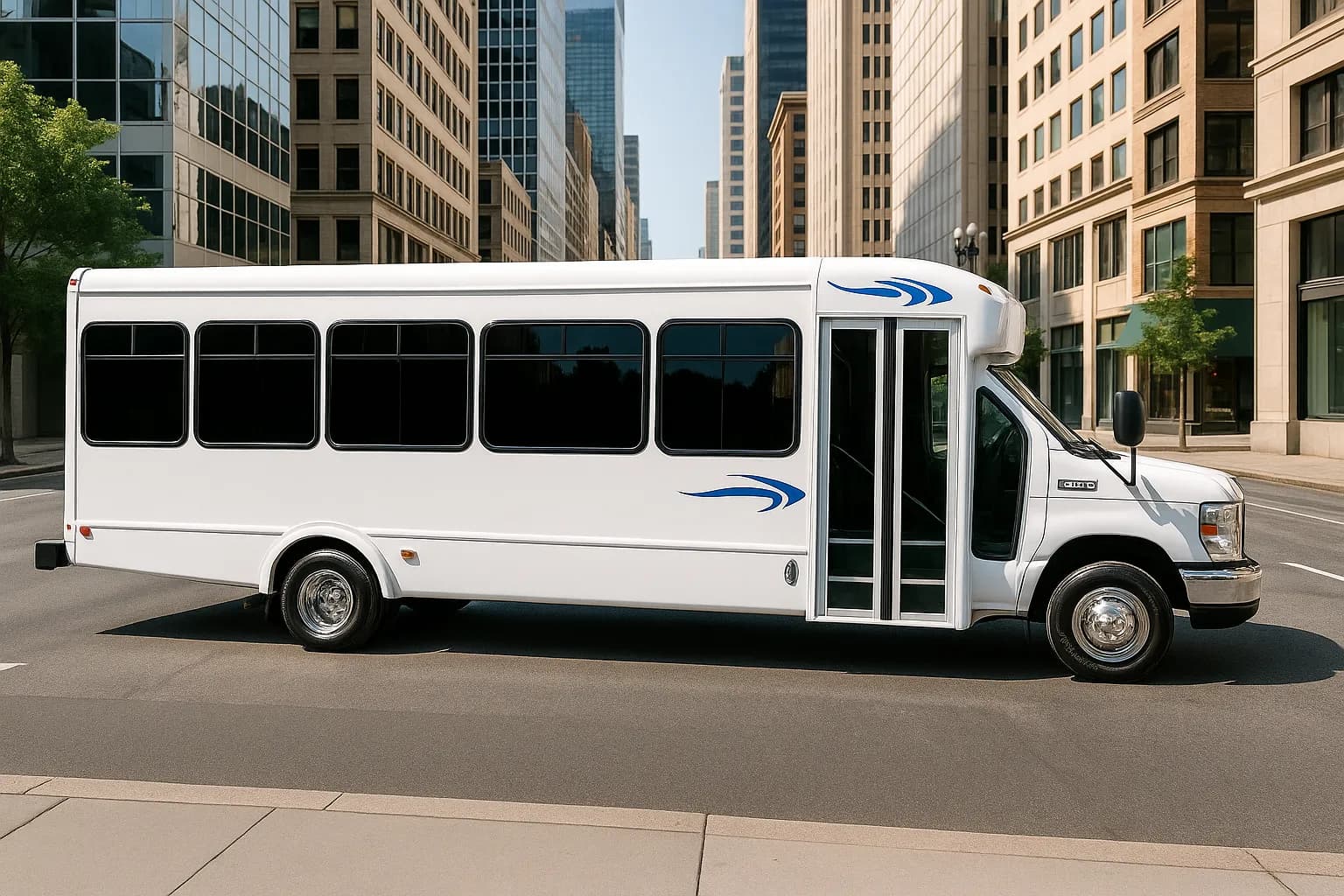
A small bus body on a heavy-duty chassis, and nothing more exotic than that.
Passengers come in through a front door with steps and a grab rail, then walk down a center aisle to forward-facing rows, usually two seats on one side and one or two on the other. Most adults have standing headroom in the aisle. The windows are large, there is a luggage area behind the last row, and the whole thing is short enough to turn into an office lot without a negotiation.
What it is not is a lounge. Nobody sits sideways, there is no bar, and for a working group that is the appeal: people can read a site packet or talk to the person beside them without shouting over music. Many vehicles in this class carry a PA microphone at the front for the day's agenda.
A meeting room on a cutaway chassis, with a PA microphone up front.
Right size for a client visit?
Business groups are usually smaller than the person booking expects them to be. In our Houston inquiry records, about 31% of requests with a group size attached were for 1 to 10 passengers and about 49% were for 11 to 20. A 16 seat shuttle covers the lower half of that larger band, which is where a visiting delegation, a department lunch or a sales team with a couple of guests tends to land.
Count the people and the bags in the same breath. Fourteen people with a slim laptop bag each ride comfortably, with a free seat or two for coats and handouts. Sixteen who each brought a roller case from the airport do not, because the rear storage fills fast and the overflow ends up on laps. When the visit starts or ends at an airport, step up to the 18 passenger shuttle bus or the 20 passenger shuttle bus and keep every seat for a person.
Planning a site tour around Houston traffic
Business travel in this city means crossing it at the worst possible hour.
A group staying in Uptown near the Galleria heading for an office campus in the Energy Corridor spends 20 to 30 minutes on I-10 west outside rush hour and closer to 45 inside it. A plant visit along the Ship Channel from a downtown hotel typically runs 25 to 40 minutes on I-10 east or SH 225, and the east side adds refinery shift-change traffic early morning and mid-afternoon.
Schedule the long legs against the flow rather than through it. Leaving Uptown at 8:45 instead of 7:45 saves more time than any shortcut anyone will suggest. The route planner gives typical drive times between districts, and the event timeline builder turns them into a schedule you can send around before the guests land.
Leaving Uptown at 8:45 beats every I-10 shortcut somebody offers you.
Small things that make a client ride go well
One meeting point and one named host solves most of what goes wrong. Pick a hotel lobby or the front of the office, and put the host up front where they can reach the PA and field questions. Their cell number belongs on the agenda, not in somebody's inbox.
Long days are more common for business groups than for most trips. About 11% of Houston inquiries with a stated duration asked for seven to eight hours, and a client visit with a lunch, a second session and a dinner lands right in that stretch. Build the length in at the start, because extending on the day depends entirely on whether the vehicle is free that evening.
- Bottled water and a printed agenda on the seats before anyone boards.
- Visitors toward the front, where they can hear the host and see out the windshield.
- The driver told about any gated entrance, security check-in or badge desk on the route.
- One restroom break planned into any leg over about 90 minutes.
Hours to request, and what past quotes show
About 53% of Houston inquiries with a requested duration on file were for three to four hours and about 34% were for five to six. For a corporate group the shorter block covers a single site visit and the return. The longer one fits a full day with a working lunch in the middle, or a plant tour followed by dinner in Montrose or River Oaks.
On money, the useful thing is knowing where past quotes clustered. Among Houston inquiries with a historical quote on file, about 47% landed between $1,000 and $1,499 and about 18% between $1,500 and $1,999. Those cover every vehicle type and every kind of date, and they are past quotes rather than prices for this bus. An eight-hour Energy Corridor day and a three-hour Ship Channel plant visit sit at different points on that spread. Our corporate events page goes further into planning the day itself.
A site visit with lunch and dinner is eight hours. Book those, not the ones on the invite.
When another vehicle does it better
For eight to twelve senior people, a 14 passenger executive sprinter makes a more polished arrival with leather seating and easier boarding, and it parks anywhere a large van can. At 17 or more, go up a size instead of filling every seat on this one and hoping nobody brought a bag. If the evening is a team celebration rather than a working ride, the 16 passenger party bus has the wrap-around seating and sound system this bus deliberately leaves out. The vehicle comparison tool puts any two side by side.
Sample day: 14 visiting clients, Uptown hotel to an Energy Corridor campus
About eight hours on a weekday: one pickup, one site, and dinner on the way back.
8:45 am
Pickup at a hotel entrance in Uptown. The host boards first and hands out agendas before anyone sits down.
9:20 am
At the client campus off I-10 in the Energy Corridor after a typical 25 to 35 minute run west.
12:30 pm
A short hop to lunch on the west side. The shuttle waits in the lot holding jackets and handouts.
1:45 pm
Back to the campus for the afternoon session.
4:30 pm
Out to an early dinner in the Heights, 25 to 40 minutes east depending on I-10.
6:45 pm
Return to the Uptown hotel, roughly 15 to 20 minutes, comfortably inside the block.