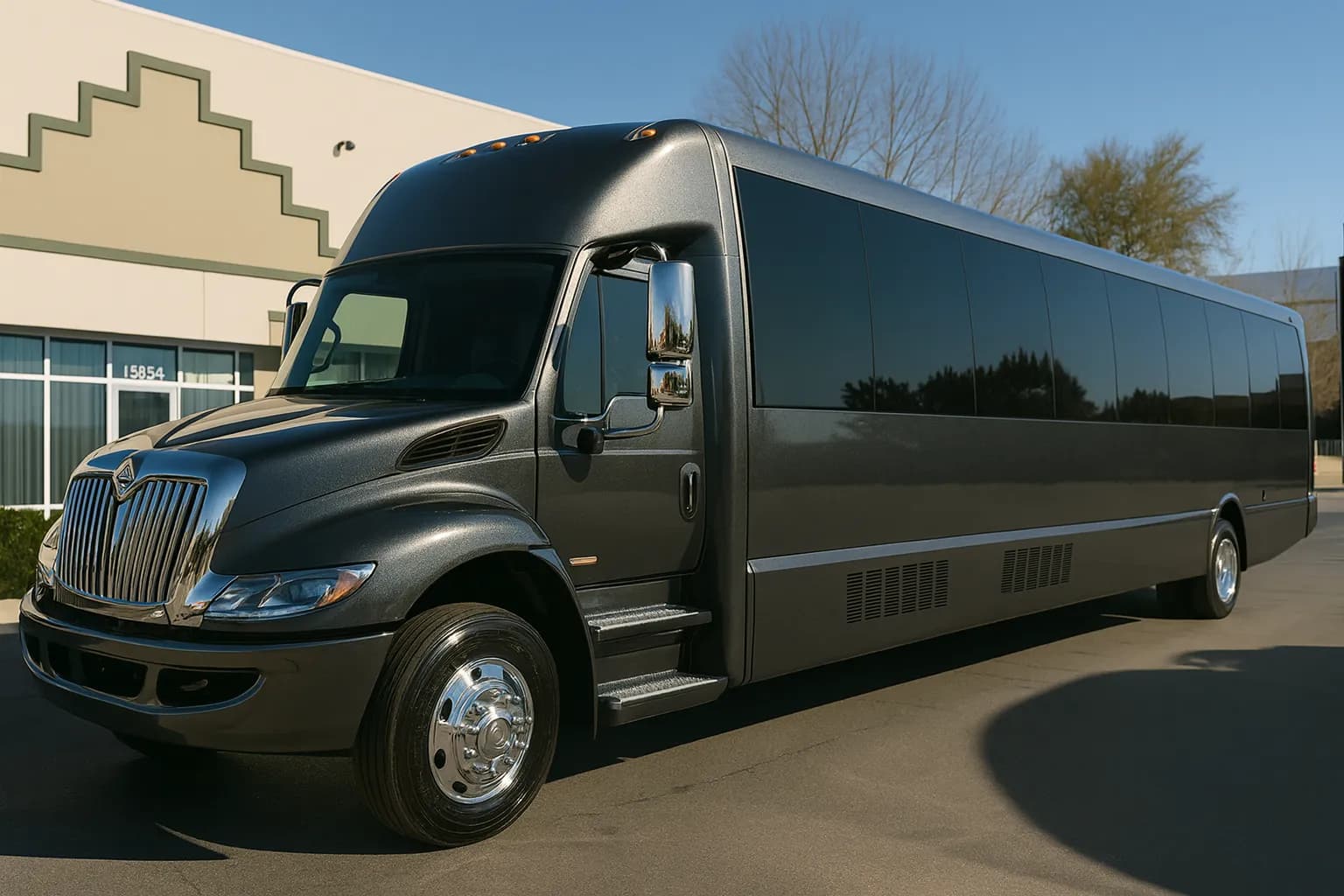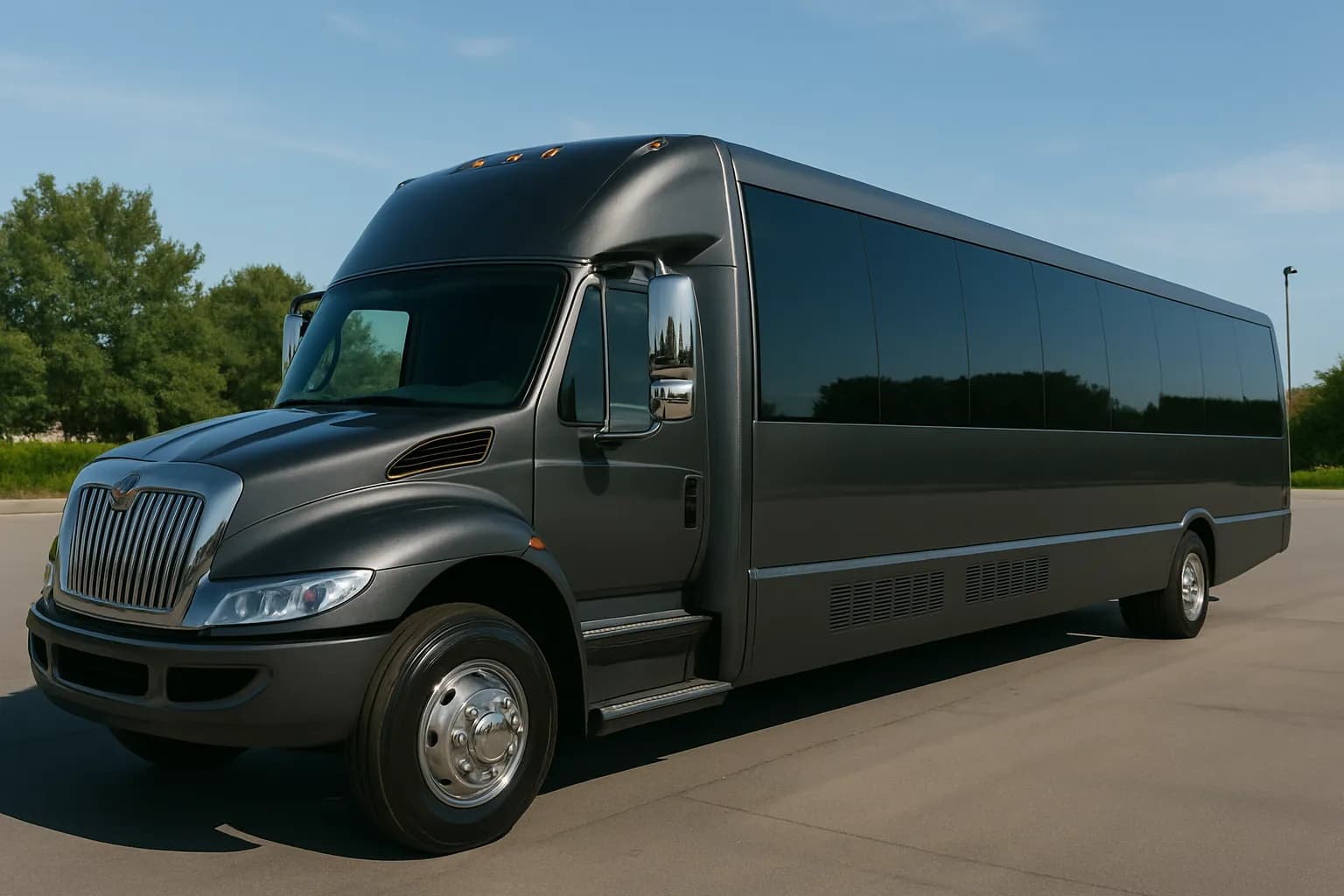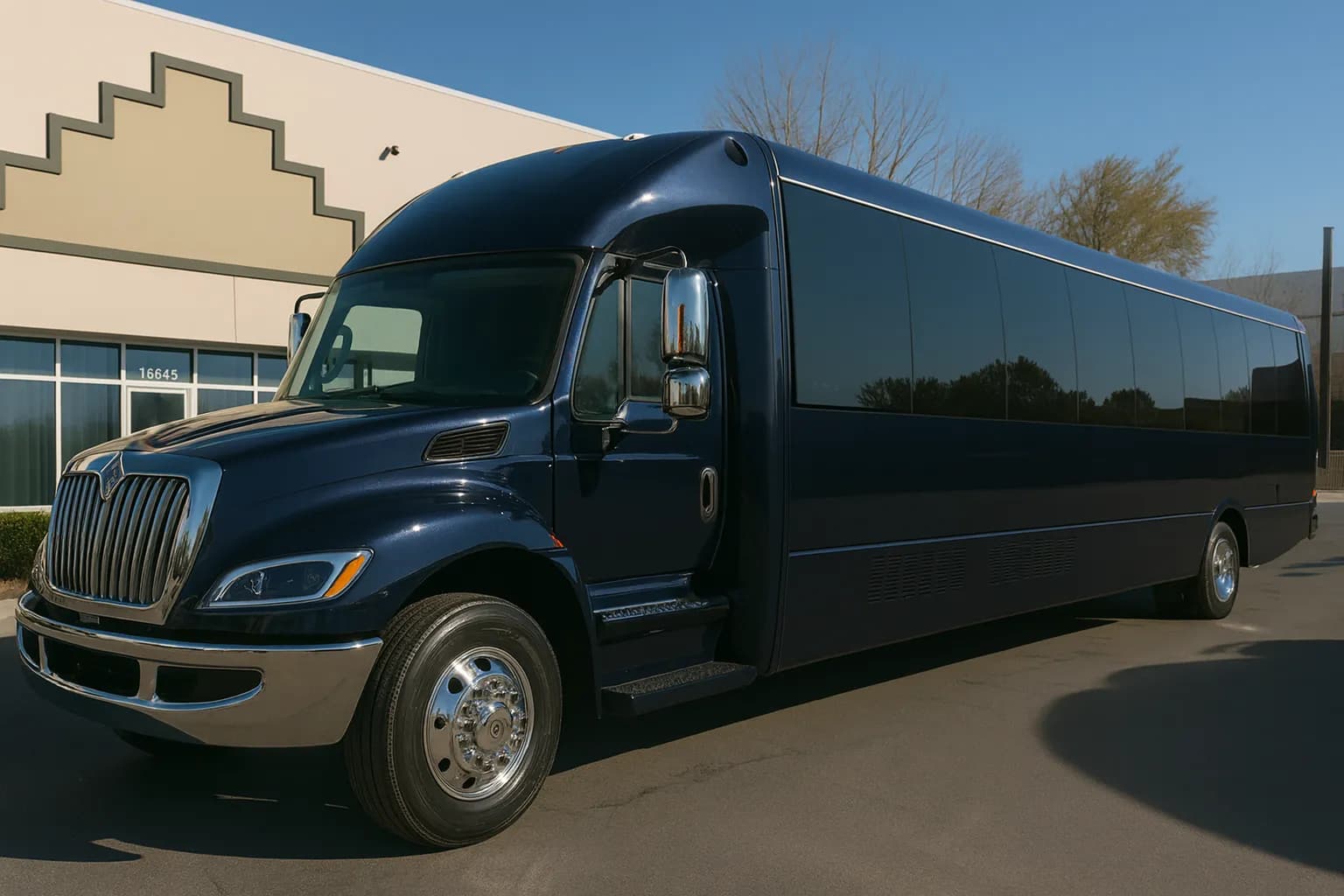
Where can a bus this long actually stop?
Not in a parking garage. Not in most restaurant lots inside the Loop. And not straddling a travel lane on Washington Avenue or Westheimer while thirty-four people file off one at a time.
What it can use: a marked commercial or bus loading zone, a hotel's motorcoach area, a wide side street with open curb, a surface lot with a generous entrance.
Downtown. Streets are one-way and wide, which helps, but curb space near Toyota Center, Daikin Park and the George R. Brown Convention Center is controlled on event nights. Expect a drop a block or two from the door and a pickup somewhere else entirely.
The Heights. Narrow streets, parked cars both sides, low tree limbs. The commercial corridors are the answer: 19th Street, Yale, North Shepherd. For a show at White Oak Music Hall the drop is on North Main, not the neighborhood behind it.
Pick the pickup corner while everyone is still sober enough to remember it.
Tailgating at NRG with 38 seats
A Texans home game or a rodeo concert night is the reason most people find this page.
NRG Park handles buses on separate terms from cars: specific gates, assigned areas, and a pass that can change from event to event. That pass gets sorted when you book the bus, not during game week, and never in the entry queue. Kirby, Fannin and the 610 frontage roads all thicken up in the two hours before kickoff, so the group that leaves early is the group that eats first.
Tailgates this big are a small club. Across all the markets in our records, about 16% of sporting event inquiries were for 21 to 30 passengers and about 4% were for 31 to 40, while about 52% of sporting event inquiries with a vehicle on file mentioned a party bus. A band that small is a narrow place to shop, which argues for asking early. A crew of 25 to 28 is handled by the 32 passenger party bus, and the tailgating page walks through the gear and the parking pass; 45 or more wants a 46 passenger shuttle bus with bays for the gear.
One long bus, or two shorter ones?
The default advice is one vehicle. Access sometimes overrules the default.
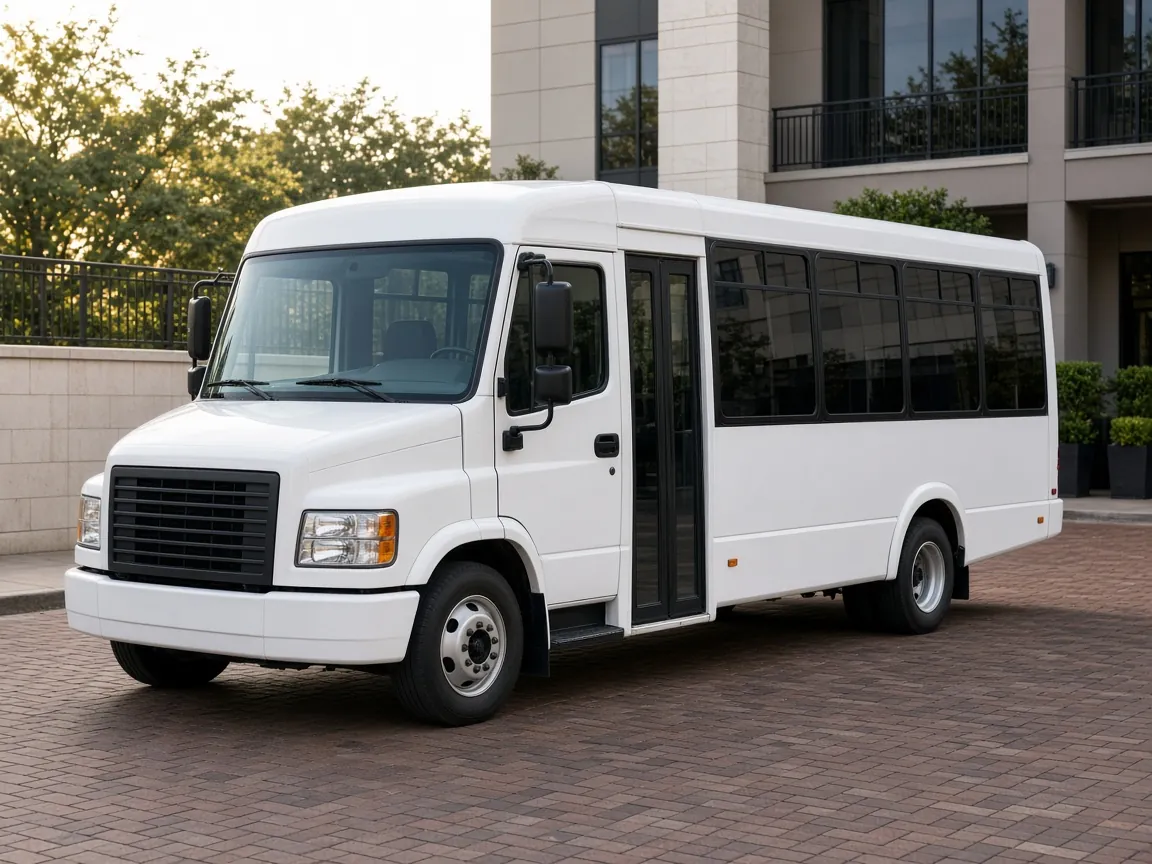
Two 20 passenger party buses can pull up outside a Midtown bar, a Montrose restaurant, or a house in a gated Memorial subdivision. A single 38 seater may load a block and a half away, pleasant in October and a problem in an August thunderstorm or in heels.
Where the day is one big destination with real bus facilities, the long bus is simpler: NRG Park, Cynthia Woods Mitchell Pavilion in The Woodlands, Smart Financial Centre in Sugar Land, a festival ground. Where it is four stops at small venues on narrow streets, two shorter vehicles get everyone closer to each door. Two vehicles also means two drivers to keep in sync and usually a higher combined total. The venue distance calculator checks typical drive times between listed venues, and the route stop planner suggests an order by neighborhood.
The bus that parks closest wins the argument at 1 am.
Festival and amphitheater days
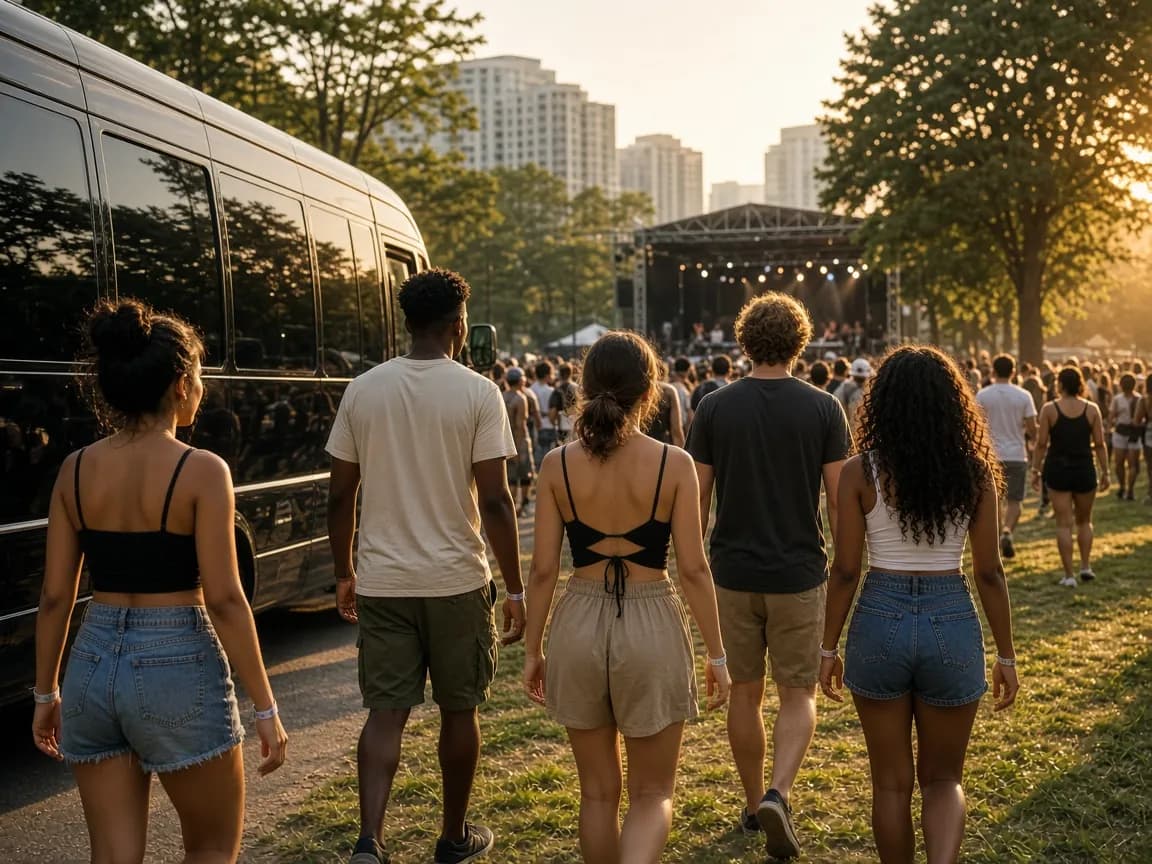
At an all-day festival the bus quietly turns into a locker room.
Dry clothes, phone chargers, cold water, somewhere to sit that is not a folding chair in the sun, and a ride already lined up while the rideshare zone descends into chaos. Many festival sites park buses in a remote lot, so ask whether charter vehicles may stay on site at all, and whether re-entry is allowed once you leave.
For the Pavilion in The Woodlands, central Houston up I-45 is typically 35 to 50 minutes and longer at weeknight rush hour, so arriving before the lots fill takes real margin. Afterward a big bus queues to leave like everyone else, which is what the cooler is for. Our music festivals page and concerts page have drop-off notes venue by venue.
How long do game days actually run?
Longer than a night out, and by a lot.
A tailgate arrives three or four hours before kickoff, the game runs a little over three, and getting out of the lot takes another forty-five minutes. In Houston, about 11% of inquiries with a requested duration asked for seven to eight hours, and event days are where that length starts making sense. Two one-way transfers, with the bus leaving during the game, can come in lower, though you give up the home base and whatever restroom came with it.
Restrooms are more common at this size without being standard, so confirm it for the vehicle on your quote.
What large buses have been quoted at
There is no quote band specific to 38 seat vehicles, so here is the wider picture. Across all markets, about 17% of party-bus inquiries with a historical quote on file fell between $2,000 and $2,499 and about 9% between $2,500 and $2,999. Past quotes, not rates; what you get quoted turns on the kickoff date, the ten hours, the bus and the run in from Cypress. Divided thirty-four ways, even an upper-band total often comes in under stadium parking plus a round-trip rideshare. Put thirty-four shares next to one parking pass in the group split calculator before the group chat starts arguing.
Per head, it competes with NRG parking plus a rideshare home. That is the comparison people forget to make.
Sample Sunday: 34 season-ticket friends, Cypress to an NRG Stadium tailgate
Roughly ten hours for a noon kickoff, with a bus parking pass bought weeks in advance.
7:30 am
Loading at a church lot off Barker Cypress Road, cleared with the office beforehand. Canopy, chairs, a flat-top grill and five coolers go on first.
8:00 am
Out down US-290 to Loop 610 South. A typical Sunday morning run is 40 to 50 minutes.
8:50 am
In through the gate assigned to buses, and set up alongside where the lot rules allow.
11:15 am
Grill packed, bus locked, everyone walks to the gates. The driver stays with the vehicle.
3:15 pm
Final whistle. The group drifts back over half an hour while the lot thins.
4:00 pm
Rolling out. Back in Cypress around 4:55, with a cushion before the ten hours are up.