Galveston or Louisiana?
One of these gets you home to your own bed. That is most of the decision.
Mardi Gras Galveston runs across the two weekends before Fat Tuesday, with parades along the Seawall and through the downtown Strand district, balcony parties and concerts. The downtown entertainment district is gated and ticketed on the main weekends, while the Seawall parades can be watched for free from the sidewalk. Big, loud, close.
Louisiana is the same holiday at a different scale. Lake Charles hosts one of the largest celebrations in the state and is near enough for a very long day trip. Lafayette's parades lean family and make a reasonable overnight. New Orleans wants one night minimum and really two, and hotels near the parade routes go months ahead. If someone keeps saying you should just go to New Orleans, hand them the hotel search first.
What size group goes to Galveston?
Twenty, and then twenty-four by the week of.
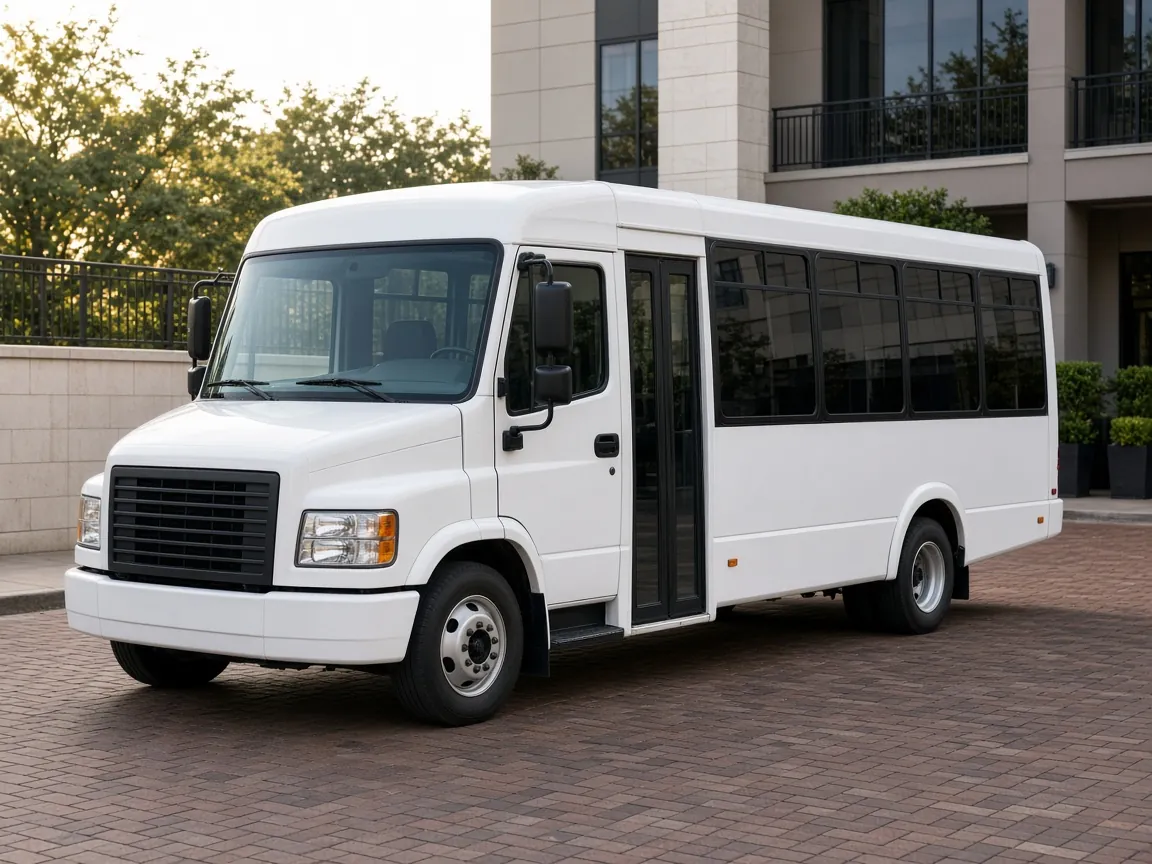
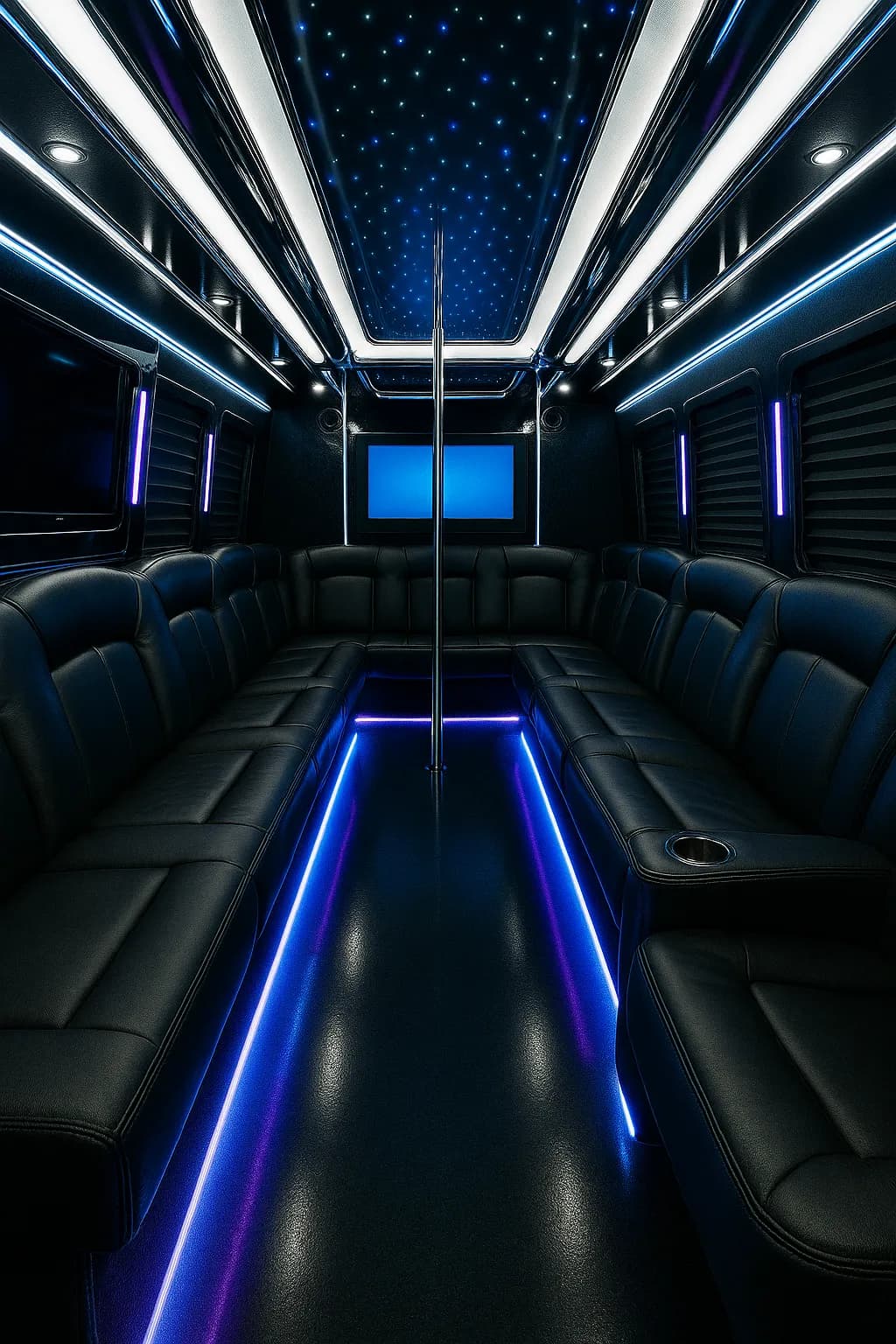
Houston-wide, about 49% of the requests in our inquiry records were for 11 to 20 passengers and about 13% were for 21 to 30. Parade groups sit at the top of that first band and spill into the second, because a Mardi Gras outing collects friends of friends as the date gets closer in a way a dinner never does. That is why the 26 Passenger Party Bus is a sensible default: it takes a group of 20 plus costumes, bead hauls and a cooler.
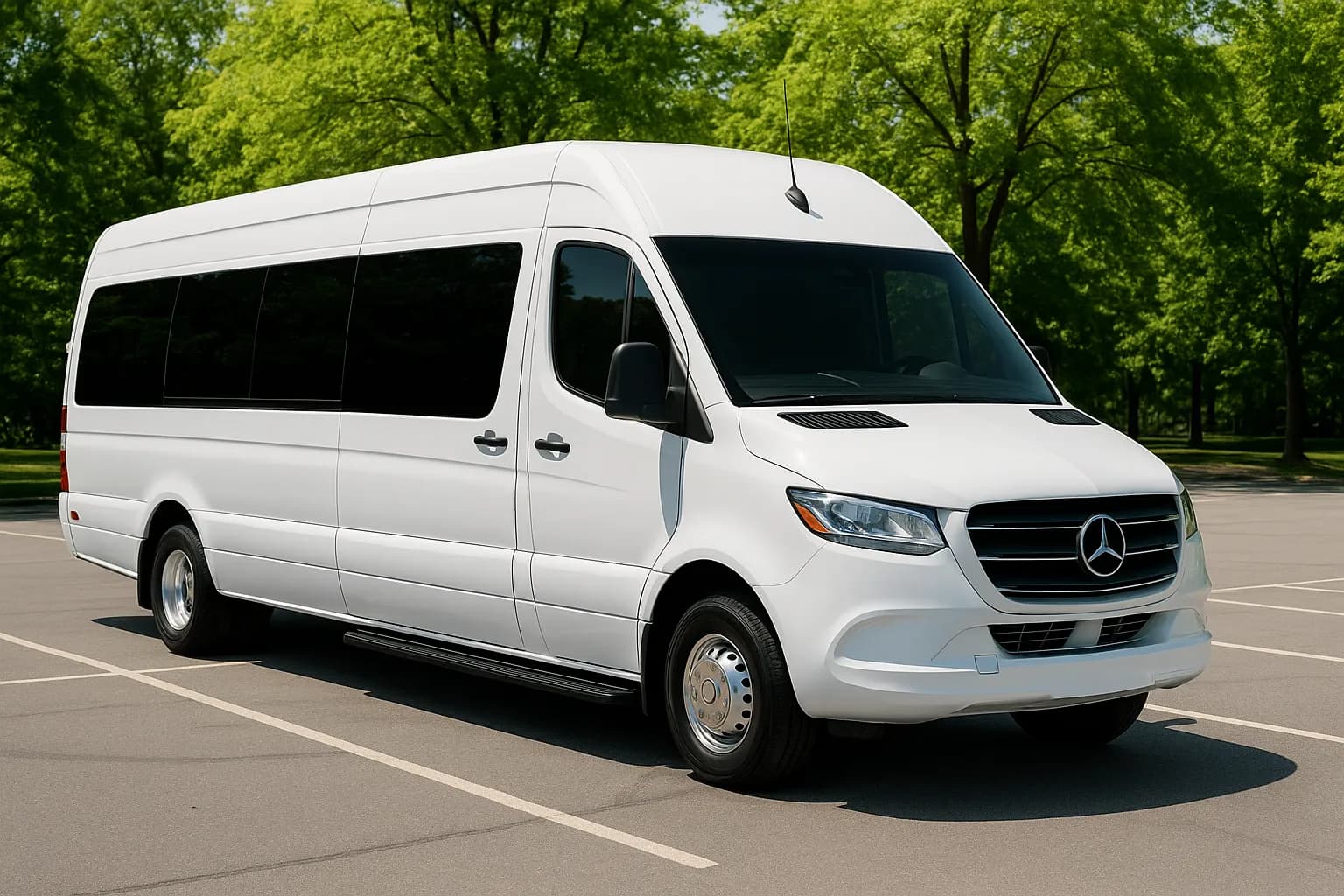
Among Houston requests that named a party bus, about 57% involved 11 to 20 riders and about 16% involved 21 to 30, so you are in well-traveled company either way. A tighter krewe of ten or twelve fits the 14 Passenger Limo Sprinter, which is also far easier to stage on a crowded island. The vehicle comparison tool puts the listed features of both side by side.
Book for the group you will have in February, not the one in the chat today.
What changes when you cross into Louisiana?
Three things, and none of them are small.
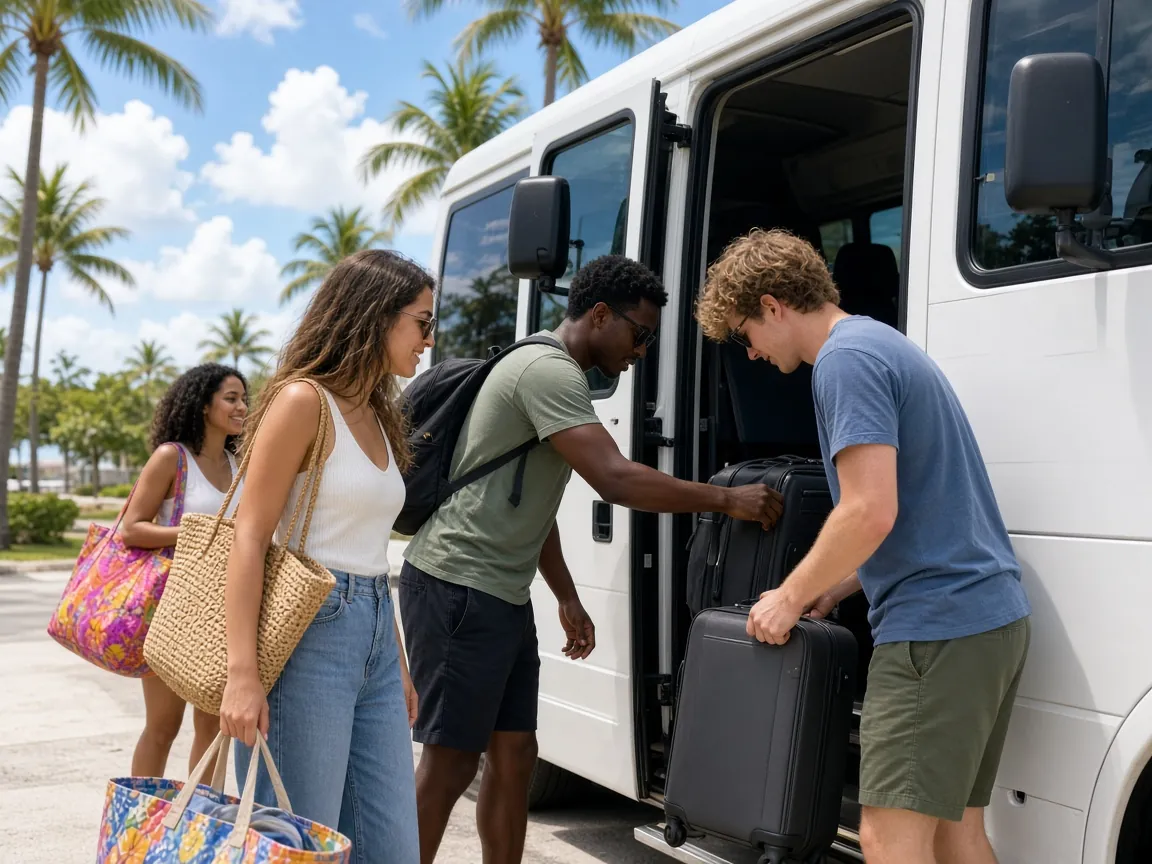
The vehicle, first. Five hours on perimeter bench seating is punishing, so long hauls want forward-facing seats. The 38 Passenger Shuttle Bus covers 25 to 35 people, and the full-size coaches on the luxury coaches page add underfloor luggage bays and often a restroom, which is worth confirming for the specific coach you are quoted.
The driver, second. Ask how many drivers a same-day Houston to New Orleans round trip would need, because with parade time in the middle it is not a one-driver day. Expect an overnight with driver lodging folded into the quote. And third, ask what applies on board once you cross the Sabine River. The operator will know what changes between Texas, Louisiana and New Orleans itself, and on the night, go with what the driver tells you.

How long is a Galveston day?
Longer than the four hours you were about to book.
Only about 11% of Houston requests with a stated duration asked for seven to eight hours, and about 34% asked for five to six. A parade day belongs in one of those two. From central Houston the drive runs 55 to 75 minutes going down and can hit 90 coming back if you leave with everybody else. Add three or four hours on the ground for a parade and food and the short booking is already gone.
Organizers publish the parade schedule each winter. Build the day around one parade you genuinely want to see rather than three you will half-catch. Be on the island at least 90 minutes before it rolls, because island road closures start early and a bus caught outside them drops you a long, hot walk from where you wanted to be. Draft it in the event timeline builder and send it with your request.
One parade, seen properly, beats three parades seen through a windshield.
What has a trip like this been quoted at?
Background only, because a festival Saturday is not an average Saturday.
For Houston requests in our records with a historical quote attached, about 47% fell between $1,000 and $1,499 and about 18% between $1,500 and $1,999. A six to eight hour island trip on a larger bus during a festival weekend points at the higher of those, or past it. These are past quotes across every kind of outing, so treat them as orientation. Which weekend, which bus, how many hours and how far down I-45 all move the real figure.
An overnight Louisiana charter is a separate category altogether and does not map onto those bands at all. For either version, the group split calculator tells each person what they owe, which is useful when you are chasing twenty-four people through a payment app.
Keeping a group together in a parade crowd
Assume the phones will fail, because on the big nights they do.
Cell networks bog down on the island during the major parades. Texts land twenty minutes late and calls simply do not connect. Set a meeting place and a meeting time before anyone steps off the bus, and make it specific: a named intersection two blocks off the route, not the general area near the food. Write the organizer's number on a wristband or a card, because a number saved only in a chat that will not load is not a number.
Buddy system for anyone peeling off from the main group, and set the return time half an hour before you truly need to leave. Somebody is always late, and it is never the same person twice. If part of your group wants a gentler day, the Galveston location page has ideas well away from the route.
Meet at a named corner two blocks off the Seawall, not somewhere near the food.
A Galveston Saturday: 22 friends out of The Heights
Seven hours on a 26 passenger party bus, built around one evening Seawall parade.
2:00 pm
Pickup at a house in The Heights. Costumes on, king cake aboard, cooler packed with cans only.
2:20 pm
South on I-45. Seventy to eighty minutes is typical on a festival Saturday.
3:40 pm
Drop a few blocks off the Seawall ahead of the closures. The driver names the staging spot and the pickup corner before pulling away.
4:00 pm
Late lunch on the Seawall, then claim a stretch of sidewalk.
6:30 pm
Parade rolls. Beads, more beads, buddy check every half hour.
8:00 pm
Meet at the agreed corner. Headcount, then north over the causeway ahead of the late crowd.
9:00 pm
Back in The Heights, right on the end of the window.